
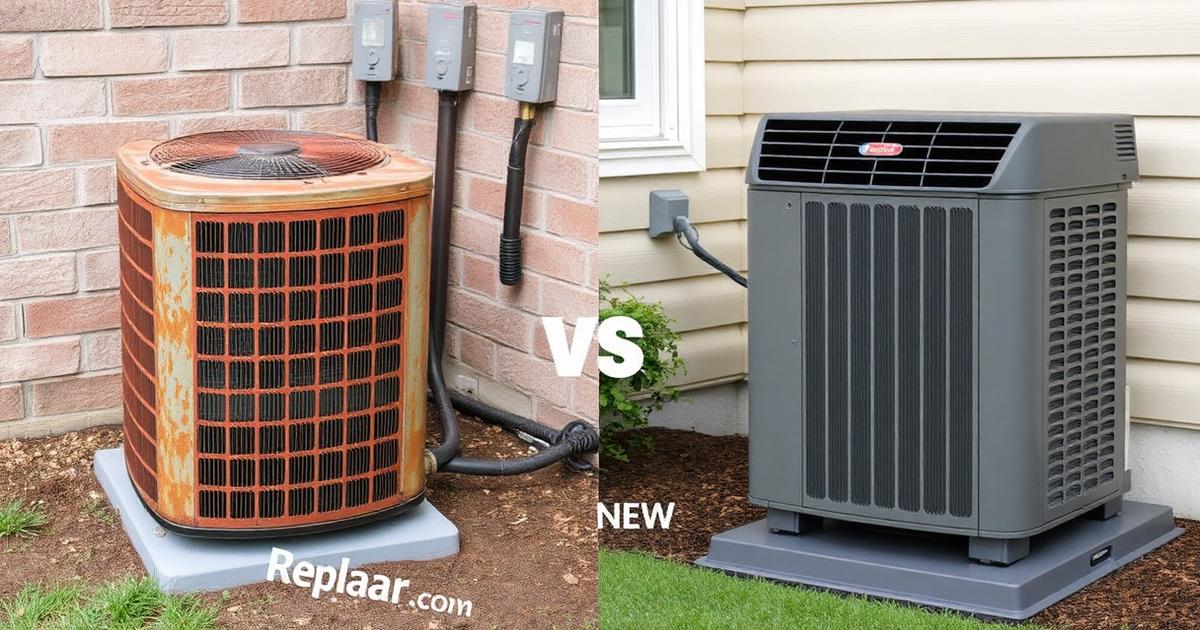
Key Takeaways
- Use the $5,000 Rule: multiply system age × repair cost — if over $5,000, replace
- Systems under 8 years old are almost always worth repairing
- R-22 systems facing major repairs should be replaced, not repaired
- A new AC system can reduce cooling costs by 30-50% compared to a 15-year-old unit
- Federal 25C ended after 2025; subtract current utility, state, or manufacturer incentives only when project eligibility and the estimated amount are confirmed in writing
01The Repair vs. Replace Decision: A Clear Framework
Every homeowner facing a significant AC repair asks the same question: "Am I throwing money at a dying system?" Here's a straightforward framework to answer that question with confidence.
The decision comes down to four factors:
- System age — How old is your current AC?
- Repair cost — What's the estimate for this specific repair?
- Repair history — How much have you spent on repairs in the past 2-3 years?
- Efficiency gap — How much more are you paying in electricity than you would with a new system?
None of these factors alone dictates the answer. But taken together, they paint a clear picture.
02The $5,000 Rule: A Quick Decision Tool
The $5,000 Rule is the fastest way to gut-check a repair estimate:
Multiply the age of your AC system (in years) by the repair cost. If the result exceeds $5,000, replacement is the better investment.
Examples:
- 5-year-old system, $600 repair → 5 × $600 = $3,000 → Repair ✅
- 10-year-old system, $400 repair → 10 × $400 = $4,000 → Repair ✅
- 12-year-old system, $500 repair → 12 × $500 = $6,000 → Replace 🔄
- 15-year-old system, $350 repair → 15 × $350 = $5,250 → Replace 🔄
- 8-year-old system, $800 repair → 8 × $800 = $6,400 → Replace 🔄
This rule isn't absolute — other factors matter — but it's a solid starting point that prevents emotional decision-making.
Need professional help?
Nassau County service · Written scope and pricing · Scheduling confirmed by dispatch
03AC Repair vs. Replace by System Age
Your AC's age is the single biggest factor in the repair-or-replace decision:
0-8 Years Old: Almost Always Repair
Systems in this age range are well within their expected lifespan. Most components are covered under manufacturer warranty (5-10 years for parts, sometimes lifetime on compressors). Unless you're facing a catastrophic failure not covered by warranty, repair is the clear choice.
8-12 Years Old: Evaluate Carefully
This is the gray zone. The system has significant useful life remaining, but warranties may have expired. Apply the $5,000 Rule and consider your repair history. If this is the first major repair, fix it. If you've been calling a technician every summer, it's time to plan for replacement.
12-15 Years Old: Lean Toward Replacement
Your system is approaching end-of-life. Major repairs (compressor, evaporator coil) are hard to justify because other components are likely nearing failure too. The efficiency gap between your system and a new one is significant — potentially saving $300-$600/year in electricity.
15+ Years Old: Replace
Systems over 15 years old have exceeded the average lifespan. Any repair over $500 should trigger replacement consideration. The combination of declining reliability, poor efficiency, and potential R-22 refrigerant issues makes replacement the financially sound choice.
04The Efficiency Calculation Most Homeowners Miss
Here's where the repair-vs-replace math gets interesting. Most homeowners only look at the upfront cost — but operating cost differences can dwarf the repair bill.
Consider a typical Nassau County home with a 3-ton AC system:
- Old system (10 SEER, installed 2008): Approximately $1,200/year in cooling costs at PSEG Long Island rates
- New system (18 SEER2, installed 2026): Approximately $650/year in cooling costs
- Annual savings: $550/year
Over 15 years, that modeled difference is $8,250 in electricity savings. Actual savings vary with weather, utility rates, home performance, ductwork, thermostat settings, and equipment condition.
Federal 25C ended for property placed in service after December 31, 2025. Separate utility, state, or manufacturer programs may still apply, but eligibility and amounts vary and should be confirmed in writing before they are subtracted from replacement cost. HEAR/HEEHRA programs, where funded and available, have separate rules and are not an extension of 25C.
Compare the repair cost with the full installed replacement price and a home-specific operating-cost projection. Treat any current incentive as a separate, documented line item rather than an assumed discount.
Get a Quick Callback
No email required — we'll call you.
05Situations Where You Should Always Repair
Despite the above analysis, some situations clearly call for repair over replacement:
- Minor repairs under $300 — Capacitors, contactors, and drain line cleanings are routine maintenance items, not signs of system failure. Fix them regardless of system age.
- System under warranty — If parts are covered, your out-of-pocket cost is just labor. Even compressor replacement under warranty costs only $500-$800 for labor.
- Recent installation (under 5 years) — A system this new failing indicates an installation issue or defective part, not end-of-life. Your installer should stand behind their work.
- Budget constraints — If replacement isn't financially feasible right now, a well-executed repair can buy you 2-3 more years while you save for a new system. Just plan ahead rather than being forced into an emergency replacement.
- You're selling soon — If you're listing your home within the next year, a $500 repair makes more sense than a $6,000 replacement you won't benefit from long-term.
AC trouble during hot weather?
Call to confirm current repair availability or request written maintenance terms.
(516) 259-119106Situations Where You Should Always Replace
And some situations make replacement the only logical choice:
- R-22 refrigerant system with a major leak — R-22 is no longer manufactured. Remaining supplies cost $150-$300/pound. Repairing a major leak in an R-22 system and recharging it can cost $2,000-$4,000 — nearly the price of a new R-410A system.
- Compressor failure on a 12+ year old system — Compressor replacement costs $1,500-$3,000. On an aging system, other components will follow. Invest that money in a new system instead.
- Repeated repairs totaling $1,000+ in the past two years — This pattern indicates systemic failure, not isolated component issues. Each repair is buying less and less time.
- System can't keep up with demand — If your AC runs constantly on hot days but can't maintain comfortable temperatures, it may be undersized, have degraded components, or suffer from duct leakage. A properly sized new system solves all three.
- Major renovation or addition — If you're adding square footage or reconfiguring your home, your existing AC may not have the capacity for the expanded space. This is the ideal time to upgrade.
Frequently Asked Questions
Home+ Team
Home+ Air and Heat editorial team
Service articles are reviewed against current company pricing, coverage and scheduling terms. Technician credentials are confirmed for the person and work assigned to each appointment.
Continue Reading
AC Repair Cost on Long Island: 2026 Pricing Guide
Wondering what AC repair costs on Long Island? Get real pricing data for common repairs — from capacitor swaps to compressor replacements — plus tips to avoid overpaying.
Emergency AC Repair Near Me in Nassau County: What to Do First
AC stopped during dangerous heat, smells like it is burning, leaks water, or keeps tripping a breaker? Use this Nassau County safety and booking checklist.
Same-Day AC Repair on Long Island: Availability, Cost and What to Ask
Same-day AC repair depends on current capacity, location, equipment and demand. Learn what dispatch needs, what the visit includes and which terms to confirm.
Need help with the next HVAC step?
Call to confirm service-area fit, equipment capability, written terms and current scheduling.
5.0 Google rating · 94 reviews