
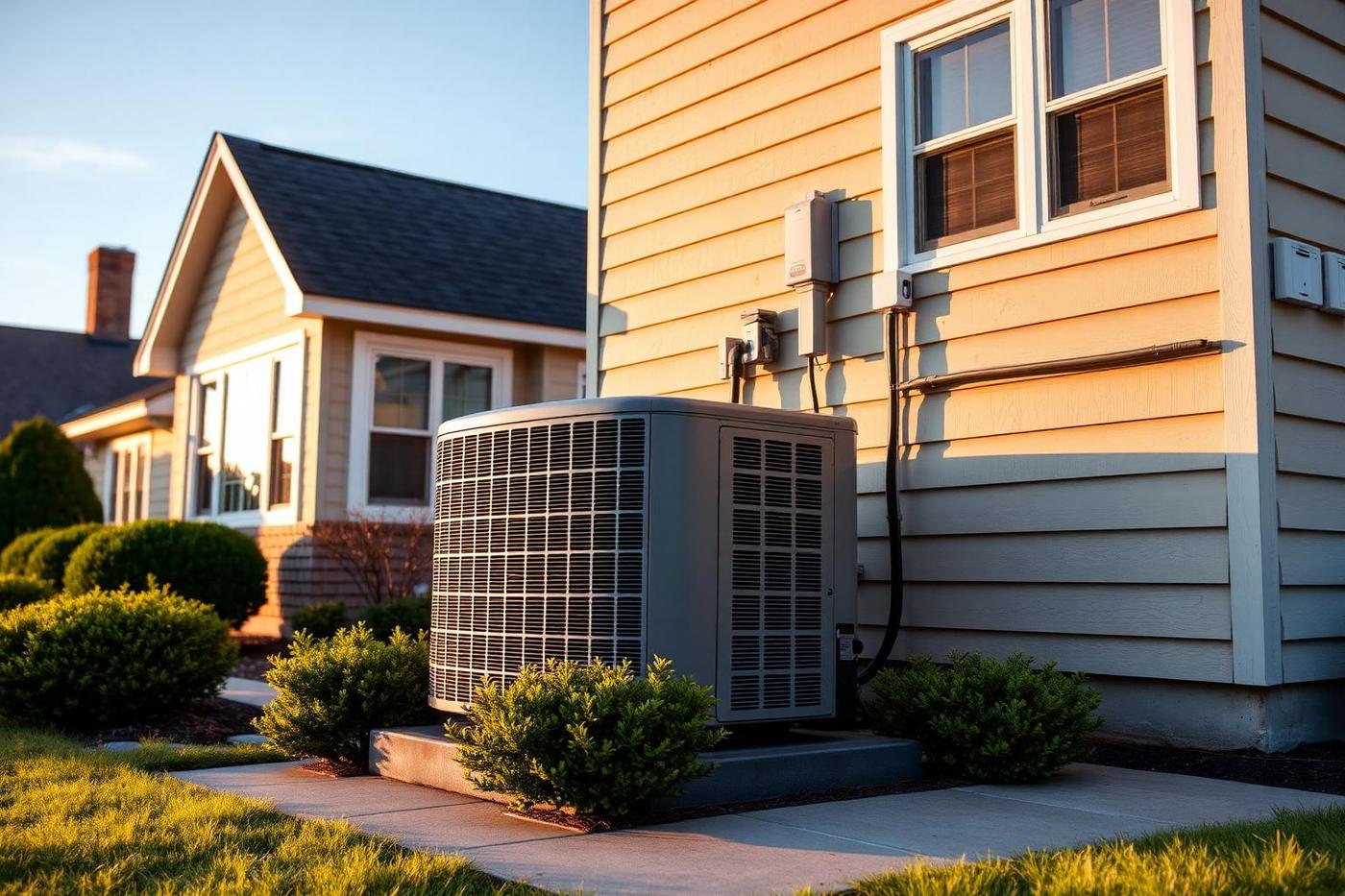
Key Takeaways
- Most Long Island homes need 1.5 to 4 tons of cooling capacity — but square-footage shortcuts are usually wrong
- Manual J load calculation is the correct sizing method; verify any current program's documentation rules in writing for the exact project
- Oversized AC systems short-cycle, fail to dehumidify, and wear out faster than properly sized units
- Long Island's humidity, salt air, and older housing stock significantly affect sizing decisions
- 1 ton = 12,000 BTU/hr; the right size depends on insulation, windows, orientation, and infiltration — not just square footage
AC Size by Home Type on Long Island (Approximate)
| Service | Cost Range | Notes |
|---|---|---|
| Small home / condo (800–1,200 sq ft) |
$18,000–$24,000
|
1.5–2 tons; verify with Manual J |
| Mid-size cape or ranch (1,200–1,800 sq ft) |
$24,000–$30,000
|
2–2.5 tons typical |
| Standard colonial (1,800–2,400 sq ft) |
$30,000–$36,000
|
2.5–3 tons typical |
| Large colonial / expanded (2,400–3,200 sq ft) |
$36,000–$48,000
|
3–4 tons; zoning often recommended |
| Estate / open-plan (3,200+ sq ft) |
$48,000–$60,000
|
4–5 tons; multi-zone strongly recommended |
BTU/hr ranges are starting points only. Actual sizing requires a Manual J load calculation that accounts for insulation, window count and orientation, ceiling height, infiltration, and occupancy. Use this table for budgeting — never for purchasing.
01Why AC Sizing Matters More Than You Think
Buying an air conditioner that's too big is one of the most common — and most expensive — mistakes Long Island homeowners make. The intuition is reasonable: bigger system, more cooling, better comfort. Unfortunately, that's not how central AC works.
An oversized AC cools the air quickly, then shuts off before it has time to remove humidity from the home. The result is a house that feels cold and clammy at the same time — the classic "meat locker" effect. The system short-cycles (turns on and off repeatedly), which:
- Wears out the compressor — Compressors are stressed most at startup. Frequent cycling cuts lifespan by years.
- Fails to dehumidify — Long Island summers run 70–85% relative humidity. Without proper runtime, your home stays muggy even at 72°F.
- Wastes electricity — Each startup draws a surge of current. Short cycles mean more startups per hour, raising your PSEG-LI bill.
- Creates hot and cold spots — The system shuts off before air has fully circulated through ductwork.
An undersized system has the opposite problem: it runs continuously, never reaches setpoint on hot days, and burns out from constant operation. The goal is right-sized, which is what Manual J was designed to calculate.
02Tons, BTUs, and What the Numbers Actually Mean
AC capacity is measured two ways, and they refer to the same thing:
- BTU/hr (British Thermal Units per hour) — The amount of heat the system can remove from your home in one hour.
- Tons — Industry shorthand. 1 ton = 12,000 BTU/hr. A "3-ton" AC removes 36,000 BTU/hr.
Residential central AC and air-source heat pumps in the U.S. are sold in half-ton increments: 1.5, 2, 2.5, 3, 3.5, 4, and 5 tons. Most single-family homes on Long Island fall between 2 and 4 tons.
You'll sometimes hear a "rule of thumb" that homes need roughly 20 BTU per square foot — meaning a 2,000 sq ft home would need 40,000 BTU (about 3.5 tons). That rule is wrong more often than it's right. Two homes of identical square footage on the same Long Island street can have cooling loads that differ by 30% or more based on insulation, window orientation, attic ventilation, and air leakage.
Need professional help?
Nassau County service · Written scope and pricing · Scheduling confirmed by dispatch
03What Is Manual J — and Why It's the Only Correct Method
Manual J is the residential load calculation standard published by ACCA (Air Conditioning Contractors of America). It's the industry-accepted method for determining exactly how much cooling and heating capacity a home needs. Reputable HVAC contractors use Manual J software (Wrightsoft, Cool Calc, or similar) to model your specific home.
A proper Manual J calculation accounts for:
- Conditioned square footage — Only spaces you cool, not garages or unfinished basements.
- Ceiling height — A 9-ft ceiling holds 12.5% more air than an 8-ft ceiling.
- Insulation values — Walls, attic, basement, and crawl space R-values.
- Windows — Count, size, glazing type (single, double, low-E), and orientation (south- and west-facing add significant load).
- Air infiltration — How leaky the house is. Older Long Island homes built before 1980 typically leak 2–3× more than modern construction.
- Occupancy and internal gains — People, lighting, and appliances all add heat.
- Climate zone — Long Island is ASHRAE Climate Zone 4A. Design temperatures are roughly 88°F outdoor / 75°F indoor for cooling.
Manual J is essential whether or not an incentive applies. Current utility, state, or income-qualified programs may specify a sizing range and documentation format, but eligibility depends on the customer, equipment, project, contractor, installation date, funding, and current rules. Confirm those requirements and any estimated amount in writing. A contractor offering a heat pump without Manual J also risks leaving you with an oversized system.
04Long Island Sizing Factors Most Contractors Miss
National sizing tables don't account for the quirks of Nassau and Western Suffolk housing stock. Here's what local experience adds:
Humidity Load
Long Island summers average 72% relative humidity. A significant portion of your AC's capacity is spent removing moisture, not just cooling air. Right-sized systems run longer cycles that pull water out of the air. Oversized systems skip this entirely.
Coastal Salt Air
Homes within a mile of the South Shore — Long Beach, Atlantic Beach, Point Lookout, Lido Beach, and the Hamptons — experience accelerated corrosion of condenser coils. This doesn't change the BTU calculation, but it does push us toward coastal-rated equipment (Trane XV20i with Spine Fin, Carrier Infinity with WeatherArmor) and shorter expected lifespans.
Older Housing Stock
Much of Nassau County was built between 1945 and 1970 — Levittown, Hicksville, Westbury, Mineola, Garden City, Hempstead. Original construction used minimal wall insulation (often none) and single-pane windows. If a home has been retrofitted with blown-in insulation and double-pane windows, the cooling load may be 20–30% lower than the original spec — making yesterday's 3-ton system today's 2.5-ton sweet spot.
Finished Basements and Attic Conversions
Many Long Island homeowners add conditioned space without resizing HVAC. A finished basement adds 400–800 sq ft of cooling load (less because of below-grade location), and a finished attic adds 300–600 sq ft (more because of solar gain through the roof). Always recalculate Manual J after major renovations.
Western Exposure on Standard Lots
Many post-war Long Island subdivisions oriented homes east-west to fit narrow lots. Late-afternoon sun pounding through western windows adds 3,000–6,000 BTU/hr of solar gain on a hot July afternoon — often the difference between a 2.5-ton and a 3-ton system.
Get a Quick Callback
No email required — we'll call you.
05Sizing Differences: Central AC vs. Heat Pump vs. Mini-Split
Different system types size slightly differently:
- Central AC (cooling only) — Size to 100% of cooling load. Never oversize.
- Air-source heat pump — Size from the Manual J heating and cooling loads and the selected equipment's capacity data. On Long Island, cooling and heating loads are roughly balanced. If a current program applies, confirm its sizing range, matched-equipment, contractor, and documentation rules in writing.
- Ductless mini-split (single zone) — Size each zone individually based on the conditioned area it serves. Mini-splits inverter-modulate, so they tolerate slight oversizing better than fixed-speed central AC — but only slightly.
- Multi-zone mini-split — Sum the indoor head capacities, but the outdoor condenser is sized to expected simultaneous load (typically 70–80% of total head capacity), since not all zones run at full output at the same time.
For most Long Island homes, the right answer is not "the biggest system that fits the budget" — it's "the system the Manual J says you need, installed by a contractor who actually ran the calculation."
AC trouble during hot weather?
Call to confirm current repair availability or request written maintenance terms.
(516) 259-119106What to Ask Before You Buy
If you're getting quotes for a new central AC or heat pump on Long Island, ask every contractor:
- "Will you perform a Manual J load calculation before recommending a size?" — The correct answer is yes, no exceptions. If the contractor sizes by square footage or "what was here before," walk away.
- "Can I see the Manual J report?" — You're entitled to a copy. It should show room-by-room loads, not just a single whole-house number.
- "Which current program requirements apply to this exact project?" — Participating-contractor status may be one requirement, but it does not guarantee customer, equipment, project, funding, or amount eligibility. Get the estimated amount and filing responsibilities in writing.
- "What SEER2 and HSPF2 ratings are you proposing?" — Higher efficiency costs more upfront but reduces operating cost over the system's 15–20 year life.
- "How will you handle the existing ductwork?" — A new high-efficiency system attached to undersized or leaky ducts will underperform regardless of how well it's sized.
Installation quality matters more than brand name. A correctly sized mid-tier system installed by a meticulous contractor will outperform an oversized premium system installed by someone who skipped Manual J.
Frequently Asked Questions
Home+ Team
Home+ Air and Heat editorial team
Service articles are reviewed against current company pricing, coverage and scheduling terms. Technician credentials are confirmed for the person and work assigned to each appointment.
Continue Reading

AC Repair Cost on Long Island: 2026 Pricing Guide
Wondering what AC repair costs on Long Island? Get real pricing data for common repairs — from capacitor swaps to compressor replacements — plus tips to avoid overpaying.
Mini Split vs Central Air on Long Island (2026): Cost, Efficiency & Best Choice
Real 2026 install costs, SEER2 efficiency, retrofit options, and current incentive-verification guidance for mini split vs central AC across Nassau and Suffolk County.
How to Choose an Air Conditioning Repair Company on Long Island
Compare Long Island AC repair companies using current county records, insurance, technician credentials, written diagnosis, price, parts and labor coverage.
Need help with the next HVAC step?
Call to confirm service-area fit, equipment capability, written terms and current scheduling.
5.0 Google rating · 94 reviews