
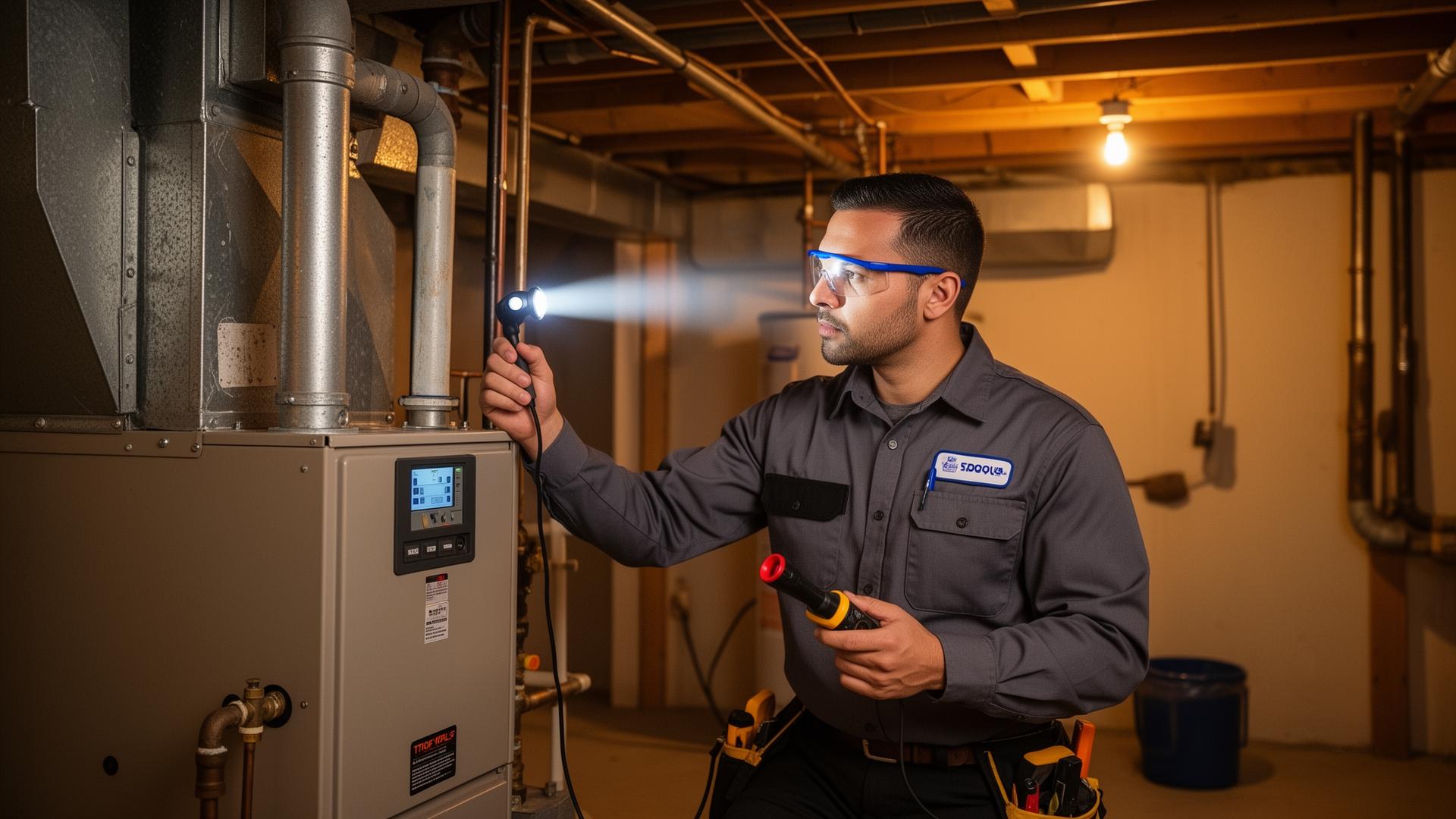
Safety First
If you smell gas, see sparks, or your carbon monoxide detector is alarming, leave your home immediately and call 911 or your gas company. Never attempt DIY repairs involving gas lines or electrical components beyond basic troubleshooting.
Understanding Common Furnace Problems
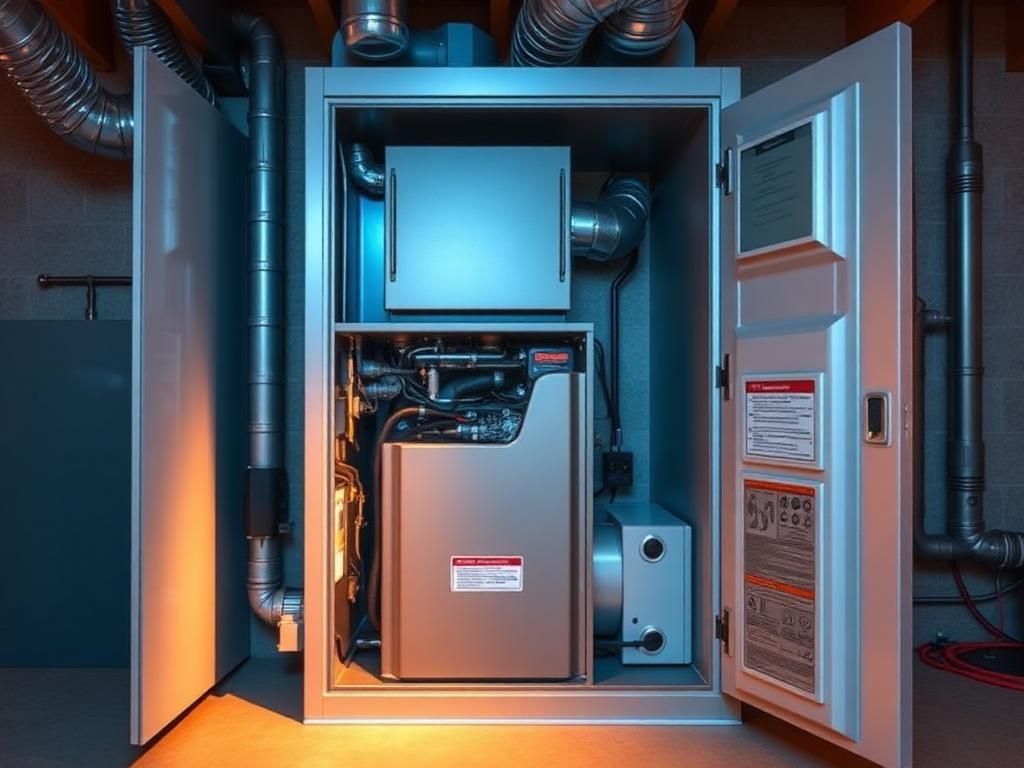
Understanding your furnace's components helps with troubleshooting
When your furnace stops working properly—especially during a Long Island winter—it's stressful. But before you panic, many furnace issues have simple causes that you can check yourself. This guide covers the 7 most common furnace problems, their likely causes, and what you can safely troubleshoot at home.
Important: While some issues have DIY solutions, others require professional service. We'll clearly indicate when it's time to call in the experts.
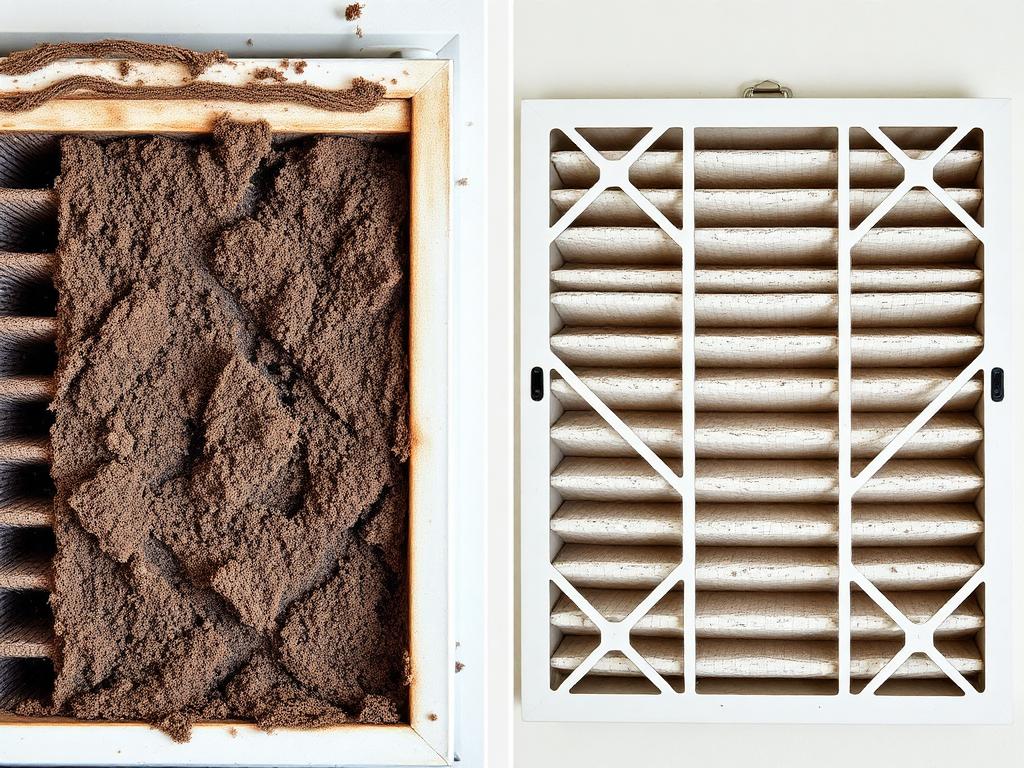
A dirty air filter (left) vs. a clean filter (right) — the #1 cause of furnace problems
Furnace Won't Turn On or Produce Heat
Symptoms
- Furnace doesn't respond when thermostat calls for heat
- No sounds coming from the furnace
- Cold air or no air from vents
Possible Causes
- Thermostat set incorrectly or batteries dead
- Tripped circuit breaker or blown fuse
- Pilot light out (older furnaces)
- Gas supply issue
- Faulty ignition system
What You Can Try
- 1.Check thermostat is set to 'Heat' and temperature is above room temp
- 2.Replace thermostat batteries
- 3.Check circuit breaker and reset if tripped
- 4.Ensure gas valve is in the 'On' position
- 5.Check if furnace power switch (looks like a light switch) is on
When to Call a Professional
If the furnace still won't start after these checks, there may be ignition, gas valve, or control board issues that require professional diagnosis.
Furnace Short Cycling (Turns On and Off Frequently)
Symptoms
- Furnace runs for only a few minutes then shuts off
- Cycles on/off more than 3-4 times per hour
- House never reaches set temperature
Possible Causes
- Dirty or clogged air filter restricting airflow
- Overheating due to blocked vents
- Thermostat malfunction or poor placement
- Oversized furnace for your home
- Flame sensor needs cleaning
What You Can Try
- 1.Replace the air filter (check monthly, replace every 1-3 months)
- 2.Ensure all vents and registers are open and unobstructed
- 3.Make sure thermostat isn't near heat sources or drafts
- 4.Clear any objects blocking the furnace intake
When to Call a Professional
Persistent short cycling often indicates a dirty flame sensor, faulty limit switch, or sizing issues that need professional attention.
Weak Airflow or Uneven Heating
Symptoms
- Some rooms much colder than others
- Weak air coming from vents
- Takes forever to heat the house
Possible Causes
- Clogged air filter
- Blocked or disconnected ductwork
- Blower motor issues
- Leaky ducts losing heated air
- Closed or blocked registers
What You Can Try
- 1.Replace the air filter
- 2.Check all registers are open throughout the house
- 3.Inspect visible ductwork for obvious disconnections
- 4.Make sure furniture isn't blocking vents
- 5.Check if dampers in ductwork are properly positioned
When to Call a Professional
If airflow remains weak, the blower motor, fan belt, or ductwork may need professional inspection and repair.
Strange Noises (Banging, Squealing, Rattling)
Symptoms
- Loud bang when furnace starts
- Squealing or screeching during operation
- Rattling or rumbling sounds
- Clicking that doesn't stop
Possible Causes
- Delayed ignition (banging) - dirty burners
- Worn blower belt or motor bearings (squealing)
- Loose panels or ductwork (rattling)
- Ignition problems (clicking)
- Dirty burners or heat exchanger
What You Can Try
- 1.Tighten any loose furnace panels and screws
- 2.Check for objects near or in the furnace
- 3.Inspect visible ductwork for loose connections
When to Call a Professional
Most furnace noises indicate mechanical issues. Banging sounds especially can indicate dangerous delayed ignition - call immediately.
Pilot Light or Ignition Problems
Symptoms
- Pilot light keeps going out (older furnaces)
- Yellow or flickering pilot flame instead of blue
- Furnace tries to ignite but fails
- Multiple ignition attempts before starting
Possible Causes
- Dirty pilot orifice
- Faulty thermocouple
- Draft blowing out pilot
- Dirty flame sensor (electronic ignition)
- Igniter failure
What You Can Try
- 1.For standing pilot: Carefully relight following manufacturer instructions
- 2.Check for drafts near the furnace
- 3.A yellow flame indicates incomplete combustion - don't ignore this
When to Call a Professional
Ignition systems involve gas and electricity - professional service is strongly recommended. A yellow pilot flame can indicate carbon monoxide risk.
Thermostat Not Working Properly
Symptoms
- Temperature reading seems inaccurate
- Furnace doesn't respond to thermostat changes
- Blank thermostat display
- Temperature swings wildly
Possible Causes
- Dead batteries
- Thermostat placed in poor location (drafts, sun, near vents)
- Loose wiring connections
- Outdated or faulty thermostat
- Thermostat not level (older mechanical types)
What You Can Try
- 1.Replace batteries (even hardwired units often have backup batteries)
- 2.Clean dust from inside thermostat carefully
- 3.Ensure it's mounted level and away from heat sources
- 4.Check that thermostat is set to 'Heat' not 'Cool'
- 5.Try raising temp 5 degrees above current room temp
When to Call a Professional
If basic troubleshooting doesn't work, consider upgrading to a smart thermostat - we can help with professional installation.
Yellow Burner Flame or Carbon Monoxide Concerns
Symptoms
- Yellow or orange burner flames (should be blue)
- Soot around furnace
- Excessive moisture on windows
- Flu-like symptoms in household members
- Carbon monoxide detector alarming
Possible Causes
- Incomplete combustion
- Cracked heat exchanger
- Poor ventilation
- Blocked flue or exhaust
What You Can Try
- 1.If CO detector alarms: evacuate immediately and call 911
- 2.Install CO detectors on every level if you haven't
- 3.Never ignore yellow flames - this is a safety issue
When to Call a Professional
This is a SAFETY EMERGENCY. Yellow flames and CO concerns require immediate professional inspection. A cracked heat exchanger can leak deadly carbon monoxide.
Furnace Still Not Working?
Our EPA 608-certified technicians are available for same-day furnace repair throughout Nassau County.
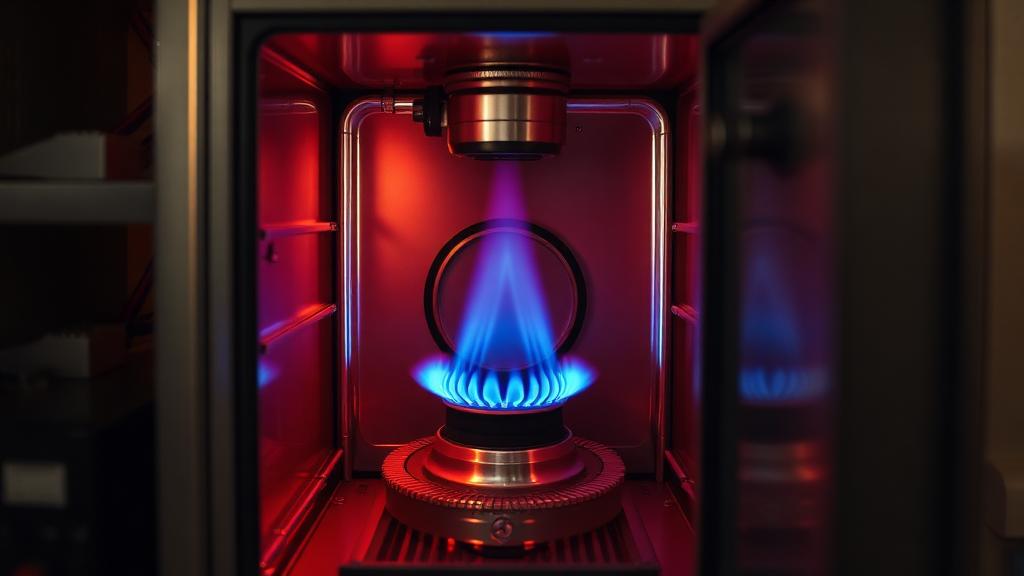
A healthy furnace flame should be blue — yellow flames indicate incomplete combustion and potential safety issues
When to Call a Professional
While DIY troubleshooting can solve simple issues, some situations require immediate professional help:
Call Immediately If:
- • You smell gas or rotten eggs
- • Carbon monoxide detector alarms
- • You see yellow/orange flames
- • There's visible damage or sparking
- • You hear loud banging noises
Schedule Service If:
- • DIY troubleshooting didn't help
- • Problems keep recurring
- • It's been 1+ years since tune-up
- • Energy bills are unusually high
- • Furnace is 15+ years old
Preventing Furnace Problems
The best way to avoid furnace problems is regular maintenance. Here's what every homeowner should do:
Maintenance Checklist:
Monthly:
- Check and replace air filter
- Test thermostat operation
- Ensure vents are unblocked
Annually:
- Professional tune-up
- Carbon monoxide detector test
- Ductwork inspection