
HVAC Installation Checklist for New Homes: 2026 Guide
Discover the essential HVAC installation checklist for new homes. Follow our 2026 guide to ensure efficient and code-compliant systems.
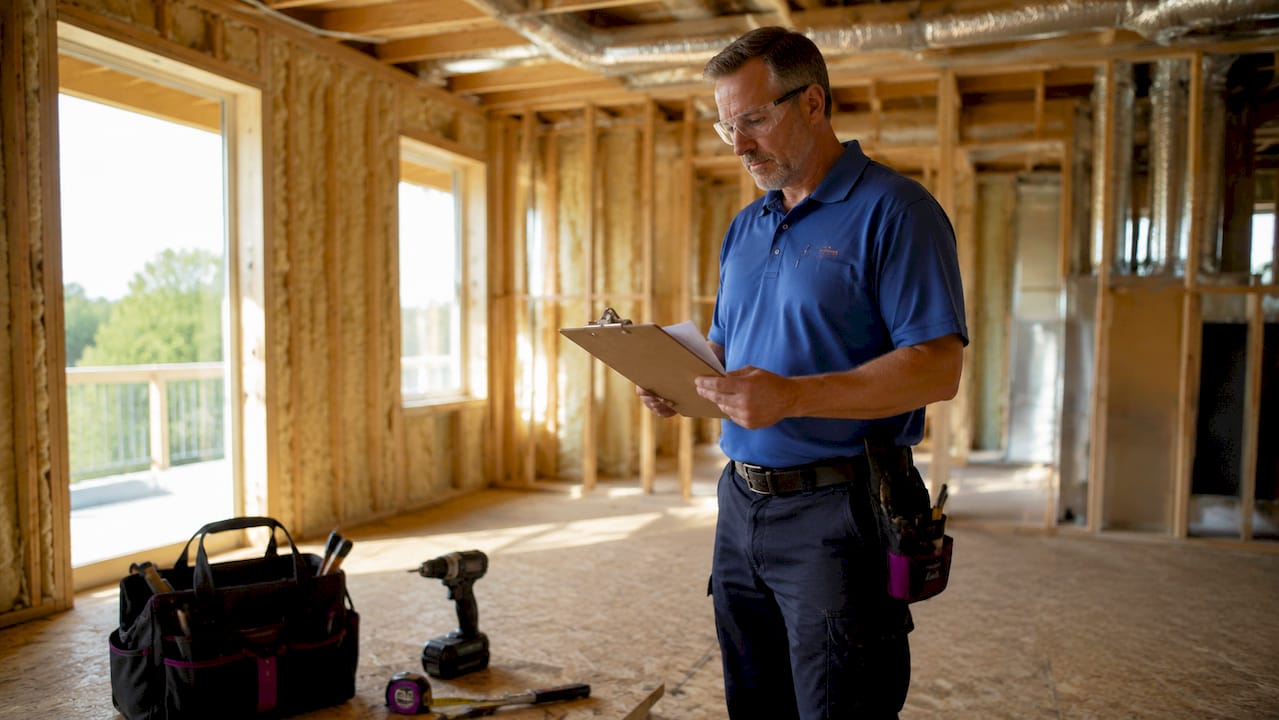
HVAC Installation Checklist for New Homes: 2026 Guide
An HVAC installation checklist for new homes is a step-by-step guide covering every phase from load calculation to final startup testing. Skipping even one step creates comfort problems, code violations, and voided warranties that cost far more to fix later. New construction gives you a rare advantage: walls are open, trades are coordinated, and the system can be designed right from the start. This guide walks you through every critical checkpoint, using 2026 industry standards including Manual J, Manual D, and ACCA protocols, so your system runs efficiently from day one.
1. What are the must-have steps in the HVAC installation checklist for new homes?
A complete new home HVAC setup follows a specific sequence. Each step builds on the last, and skipping one creates problems that are expensive to fix after walls are closed.
Step 1: Manual J load calculation Manual J is the industry standard method for calculating exactly how much heating and cooling your home needs. A Manual J calculation costs $150–$400 and takes 2–4 hours. That investment prevents the most common and costly mistake in new construction: oversizing.

Step 2: Equipment selection using Manual S Manual S uses your Manual J results to select specific equipment models. It matches the unit’s capacity to your calculated load, accounting for local climate conditions. Never let a contractor skip Manual S and substitute a rule-of-thumb size estimate.
Step 3: Ductwork design using Manual D Manual D calculates duct sizing and layout based on your actual load. Field-fitted ductwork based on visual estimates consistently underperforms compared to Manual D designs. This step happens on paper before a single duct is cut.
Step 4: Rough-in installation Duct runs, refrigerant lines, and electrical rough-in all happen after framing and before insulation. This is the only window when walls are open and routing is clean. Missing this window means cutting into finished surfaces later.
Step 5: Rough-in inspection A licensed inspector verifies duct placement, line routing, and code compliance before insulation covers everything. This checkpoint is required under the IRC 2024 and most local building codes.
Step 6: Duct pressure test After rough-in inspection, ducts are pressure-tested to confirm they are sealed. Leaky ducts waste conditioned air inside wall cavities, not inside your rooms.
Step 7: Equipment installation The air handler, condenser, and furnace are installed after drywall is complete. This protects equipment from construction dust and moisture damage.
Step 8: Electrical and refrigerant connections An EPA-certified technician handles refrigerant line connections and charging. Electrical connections must meet NEC requirements and local code amendments.
Step 9: System startup and commissioning Full commissioning includes airflow verification at every register, refrigerant charge confirmation, zone testing, and thermostat programming. This is not optional. It is the proof that your system performs as designed.
Step 10: Owner walkthrough Before closing, the technician walks you through filter locations, thermostat operation, and maintenance schedules. Skipping this step leaves homeowners operating systems incorrectly from day one.
Step 11: Equipment registration Register every piece of equipment with the manufacturer within 60 days of installation. Failing to register cuts warranty coverage from 10 years down to 5 years on most major brands.
Pro Tip: Ask your contractor for a written copy of the Manual J report before equipment is ordered. If they cannot produce one, that is a red flag worth acting on immediately.
2. How does proper HVAC sizing and load calculation improve comfort?
Oversizing is the single most common HVAC mistake in new construction. Residential systems are oversized by 50–100% in a large share of new builds. An oversized system short-cycles, meaning it turns on and off too quickly to remove humidity from the air. The result is a home that feels cold but clammy in summer and never reaches stable temperatures in winter.
Modern energy-efficient homes actually need smaller HVAC systems than older construction. Better insulation, tighter envelopes, and low-e windows all reduce the load. The rule-of-thumb sizing method, typically one ton per 500 square feet, is obsolete and consistently produces oversized equipment.
Manual J accounts for the following inputs:
- Square footage and ceiling heights
- Window area, orientation, and glazing type
- Insulation R-values in walls, ceilings, and floors
- Local climate data and design temperatures
- Internal heat gains from occupants and appliances
- Infiltration rates based on construction tightness
“An oversized system is not a safety net. It is a source of humidity problems, mechanical wear, and higher energy bills from the first day it runs.”
The IRC 2024 requires Manual J calculations for all new residential HVAC installations. Builders who skip it are not just cutting corners. They are violating code. Ask your builder or contractor to show you the completed Manual J report before any equipment is purchased.
3. When is the ideal timing for HVAC installation phases?
Timing is the most overlooked element of HVAC planning for new builds. Get the schedule wrong and you either damage finished surfaces or delay the entire project.
The critical installation window is after framing is complete and before insulation and drywall go up. During this window, walls are open and duct routing is straightforward. Once insulation is in, every duct run requires cutting and patching.
| Phase | Timing | Key Action |
|---|---|---|
| Rough-in | After framing, before insulation | Install ducts, refrigerant lines, electrical rough-in |
| Rough-in inspection | Before insulation is installed | Inspector verifies placement and code compliance |
| Duct pressure test | After rough-in, before drywall | Confirm duct sealing to code |
| Equipment installation | After drywall, before closeout | Install air handler, condenser, furnace |
| Commissioning | Before certificate of occupancy | Startup, airflow test, refrigerant charge |
Coordination with other trades is non-negotiable. Plumbers and electricians work in the same wall cavities. HVAC rough-in must be scheduled so ducts do not conflict with plumbing drain lines or electrical panels. Fire protection systems, particularly sprinkler lines, must be routed before HVAC ducts are finalized.
The commissioning phase must be completed before the certificate of occupancy is issued. Many builders treat commissioning as a formality. It is not. It is the only way to confirm the system actually delivers the airflow and temperatures the design promised.
4. What are common pitfalls and quality checks in new home HVAC installation?
Most HVAC problems in new homes trace back to a handful of recurring mistakes. Catching them before closing saves thousands in repairs and years of discomfort.
Watch for these specific issues:
- Duct leakage: Unsealed duct joints lose conditioned air into unconditioned spaces. A duct pressure test quantifies leakage and confirms compliance with ENERGY STAR and local code limits.
- Incorrect refrigerant charge: An improperly charged system runs inefficiently and wears out faster. Refrigerant charge must be verified with gauges at startup, not estimated.
- Unbalanced airflow: Every register should deliver the airflow specified in the Manual D design. Measure airflow at each register during commissioning.
- Thermostat miscalibration: A thermostat set to the wrong temperature differential causes short-cycling. Verify calibration during the owner walkthrough.
- Missing equipment registration: Homeowners routinely overlook registration after moving in. Set a calendar reminder for within 60 days of your closing date.
Scheduling an independent HVAC inspection before closing is the most effective quality check available to homeowners. A third-party inspector has no financial interest in approving substandard work. Their report gives you documented leverage if corrections are needed before you take ownership.
Pro Tip: Request the commissioning report in writing. It should list measured airflow at every register, refrigerant pressures, and thermostat settings. If your contractor cannot provide this document, the commissioning was not done properly.
5. How does equipment selection and contractor choice affect installation success?
Equipment selection and contractor credentials determine whether your checklist for HVAC systems produces a high-performing installation or a decade of service calls.
- SEER ratings matter: Choose equipment with a SEER2 rating appropriate for your climate zone. Higher SEER2 ratings cost more upfront but reduce operating costs over the system’s life.
- Avoid builder-grade traps: Builders often specify the lowest-cost equipment that meets minimum code. You have the right to negotiate equipment upgrades or select your own contractor. Exercise that right in writing before signing the construction contract.
- Verify EPA certification: Any technician handling refrigerant must hold EPA Section 608 certification. Ask for the certificate number before work begins.
- Require Manual J in the contract: Your contract with the builder or HVAC contractor should explicitly require a Manual J load calculation and Manual S equipment selection. Verbal agreements are not enforceable.
- Review equipment specs before ordering: Compare the selected model’s capacity to the Manual J output. The equipment’s rated capacity at local design conditions should match the calculated load within a reasonable margin.
| Contractor type | Credential to verify | Why it matters |
|---|---|---|
| HVAC installer | NATE certification | Confirms field competency beyond minimum licensing |
| Refrigerant technician | EPA Section 608 | Required by federal law for refrigerant handling |
| Duct designer | ACCA membership or Manual D training | Confirms design follows industry standards |
New construction HVAC installation costs run $1.75–$2.50 per square foot, compared to $3–$6 per square foot for retrofits. That cost advantage disappears quickly if you need to tear out and redo ductwork because the original contractor cut corners. Spending slightly more on a credentialed contractor at the start is the better investment. You can also explore ductless heating options if your floor plan makes traditional duct routing impractical.
Key takeaways
A complete HVAC installation checklist for new homes requires Manual J sizing, properly timed rough-in, full commissioning, and equipment registration within 60 days to protect your warranty and system performance.
| Point | Details |
|---|---|
| Manual J is non-negotiable | Skipping load calculation leads to oversizing by 50–100%, causing humidity problems and mechanical wear. |
| Timing the rough-in correctly | Install ducts after framing and before insulation to avoid cutting into finished surfaces. |
| Commissioning confirms performance | Airflow, refrigerant charge, and zone testing must be measured and documented before closing. |
| Register equipment within 60 days | Missing the registration window cuts most manufacturer warranties from 10 years to 5 years. |
| Vet your contractor’s credentials | Require NATE certification, EPA Section 608, and a written Manual J commitment before signing. |
What I’ve learned about HVAC checklists that most guides skip
Most HVAC guides for new construction focus on the equipment. The real leverage is in the process, specifically the sequence and the documentation.
I’ve seen homeowners move into brand-new houses with systems that were never commissioned. The builder’s HVAC sub installed the equipment, turned it on, and called it done. No airflow measurements. No refrigerant verification. No owner walkthrough. The homeowners spent their first summer in a house that never got below 78 degrees because the refrigerant charge was off by a meaningful margin.
The Manual J calculation is where I would put the most pressure as a homeowner or builder. It costs $150–$400 and takes a few hours. The alternative is a system that is too large, short-cycles constantly, and never properly dehumidifies your home. That is not a comfort issue. It is a structural issue, because persistent humidity damages wood framing, drywall, and finishes over time.
The equipment registration step is the one that surprises people most. You just spent tens of thousands of dollars on a new home, and a 15-minute online registration is the difference between a 10-year warranty and a 5-year warranty. That gap represents real money if a compressor fails in year seven.
My honest advice: treat the commissioning report the same way you treat the closing disclosure on your mortgage. Read it, verify the numbers, and keep a copy. If your contractor cannot produce a written commissioning report, do not close on the house until they do.
— Blake
Get your new home HVAC installation done right with Hometsair

Hometsair handles every phase of new construction HVAC on Long Island, from Manual J load calculations and equipment selection through rough-in, commissioning, and warranty registration. Their NATE-certified technicians follow ACCA Manual D duct design standards and verify refrigerant charge and airflow at every register before signing off. Hometsair reports a 90% first-visit fix rate and charges zero overtime fees, so your project stays on schedule. If you are building in Nassau County, their AC installation in Cedarhurst team is ready to walk you through every step. Contact Hometsair for a free estimate and get your new home HVAC setup done correctly from the start.
FAQ
What is a Manual J load calculation?
Manual J is the industry standard method for calculating the exact heating and cooling capacity a home requires. It accounts for square footage, insulation, windows, climate data, and internal heat gains to produce an accurate equipment size.
How early should HVAC planning start in new construction?
HVAC planning should begin at the design phase, before framing starts. The critical rough-in window is after framing and before insulation, so duct routing must be planned well in advance.
What happens if I skip equipment registration after installation?
Missing manufacturer registration within 60 days typically reduces your warranty from 10 years to 5 years. Set a reminder immediately after closing so you do not lose coverage on a major mechanical system.
How do I know if my HVAC system was commissioned properly?
A properly commissioned system comes with a written report listing measured airflow at every register, refrigerant pressures, zone test results, and thermostat settings. If your contractor cannot provide this document, the commissioning was incomplete.
Is new construction HVAC installation cheaper than a retrofit?
New construction HVAC costs $1.75–$2.50 per square foot, compared to $3–$6 per square foot for retrofits. The open-wall access during construction eliminates most of the labor complexity that drives retrofit costs higher.