
Switch to an Energy Efficient Heat Pump in 2026
Discover why you should switch to an energy efficient heat pump in 2026. Save on energy bills and enjoy greater comfort at home!
Switch to an Energy Efficient Heat Pump in 2026
A heat pump is a heating and cooling system that moves heat rather than generating it, which makes it 250–400% efficient compared to conventional electric furnaces. That single fact explains why so many homeowners are choosing to switch to an energy efficient heat pump right now. Modern variable-speed inverter compressors, brands like Mitsubishi, Carrier, and Bosch, and expanded federal incentives have made 2026 the most practical year yet to make the move. The Department of Energy confirms that heating electricity use drops by 50–75% when you replace electric resistance heating with a properly sized heat pump.
What you need to know before switching to an energy efficient heat pump
Before you call a contractor, four factors determine whether your home is ready and which system will perform best.
-
Identify your current fuel source. Replacing electric baseboard heaters or propane delivers the fastest payback. Cold-climate heat pumps cut heating energy use by about 53% versus oil and 41% versus propane in the Northeast. That gap is large enough to recover installation costs within a few years at current utility rates.
-
Check your climate zone. Older heat pumps struggled below 20°F. Modern ENERGY STAR cold-climate models operate at full capacity down to -15°F and provide heat down to -25°F. Long Island homeowners, for example, face salt-air corrosion and occasional hard freezes, but today’s equipment handles both without a backup furnace in most cases.
-
Assess your ductwork. Homes with existing forced-air ducts can accept a ducted air-source heat pump with minimal extra cost. Homes without ducts, common in older Northeast construction, are ideal candidates for ductless minisplit systems, which deliver zoned heating and cooling with no duct losses.
-
Research incentives before you price anything. Checking rebate availability before comparing contractor quotes can change the affordability picture entirely. Federal tax credits and state utility rebates in 2026 can cover a significant portion of upfront costs, which directly shortens your payback period.
-
Confirm contractor credentials. Look for NATE-certified technicians who have documented experience with cold-climate heat pump installations. Improper sizing is the leading cause of poor performance, and a qualified installer will perform a Manual J load calculation before recommending any equipment.
Pro Tip: Ask every contractor for the Manual J load calculation report before signing anything. If they cannot produce one, find someone who can. Sizing by square footage alone is not accurate enough.
For homes on Long Island specifically, reviewing heat pump winter performance data for the Northeast will help you set realistic expectations before your first quote.
How to install a heat pump: a step-by-step guide
Switching your heating system is a multi-week process. Breaking it into clear steps prevents costly mistakes.
Step 1: Choose the right system type and size
Select a variable-speed inverter-driven compressor model. Inverter-driven compressors modulate output continuously to match your home’s actual demand, which improves comfort, lowers energy consumption, and extends unit lifespan compared to single-stage units. Do not let a contractor talk you into a single-stage model to save upfront money. The long-term operating cost difference is significant.
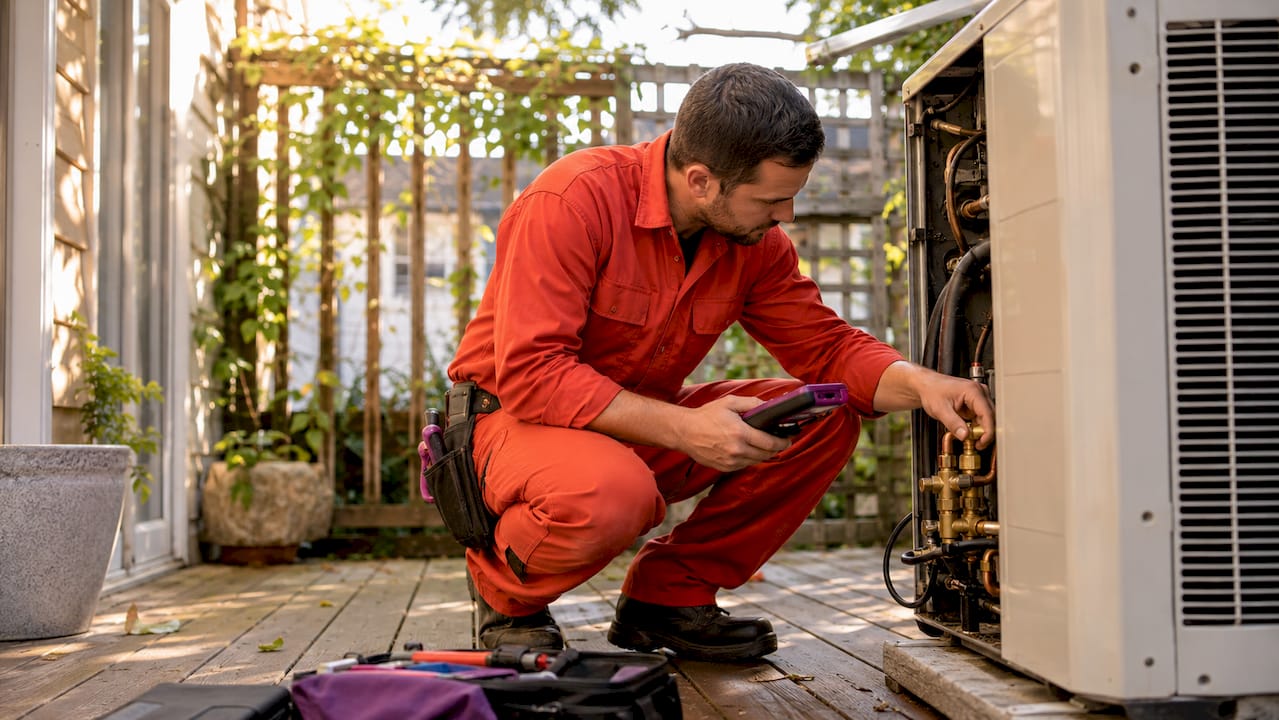
Sizing matters more than brand. Oversized heat pumps short-cycle frequently, which wastes energy, reduces lifespan, and dehumidifies poorly. A properly sized system runs longer cycles on the coldest days, which is exactly what you want.
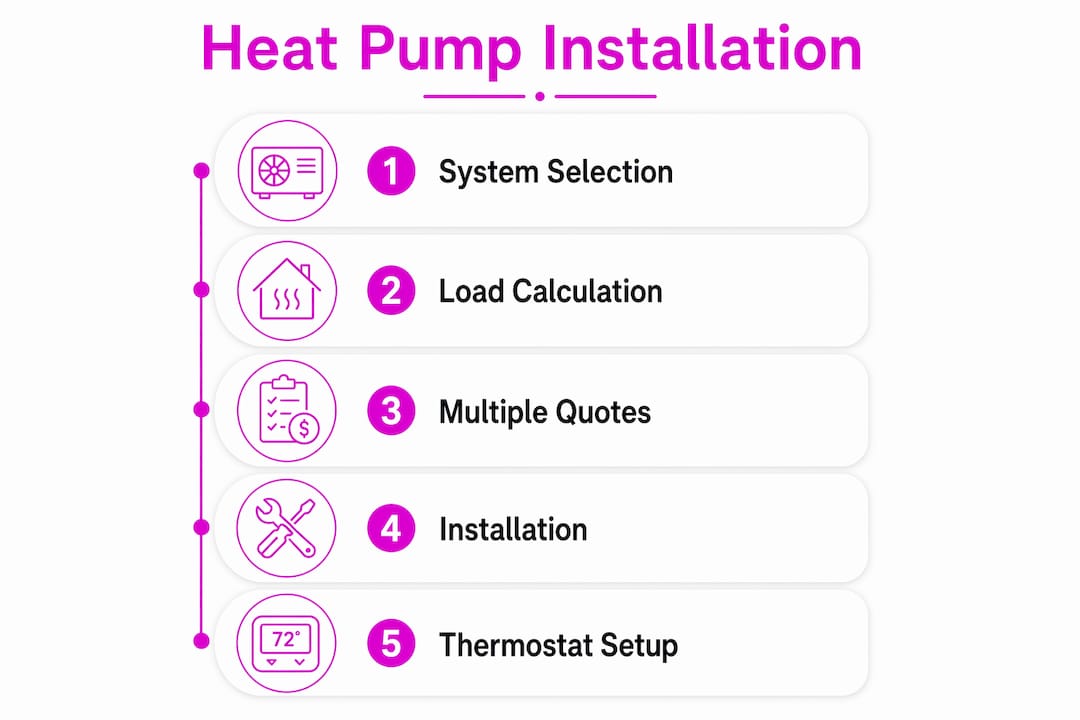
Step 2: Get multiple quotes and review contract details
Collect at least three written quotes. Each should include the specific model number, SEER2 and HSPF2 ratings, warranty terms, and a line-item breakdown of labor and materials. Compare the efficiency ratings directly. A higher HSPF2 number means lower heating costs every winter.
Step 3: Prepare your home before installation day
- Clear a 3-foot perimeter around the outdoor unit location
- Confirm electrical panel capacity (most heat pumps require a 240V dedicated circuit)
- Arrange for duct inspection or sealing if you have existing ductwork
- Notify your utility company if your state requires it for rebate processing
Step 4: Understand the installation process
A standard installation takes one to two days. The crew removes your old furnace or air handler, installs the new air handler and outdoor unit, connects refrigerant lines, and wires the system to your electrical panel. For ductless systems, technicians mount wall units in each zone and run refrigerant lines through small wall penetrations.
Step 5: Program your thermostat correctly after installation
Set your thermostat at a consistent temperature and leave it there. Frequent large temperature swings trigger the auxiliary electric resistance heat strips that most heat pumps include as a backup. Those strips are expensive to run and will erase your savings if activated regularly. A smart thermostat like an Ecobee or Nest, programmed with gradual setbacks rather than large drops, keeps the heat pump running efficiently.
Pro Tip: Set your thermostat no more than 2°F below your comfort target during setback periods. Larger drops force the system to recover using auxiliary heat, which costs significantly more per hour than the heat pump itself.
For homes considering a ductless heating system, the installation process is simpler and less invasive than a full ducted retrofit.
How to evaluate energy savings after you replace your old heating system
Tracking performance after installation confirms you are getting the savings you paid for.
What to measure every month:
- Total electricity consumption in kilowatt-hours (compare to the same month last year)
- System runtime hours (available on most smart thermostats)
- Average indoor temperature versus outdoor low temperature
- Any auxiliary heat activation events (Ecobee and Nest both log this)
What to expect based on your previous fuel:
Homeowners replacing propane or electric resistance heating can realistically save around $1,500 annually depending on climate and local utility rates. That figure from Consumer Reports reflects real-world performance across multiple climate zones, not laboratory conditions.
Signs your system is underperforming:
- Short run cycles of less than 10 minutes during moderate weather
- Auxiliary heat activating above 35°F
- Uneven temperatures between rooms
- Electricity bills that are higher than your pre-installation estimate
If you see any of these signs, call your installer for a refrigerant charge check and duct leakage test before assuming the equipment is defective.
Pro Tip: Download your utility’s hourly usage data for the first full heating season. Comparing hour-by-hour consumption on similar weather days before and after installation gives you the clearest picture of actual savings.
ENERGY STAR certification is your baseline benchmark. Any heat pump that carries the ENERGY STAR cold-climate label has been independently verified to meet minimum efficiency thresholds at low outdoor temperatures.
Heat pump vs. traditional heating: which system fits your home?
Not every home needs the same solution. The table below compares the four main configurations.
| System type | Best for | Efficiency | Upfront cost | Cold climate rating |
|---|---|---|---|---|
| Air-source ducted | Homes with existing ductwork | High (HSPF2 9–12) | Moderate | Good to -15°F with cold-climate models |
| Ductless minisplit | Homes without ducts, room additions | Very high | Moderate to high | Excellent to -25°F |
| Ground-source (geothermal) | Homes with land for ground loops | Highest | Very high | Excellent in all climates |
| Dual-fuel hybrid | Climate zones 5–7, existing gas lines | High in mild weather | Moderate | Best for extreme cold |
Dual-fuel setups pair a heat pump with a gas or oil furnace backup. The heat pump handles most of the season, and the furnace takes over only during extreme cold. This configuration is the recommended choice for climate zones 5 through 7, where temperatures regularly drop below -10°F for extended periods.
Ground-source heat pumps deliver the highest efficiency of any system, but the installation cost is substantially higher because of the ground loop excavation. For most suburban homeowners, an air-source cold-climate model with a variable-speed compressor delivers 85–90% of the efficiency benefit at roughly half the installation cost.
Ductless minisplits are the fastest-growing category in the Northeast. Brands like Mitsubishi Electric, Daikin, and LG offer cold-climate models that qualify for ENERGY STAR certification and most state rebate programs. If your home lacks ductwork, a minisplit is almost always the most cost-effective path forward.
Key takeaways
Switching to an energy efficient heat pump delivers 50–75% reductions in heating electricity use, but only when you choose the right system type, size it correctly, and operate it with consistent thermostat settings.
| Point | Details |
|---|---|
| Size correctly | Oversized units short-cycle and waste energy; always require a Manual J calculation. |
| Choose inverter-driven models | Variable-speed compressors cut operating costs and last longer than single-stage units. |
| Check incentives first | Federal and state rebates in 2026 can significantly reduce upfront installation costs. |
| Set thermostat consistently | Large temperature swings trigger costly auxiliary heat strips that erase your savings. |
| Match system to your home | Ductless minisplits suit homes without ductwork; dual-fuel hybrids suit extreme cold climates. |
What I have learned after years of heat pump installations
The single biggest mistake I see homeowners make is accepting whatever system the first contractor recommends without asking why. Most contractors default to equipment they stock, not necessarily the best fit for your home. Insist on a variable-speed inverter-driven compressor. If a contractor cannot explain the difference between a single-stage and a variable-speed unit, that tells you everything you need to know about their experience level.
Sizing is where I have seen the most money wasted. A system that is 20% too large will short-cycle all winter, wear out faster, and leave your home feeling clammy in summer. The Manual J calculation takes about an hour and costs nothing when bundled with a quote. There is no reason to skip it.
The thermostat behavior point is one most homeowners underestimate. I have seen well-installed, properly sized systems produce disappointing bills because the homeowner kept dropping the temperature at night by 8–10°F. The auxiliary strips kick on during recovery and run at three to four times the cost of the heat pump itself. Set it, leave it, and let the variable-speed compressor do its job.
Finally, check your rebates before you finalize any quote. The Inflation Reduction Act tax credits and state-level programs like New York’s Clean Heat rebate can change the math dramatically. A system that looks expensive before incentives can become the obvious choice after them.
Heat pumps are a long-term investment in both comfort and lower operating costs. The technology in 2026 is genuinely excellent. The main variable is the quality of the installation and the decisions you make before the crew arrives.
— Blake
Ready to switch? Hometsair can help Long Island homeowners
Hometsair serves Long Island homeowners with NATE-certified technicians who specialize in heat pump installation, including ductless minisplit systems built for coastal climates. Salt-air corrosion, older homes without ductwork, and tight installation windows are exactly the conditions Hometsair’s team handles every day. The company offers same-day response, zero overtime fees, and a 90% first-visit fix rate. If you are ready to get a quote or need expert advice on which system fits your home, visit Hometsair’s HVAC services page or call for 24-hour HVAC support on Long Island. Current promotions include $1,000 off AC installations, making this a strong time to act.
FAQ
How much can I save by switching to a heat pump?
Homeowners replacing propane or electric resistance heating can save around $1,500 annually depending on climate and utility rates. Savings vary based on your previous fuel type, local electricity costs, and how well the system is sized.
Do heat pumps work in cold climates like Long Island?
Modern ENERGY STAR cold-climate heat pumps operate at full capacity down to -15°F and provide heat down to -25°F. Long Island winters fall well within that range, making a cold-climate air-source or ductless minisplit system a practical choice without a furnace backup.
What is the best heat pump for a home without ductwork?
Ductless minisplit systems are the top choice for homes without existing ductwork. Brands like Mitsubishi Electric and Daikin offer cold-climate models that deliver zoned heating and cooling through wall-mounted units connected by small refrigerant lines.
Should I get a dual-fuel heat pump system?
Dual-fuel systems are recommended for climate zones 5 through 7, where temperatures regularly drop below -10°F for extended periods. If you live in a milder zone, a cold-climate air-source heat pump alone will handle the full heating season more cost-effectively.
How do I avoid activating expensive auxiliary heat strips?
Set your thermostat at a consistent temperature and limit setbacks to no more than 2°F. Large temperature drops force the system to recover quickly, which triggers the auxiliary electric resistance strips that cost significantly more per hour than the heat pump compressor.