
Why Coastal Properties Need HVAC Care Year-Round
Discover why coastal properties need HVAC care year-round. Protect your system from salt air damage and ensure efficient performance.
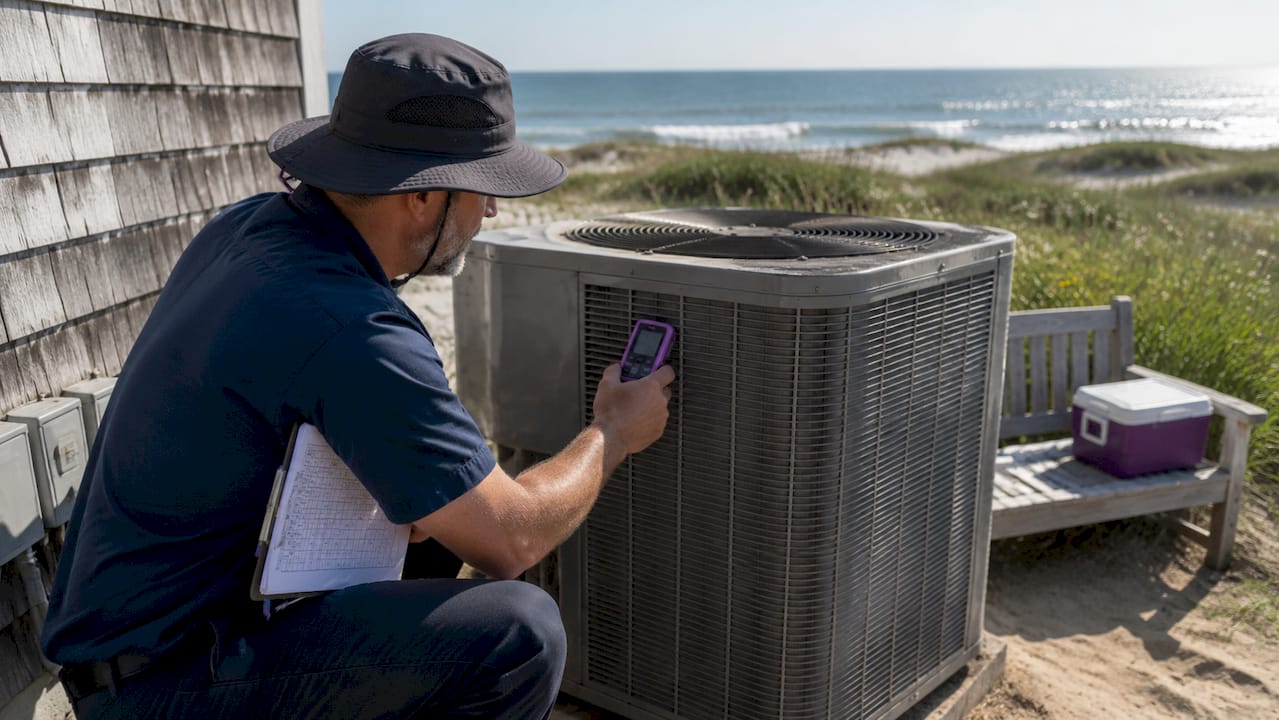
Why Coastal Properties Need HVAC Care Year-Round
Salt air and high humidity are the two most destructive forces an HVAC system faces, and coastal properties deal with both every single day. Understanding why coastal properties need HVAC care starts with one fact: salt particles travel up to 10 miles inland and trigger electrochemical corrosion on metal components the moment they land. That process runs silently for months before you notice any drop in performance. Coastal homeowners on Long Island and similar shoreline communities face accelerated wear that standard inland maintenance schedules simply cannot address. The good news is that the right approach, applied consistently, keeps your system running efficiently for years longer.
How does salt air affect HVAC systems in coastal homes?
Salt air corrosion is the primary reason HVAC maintenance for coastal homes looks different from any inland checklist. Salt particles combine with moisture and oxygen to create galvanic reactions on metal surfaces, eating through aluminum fins, copper tubing, and steel fasteners faster than any other environmental factor. The damage starts at the outdoor condenser unit, which sits fully exposed to wind-driven salt spray year-round.
The performance consequences show up before the physical damage becomes obvious. Corroded coil fins reduce heat transfer efficiency, which forces the system to run longer cycles to reach the same temperature. Longer runtime means higher energy bills and faster wear on the compressor and blower motor. Most coastal homeowners notice the utility bill spike before they ever see rust.
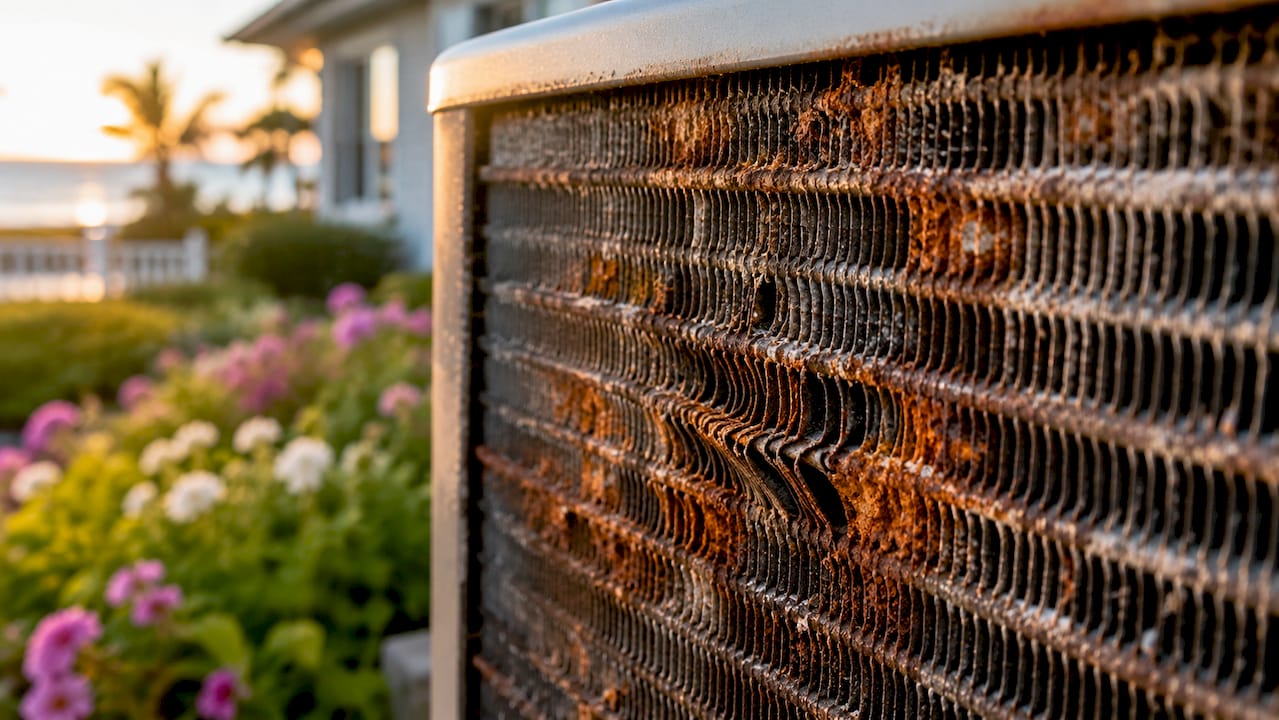
The lifespan impact is the number that should get your attention. Coastal HVAC units often last only 8–10 years when unprotected, compared to 15–20 years for equivalent inland systems. That is a gap of 3–5 years of usable life, which translates directly into early replacement costs. Protective coatings and frequent inspections are the two tools that close that gap.
The components that degrade first are predictable. Coil fins, condenser housing, and metal fasteners show the earliest signs of coastal degradation. Technicians who know coastal systems prioritize these areas during every inspection rather than following a generic checklist.
Key signs that salt corrosion is already affecting your system:
- White or rust-colored deposits on the outdoor unit housing
- Reduced airflow from the supply vents despite a clean filter
- Unusual sounds from the condenser, including rattling or grinding
- Higher-than-normal energy bills without a change in usage habits
- Visible pitting or discoloration on coil fins
Pro Tip: Rinse your outdoor condenser unit with a gentle stream of fresh water after any storm with strong onshore winds. Salt deposits left to dry on the coil accelerate corrosion significantly between professional visits.
Why is managing humidity critical for coastal HVAC performance?
Humidity management is as critical as temperature control in coastal HVAC systems. High coastal humidity creates a latent moisture load that the air conditioner must remove on top of cooling the air. That extra workload extends runtime and puts sustained stress on every moving part in the system.
The most common mistake coastal homeowners make is installing an oversized unit thinking bigger means better. An oversized air conditioner cools the space quickly and shuts off before it has run long enough to pull moisture out of the air. The result is a room that feels cold but clammy. That short cycling pattern also hammers the compressor with repeated hard starts, which is one of the most expensive failure modes in any HVAC system.
Correct system sizing for a coastal property accounts for the latent load, not just the square footage. A properly sized unit runs longer, steadier cycles that remove humidity effectively and keep indoor air genuinely comfortable. In homes with particularly high moisture exposure, a dedicated whole-home dehumidifier installed alongside the HVAC system gives you independent control over humidity without forcing the air conditioner to carry the full burden.
The risks of poor humidity management in coastal homes include:
- Clammy indoor air even when the thermostat reads a comfortable temperature
- Mold and mildew growth in ductwork, walls, and ceiling cavities
- Warped wood floors, swollen door frames, and peeling paint
- Accelerated corrosion inside the air handler from condensation buildup
- Persistent musty odors that no amount of air freshener resolves
Systems that do not run long enough fail to control moisture, harming both comfort and equipment life. Getting sizing right from the start is the single most cost-effective decision a coastal homeowner can make.
What does a coastal HVAC maintenance schedule look like?
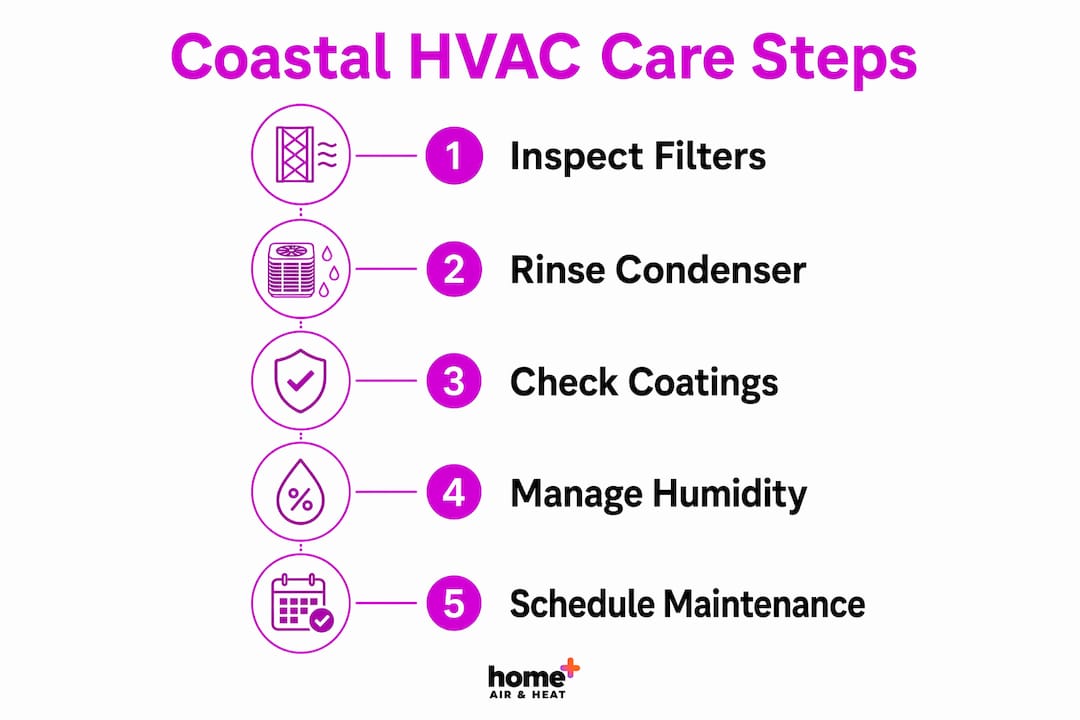
A coastal maintenance schedule is more frequent and more specific than what most HVAC guides recommend. Maintenance frequency should scale with proximity to the coast rather than follow a fixed inland calendar. A home one block from the water needs different attention than one five miles away.
The core tasks and their recommended frequency for coastal properties:
- Filter inspection and replacement: Check filters every 30–45 days during peak season. Salt particles and humidity cause filters to clog faster than inland homes, and a clogged filter forces the system to work harder across every component.
- Outdoor coil rinsing: Monthly rinsing with fresh water under gentle pressure removes salt deposits before they bond to the coil surface. After any major storm, rinse immediately.
- Professional tune-up: Schedule at minimum twice yearly. Homes within a quarter mile of the water benefit from quarterly professional visits.
- Condensate drain line clearing: Clogged drains from algae, salt residue, or sand cause indoor moisture buildup and odors. Clear the drain line at every professional visit.
- Electrical component inspection: Salt moisture accelerates corrosion on contactors, capacitors, and wiring terminals. A technician should inspect and clean these at every tune-up.
- Protective coating reapplication: Coatings wear over time. Inspect coating integrity annually and reapply as needed to maintain the barrier between salt air and metal surfaces.
| Maintenance Task | Frequency for Coastal Homes | Frequency for Inland Homes |
|---|---|---|
| Filter check | Every 30–45 days | Every 60–90 days |
| Outdoor coil rinse | Monthly, after storms | Seasonally |
| Professional tune-up | Twice yearly minimum, quarterly near water | Once yearly |
| Drain line clearing | Every professional visit | Once yearly |
| Protective coating check | Annually | Every 2–3 years |
Pro Tip: Set a phone reminder on the first of each month to visually inspect your outdoor unit. You do not need to be a technician to spot rust streaks, bent fins, or debris buildup that warrants a call.
How to choose and protect HVAC equipment for coastal properties?
Equipment selection is the foundation of long-term coastal HVAC performance. Standard residential units are not built for salt air exposure. Coastal-rated systems feature factory-applied coated coils, corrosion-resistant metals, and sealed electrical compartments that provide meaningful protection from the start.
Protective coatings prevent salt and moisture contact with the underlying metal, restoring expected equipment lifespan closer to inland standards. Coatings applied to the condenser coil and housing create a physical barrier that slows the galvanic reaction salt particles initiate. For existing equipment, aftermarket coating applications from a qualified technician deliver similar protection.
Placement matters as much as the equipment itself. Positioning the outdoor unit on the side of the home least exposed to prevailing onshore winds reduces direct salt spray contact. A physical barrier like a louvered fence or shrub screen can further reduce exposure without restricting airflow. Never place the unit in a fully enclosed space, since adequate airflow is non-negotiable for condenser performance.
| Feature | Coastal-Rated Unit | Standard Residential Unit |
|---|---|---|
| Coil coating | Factory-applied corrosion-resistant coating | None standard |
| Cabinet material | Galvanized or powder-coated steel | Standard steel |
| Electrical compartment | Sealed against moisture intrusion | Basic cover |
| Expected coastal lifespan | Closer to 15 years with maintenance | 8–10 years unprotected |
| Recommended for beachfront | Yes | No |
Salt-air corrosion is a gradual process that reduces performance before visible damage appears. Choosing the right equipment and applying protective measures from day one is far less expensive than replacing a corroded system five years ahead of schedule.
Key Takeaways
Coastal properties require more frequent, more specific HVAC maintenance than inland homes because salt air and humidity accelerate corrosion, shorten equipment life, and raise energy costs without warning.
| Point | Details |
|---|---|
| Salt air shortens HVAC lifespan | Unprotected coastal units last 8–10 years versus 15–20 years inland. |
| Humidity sizing matters | Oversized units short cycle and fail to dehumidify, causing wear and discomfort. |
| Filters need monthly checks | Coastal salt and humidity clog filters faster; check every 30–45 days in peak season. |
| Protective coatings extend life | Factory or aftermarket coatings block salt contact and restore expected equipment lifespan. |
| Drain lines need regular clearing | Salt, algae, and sand clog condensate drains and cause indoor moisture and odor problems. |
What I have learned from watching coastal HVAC systems fail
The homeowners I see with the worst HVAC problems are not the ones who skipped one tune-up. They are the ones who treated their coastal system like an inland system for three or four years straight. By the time the compressor fails or the coil corrodes through, the repair bill is often close to the cost of a full replacement. That is a painful and completely avoidable outcome.
The two things coastal homeowners most consistently overlook are the condensate drain and the filter. The drain line gets ignored because it is out of sight. A blocked drain quietly allows moisture to back up into the air handler, creating the perfect environment for mold growth inside the system itself. The filter gets stretched past its useful life because changing it monthly feels excessive. It is not. A dirty filter in a coastal home is not just an air quality issue. It is a system stress issue that compounds every other problem.
My honest advice is to treat your HVAC maintenance schedule the same way you treat your car’s oil change. You do not wait until the engine starts knocking. You follow the schedule because prevention is always cheaper than repair. For coastal properties, that schedule is simply more frequent. Commit to it, and your system will outlast the neighbors’ by years.
— Blake
Hometsair brings coastal HVAC expertise to Long Island homeowners
Coastal HVAC care requires local knowledge, not just a standard service call. Hometsair’s NATE-certified technicians specialize in the salt air and humidity challenges specific to Long Island’s shoreline communities, from Atlantic Beach to Bayville.

Hometsair offers customized maintenance schedules built around your property’s actual coastal exposure, professional protective coating applications, condensate drain clearing, and coil inspections at every visit. With a 90% first-visit fix rate, zero overtime fees, and same-day response, you get reliable service without surprises on the bill. Current promotions include $1,000 off AC installations for qualifying systems. Schedule your coastal HVAC inspection with Hometsair and protect your system before salt air does the damage for you.
FAQ
How does salt air damage HVAC systems?
Salt particles combine with moisture and oxygen to create galvanic corrosion on metal coil fins, fasteners, and condenser housings. This process accelerates component failure and reduces system efficiency before visible damage appears.
How often should coastal homeowners change HVAC filters?
Coastal homeowners should inspect and replace filters every 30–45 days during peak season. Salt particles and humidity cause filters to clog significantly faster than in inland environments.
Do I need a special HVAC unit for a beachfront property?
Coastal-rated units with factory-applied coil coatings and corrosion-resistant materials are strongly recommended for beachfront properties. Standard residential units without protective coatings typically last only 8–10 years in salt air environments.
What is the most overlooked coastal HVAC maintenance task?
Condensate drain line clearing is the most commonly skipped task. Salt residue, algae, and sand block the drain and cause indoor moisture buildup, mold growth, and persistent odors inside the system.
Can protective coatings be applied to an existing HVAC unit?
Yes. A qualified technician can apply aftermarket protective coatings to the condenser coil and housing of an existing unit. These coatings slow corrosion and extend equipment life even if the unit was not originally built for coastal exposure.