
Key Takeaways
- A professional AC tune-up is a 21-point inspection, cleaning, and calibration process — not just a filter change
- Annual maintenance prevents 80% of AC breakdowns and reduces cooling costs by 10-30%
- Home+ Comfort members get 2 annual tune-ups (AC + furnace) for $299/yr — less than the à-la-carte cost of two visits
- Skipping tune-ups voids most manufacturer warranties and shortens system lifespan by 3-7 years
- Schedule AC tune-ups in March–May and furnace tune-ups in September–November for peak-season readiness
01Why Annual AC Tune-Ups Are Non-Negotiable on Long Island
Your air conditioner is a mechanical system that runs 1,000+ hours every summer. Without regular maintenance, it loses efficiency, develops problems, and becomes far more likely to fail during the first 90°F day in July — exactly when every HVAC contractor in Nassau County is already booked solid.
Here's what the data shows:
- 80% of AC failures are preventable with maintenance. Worn capacitors, low refrigerant, dirty coils, and clogged drains are caught during a tune-up — before they leave you without cooling on a 95°F Saturday.
- Well-maintained systems last 3-7 years longer. A central AC that should last 15–20 years often fails at 12 because of neglected maintenance. That's a $6,500–$15,000 replacement you could have delayed.
- Clean systems use 10-30% less electricity. Dirty condenser coils and restricted airflow force your compressor to work harder. On a typical PSEG-LI summer bill of $200–$350/month, that's $240–$1,050 in annual savings.
- Manufacturer warranties require proof of maintenance. Most major brands (Trane, Carrier, Lennox, American Standard) require annual professional maintenance to keep parts warranties valid. Skip a tune-up and a failed compressor becomes your $1,800 problem, not theirs.
On Long Island, where summer humidity averages 72% and coastal salt air accelerates corrosion, maintenance isn't a nice-to-have — it's essential for reliable cooling and long equipment life.
02The Home+ 21-Point AC Tune-Up Checklist
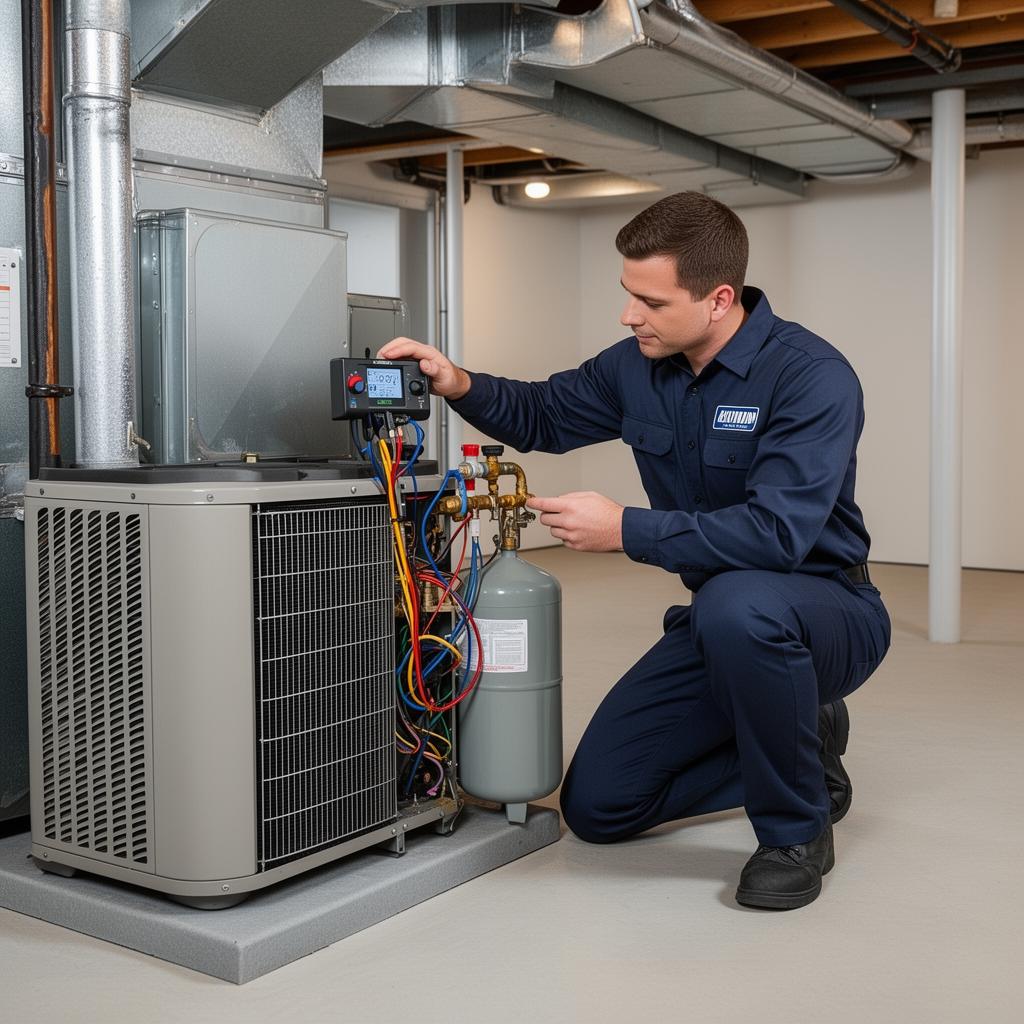
Our certified technicians follow a comprehensive checklist on every AC tune-up. Here's exactly what happens during your annual service visit:
1. System Performance Assessment
We start by evaluating how your AC is currently running — cooling capacity, cycle times, and any homeowner-reported concerns. This establishes a baseline before we touch anything.
2. Thermostat Calibration & Programming
We verify your thermostat is reading accurately (±1°F), check programmed schedules, and confirm it properly communicates with the control board. A miscalibrated thermostat can cause 5-10% energy waste.
3. Electrical Connection Inspection
All wiring, terminals, and junctions are checked for corrosion, looseness, and heat damage. Loose electrical connections are a top cause of compressor failures and fire hazards.
4. Capacitor Testing
Start and run capacitors are tested with a multimeter. Capacitors lose capacity over time — a weak capacitor stresses the compressor and is the #1 cause of summer emergency calls.
5. Contactor Inspection
The contactor (the high-voltage switch that powers the compressor) is inspected for pitting, carbon buildup, and coil resistance. A failing contactor causes intermittent cooling or total failure.
6. Compressor Amp Draw
We measure the compressor's current draw and compare it to manufacturer specs. Elevated amp draw indicates mechanical wear, refrigerant problems, or electrical issues.
7. Condenser Coil Cleaning
The outdoor condenser coils are thoroughly cleaned to remove dirt, pollen, grass clippings, and salt residue. Dirty coils can reduce efficiency by 30% or more.
8. Evaporator Coil Inspection
The indoor evaporator coil is inspected for dirt buildup, mold, and frost patterns. Restricted airflow here causes ice formation and poor dehumidification.
9. Refrigerant Level Check
System pressures and temperatures are measured to verify proper refrigerant charge. Low refrigerant indicates a leak that needs repair — not just a top-off.
10. Refrigerant Line Inspection
Suction and liquid lines are checked for insulation damage, kinks, and oil spots (which indicate leaks). Properly insulated lines maintain efficiency and prevent condensation damage.
11. Blower Motor & Fan Inspection
The indoor blower motor and outdoor fan motor are tested for proper amp draw, bearing wear, and vibration. Worn bearings are a common source of unusual noise.
12. Fan Blade & Housing Check
Outdoor fan blades are inspected for cracks, chips, and balance issues. An unbalanced blade damages bearings and reduces airflow across the condenser.
13. Condensate Drain Line Cleaning
The drain line is flushed and treated to remove algae, mold, and blockages. Clogged drains are the #1 cause of water damage and indoor humidity problems.
14. Drain Pan Inspection
The condensate drain pan is checked for cracks, corrosion, and proper slope. A cracked pan in an attic air handler can cause thousands in ceiling damage.
15. Air Filter Inspection
We inspect the air filter and replace it if needed (basic filter provided; upgrade filters available). A clogged filter is the single most common cause of preventable AC problems.
16. Ductwork Inspection
Accessible ductwork is inspected for disconnections, crushed sections, and visible leaks. Duct leakage can waste 20-30% of your cooling capacity before it ever reaches your rooms.
17. Return Air Path Verification
We verify return air pathways are unobstructed. Blocked returns starve the system of airflow and cause icing, short cycling, and compressor damage.
18. Temperature Split Testing
We measure the temperature difference between supply and return air. A healthy system should deliver a 15-20°F split. Lower readings indicate airflow, refrigerant, or coil problems.
19. System Controls & Safety Testing
All safety switches, pressure controls, and limit switches are tested. These devices protect your system from damage — but only if they work.
20. Complete Cooling Cycle Test
The system is run through a full cooling cycle while we monitor pressures, temperatures, and electrical draws. This confirms everything works together properly under load.
21. Written Report & Recommendations
You receive a complete written report with findings, photos of any concerns, and honest recommendations. No pressure — just facts so you can plan ahead.
Need professional help?
Nassau County service · Written scope and pricing · Scheduling confirmed by dispatch
03How Long Does an AC Tune-Up Take?
A thorough professional AC tune-up takes 45–90 minutes depending on system condition and accessibility. Here's the typical breakdown:
- Standard split system (15 min): 45–60 minutes
- Attic air handler or tight crawlspace: 60–75 minutes
- Older system requiring extra attention: 75–90 minutes
- Premium 38-point inspection: 90–120 minutes
Be wary of "tune-ups" that take 20 minutes. That's usually a quick visual glance and a filter change — not the comprehensive maintenance your system needs. A proper tune-up requires testing equipment, cleaning tools, and time to evaluate every component.
04What You Can Do Yourself vs. What Requires a Pro
Homeowners can safely handle a few basic maintenance tasks between professional visits:
- Change the air filter — Every 1-3 months during cooling season. Check monthly.
- Clear debris around the outdoor unit — Maintain 2+ feet of clearance. Remove leaves, grass, and vegetation.
- Check the thermostat batteries — Replace annually before cooling season.
- Listen for unusual sounds — New noises are early warnings. Note them for your technician.
Everything else on the 21-point checklist requires specialized tools, training, and safety knowledge. Refrigerant handling requires EPA certification. Electrical testing requires understanding of high-voltage systems. Coil cleaning requires chemicals and pressure equipment that can damage fins if used incorrectly.
Bottom line: DIY maintenance helps, but it doesn't replace professional service. Think of it like brushing your teeth — necessary daily, but not a substitute for the dentist.
Get a Quick Callback
No email required — we'll call you.
05When to Schedule Your AC Tune-Up on Long Island
Timing matters. In Nassau County, the HVAC market follows a predictable seasonal rhythm:
- March–May (ideal): Technicians are available, parts are in stock, and you'll beat the first heat wave. Schedule now and you're protected before demand spikes.
- June: The first 85°F day creates a 48–72 hour booking backlog. If your system struggled last summer, don't wait.
- July–August: Peak season. Same-day tune-ups are nearly impossible. Emergency repairs take priority over maintenance.
- September: Late-season tune-ups are fine, but if a problem is found, you may be scheduling repairs during the busy fall heating rush.
We recommend pairing your AC tune-up with a fall furnace tune-up — which is exactly what Home+ Comfort and Infinite memberships include.
AC trouble during hot weather?
Call to confirm current repair availability or request written maintenance terms.
(516) 259-119106Membership vs. À-La-Carte: The Real Math
Let's compare the actual costs for a typical Nassau County homeowner with one central AC and one furnace:
À-La-Carte Pricing
- AC tune-up: $299
- Furnace tune-up: $299
- One diagnostic during the year: $199
- One standard repair with 10% member discount applied retroactively: ~$350 vs. $315 (saves $35 if you had been a member)
À-la-carte total: $847+
Home+ Comfort Membership
- 2 annual tune-ups (AC + furnace): Included
- Diagnostic fee: $0 (waived)
- Repair discount: 10% off all parts and labor
- Priority scheduling: Included
- 24/7 member support line: Included
Comfort membership cost: $299/yr (about $24.99/mo)
That's a $548+ annual savings — and that's before counting the 10% repair discount on any work you need. If you need even one repair, Comfort pays for itself. Over 98% of our Comfort members renew.
Home+ Infinite Membership
For homeowners with aging systems or those who want maximum protection, Infinite ($2,999/yr) includes everything in Comfort plus:
- 15% off all repairs (vs. 10%)
- $2,000 annual service credit toward any repair or replacement
- $1,000/yr stacking replacement credit — up to $10,000 over 10 years
- Priority emergency response
- No overtime charges — ever
Infinite is designed for homeowners planning a system replacement in the next 3-10 years. The stacking credit alone can cover a significant portion of a new high-efficiency system.
07What Happens If You Skip Annual AC Maintenance
Neglecting your AC doesn't cause immediate failure — it causes gradual degradation that compounds year after year. Here's the typical progression:
- Year 1 without maintenance: Efficiency drops 5-10%. You notice slightly higher electric bills but nothing dramatic. The system still cools.
- Year 2: Efficiency drops 15-20%. Coils are visibly dirty. The compressor runs longer and hotter. Capacitor shows wear. You might notice one room isn't as cool.
- Year 3: Efficiency down 25-30%. Refrigerant may be low from a slow leak. Drain line is partially clogged. Blower motor bearings are noisy. The system runs constantly on hot days.
- Year 4+: Compressor failure, major refrigerant leak, or motor burnout becomes likely. What would have been a $299 tune-up is now a $1,200–$3,500 repair — or a full system replacement.
Annual maintenance interrupts this cycle. Every tune-up resets your system to peak efficiency and catches problems while they're still small.
Frequently Asked Questions
Home+ Team
Home+ Air and Heat editorial team
Service articles are reviewed against current company pricing, coverage and scheduling terms. Technician credentials are confirmed for the person and work assigned to each appointment.
Continue Reading
AC Repair Cost on Long Island: 2026 Pricing Guide
Wondering what AC repair costs on Long Island? Get real pricing data for common repairs — from capacitor swaps to compressor replacements — plus tips to avoid overpaying.

Same-Day AC Repair on Long Island: Availability, Cost and What to Ask
Same-day AC repair depends on current capacity, location, equipment and demand. Learn what dispatch needs, what the visit includes and which terms to confirm.
What Size AC Do I Need? Long Island Sizing Guide (Manual J Explained)
Wondering what size central AC or heat pump your Long Island home needs? Learn how Manual J load calculations work, why square-footage rules of thumb fail, and the sizing factors that actually matter on Nassau and Suffolk County homes.
Need help with the next HVAC step?
Call to confirm service-area fit, equipment capability, written terms and current scheduling.
5.0 Google rating · 94 reviews