
Key Takeaways
- A ductless mini split doesn't have to be an eyesore — placement, color match, and trim work let it disappear into almost any interior style
- The most photogenic installs share three rules: mount it high (7'+ from the floor), align it with architectural lines (windows, beams, trim), and pick the slimmest profile head you can afford
- Ceiling cassettes and concealed-duct units are nearly invisible — ideal for finished basements, primary suites, and minimalist rooms where a wall head would clash
- Across Scandinavian, Japandi, modern farmhouse, mid-century, and transitional styles, the design playbook is the same: treat the head like architectural trim, not equipment
01The 2026 Design Playbook for Mini Splits
Ductless mini splits are no longer the awkward white box your contractor talked you into. The 2026 design movement is treating the indoor head as architectural trim — aligned with windows, integrated above doorways, or replaced entirely by ceiling cassettes and concealed-duct heads that vanish into the ceiling plane.
Below are eight rooms — across Scandinavian, Japandi, modern farmhouse, mid-century, transitional, and coastal styles — that get the design right. For each, we've noted the placement principle that makes it work and the head type that fits the look.
021. Scandinavian Minimalist Living Room
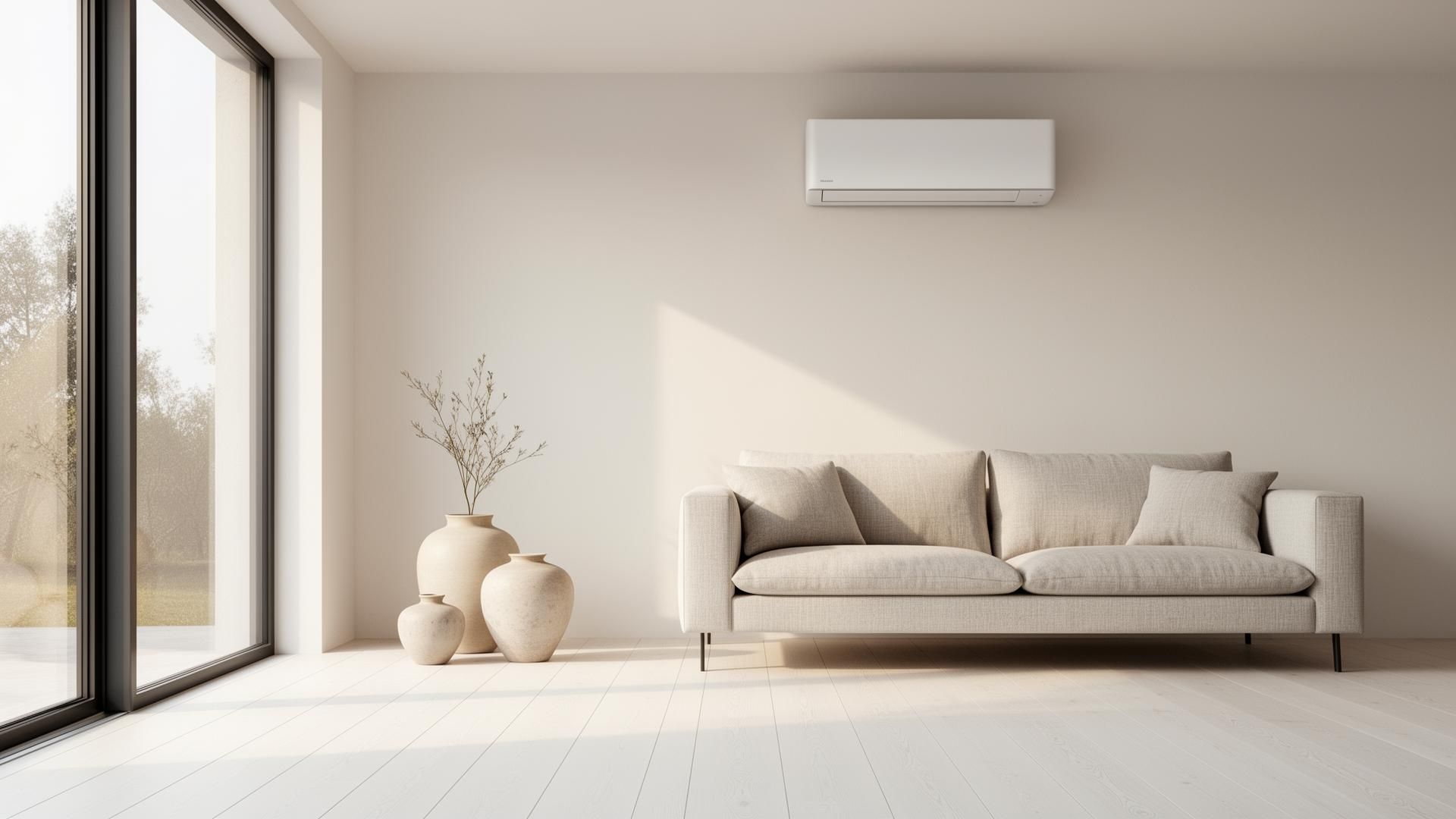
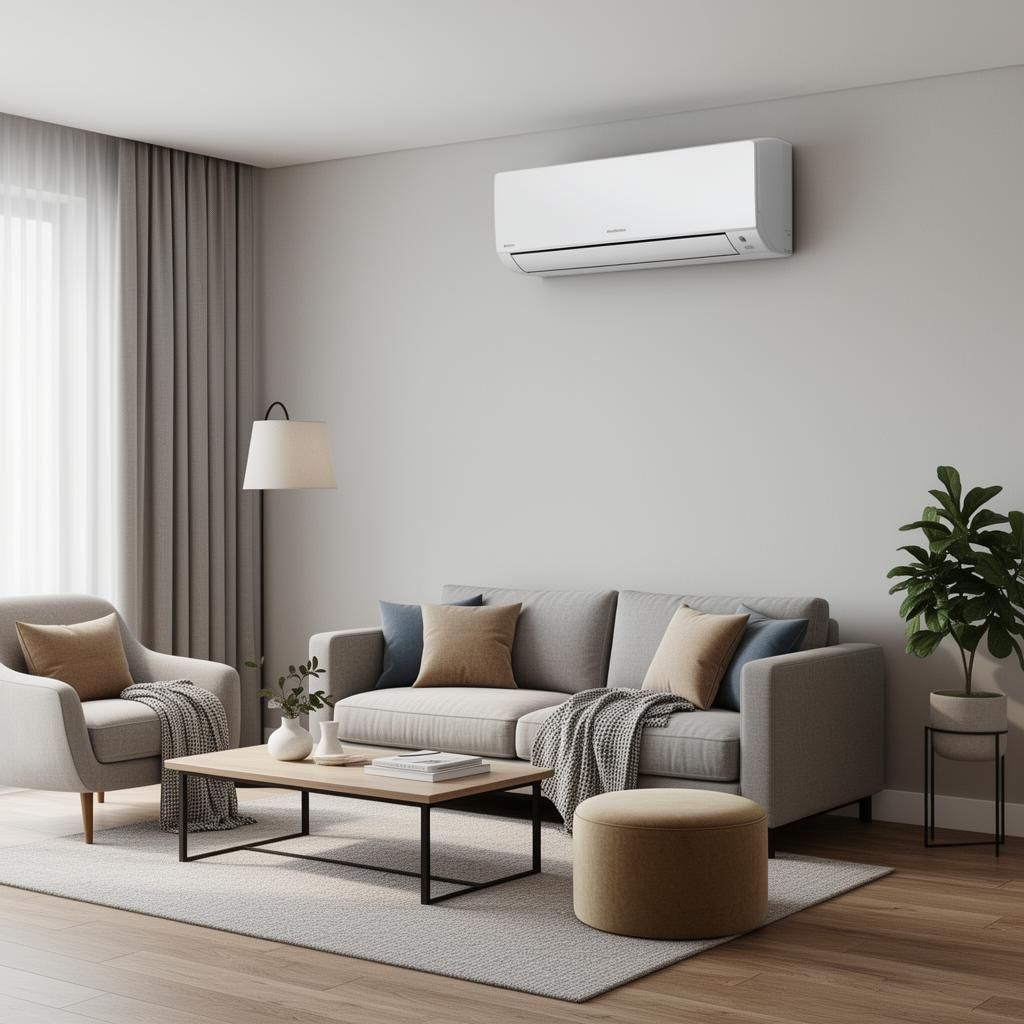
Why it works: The unit is mounted high (about 7 feet up), centered on a single wall, and color-matched to the wall paint. In a Scandinavian palette of cream, warm white, and pale gray, a glossy white head reads as part of the architecture — not equipment.
Recommended head type: Slim-profile wall mount (Mitsubishi MSZ-FS, Daikin Emura, or LG Art Cool Premier).
Need professional help?
Nassau County service · Written scope and pricing · Scheduling confirmed by dispatch
032. Japandi Bedroom
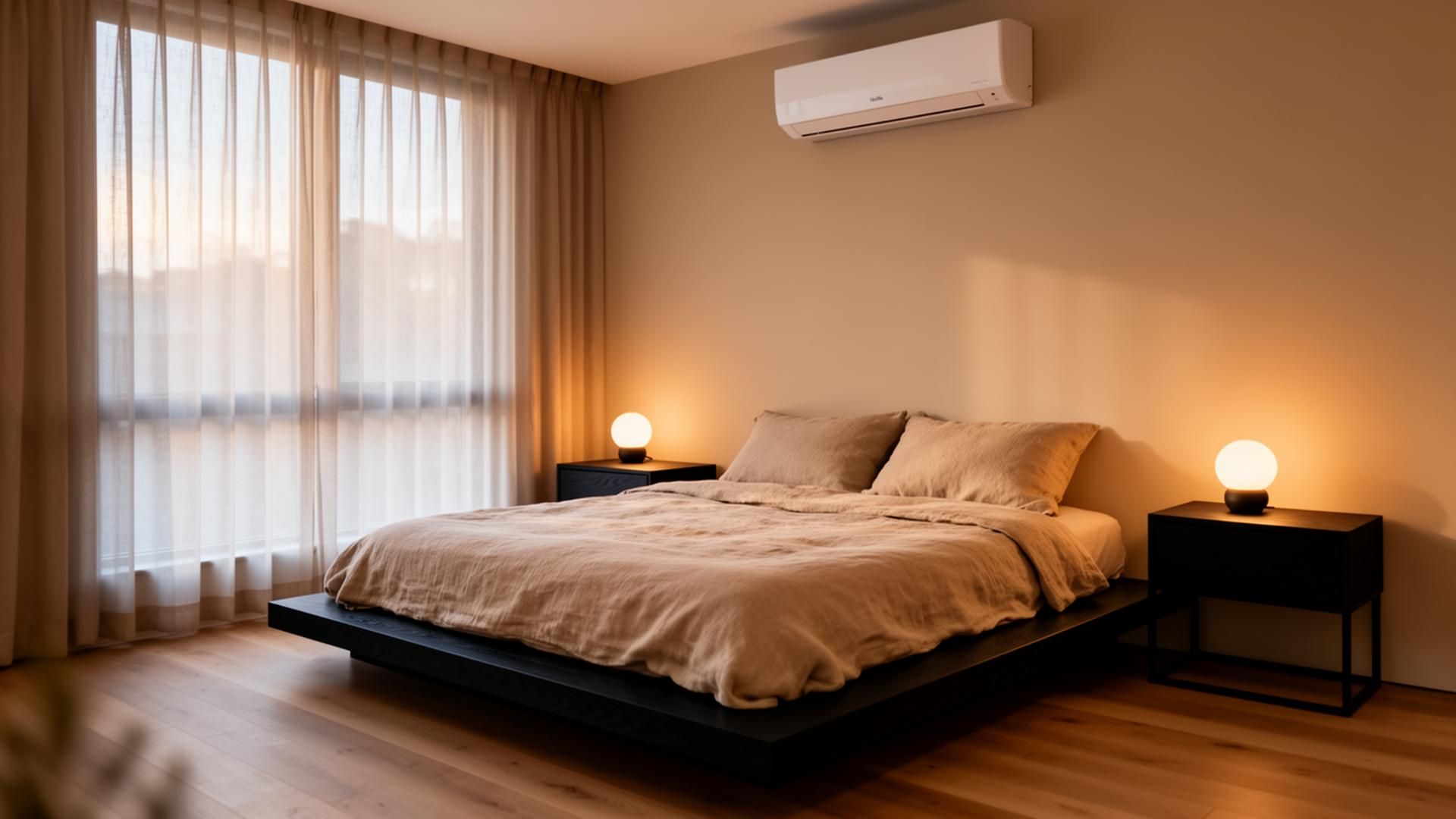
Why it works: Mini splits belong above the bed, not opposite — direct airflow on a sleeping body wakes you up. Mounting high on the headboard wall lets cool air drift down across the room without blowing on you.
Recommended head type: Standard slim wall head with whisper mode (under 19 dBA at low fan).
043. Modern Farmhouse Sunroom Office
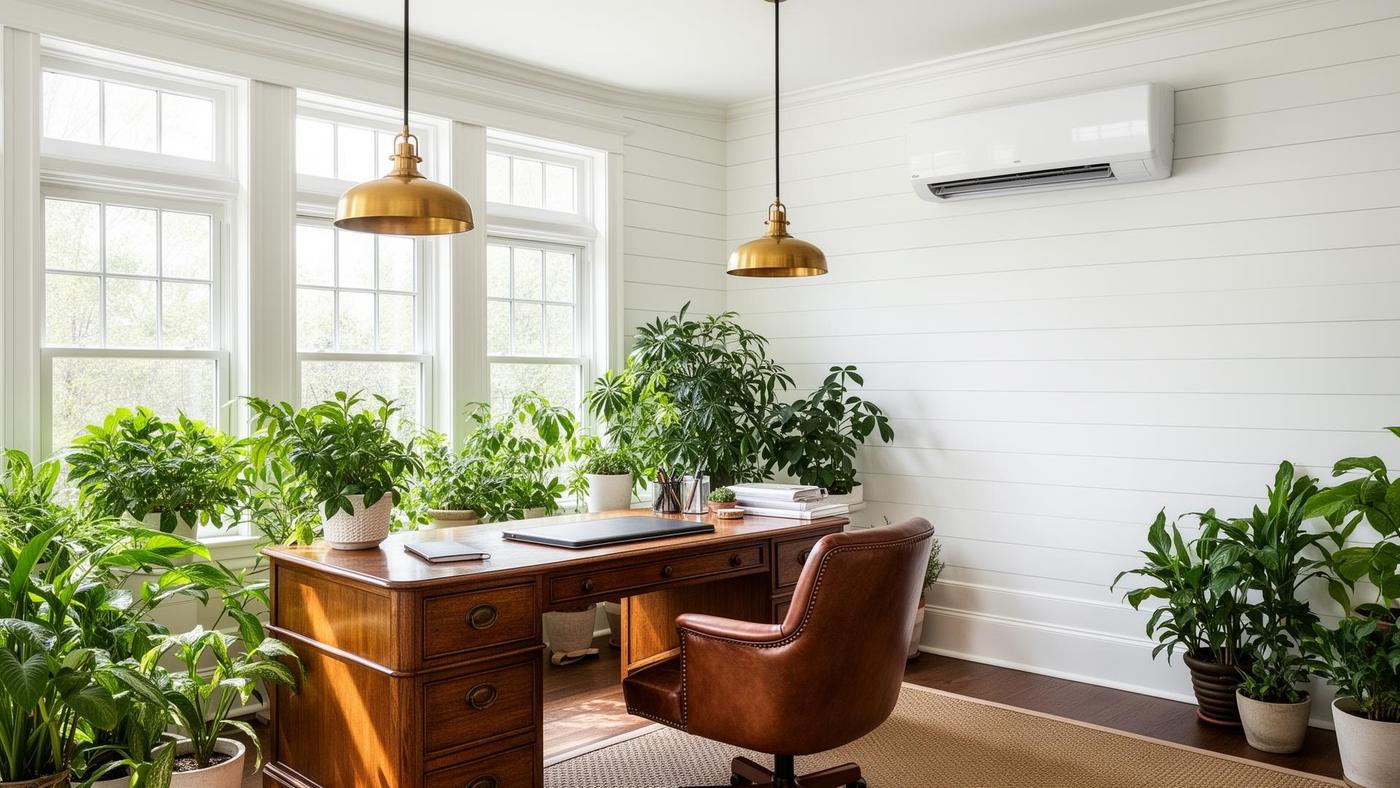
Why it works: A white wall head against white shiplap is the easiest disappearing act in HVAC. Sunrooms also need a mini split — they're typically uninsulated and impossible to cool with central air. This is the highest-ROI install on the list.
Recommended head type: Single-zone slim wall head sized for the sunroom's BTU load (usually 9k–12k BTU).
Get a Quick Callback
No email required — we'll call you.
054. Finished Basement with Ceiling Cassette
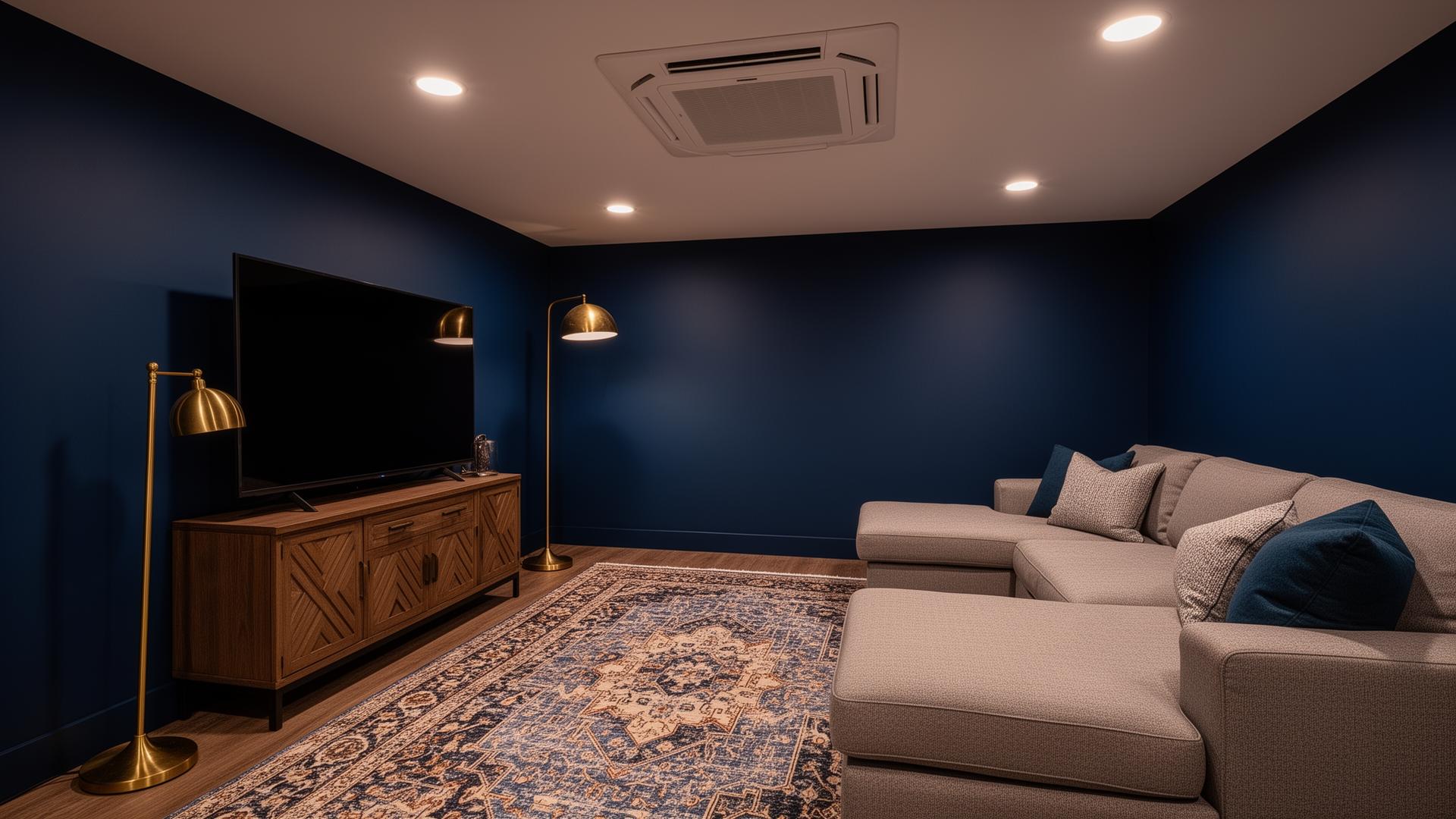
Why it works: Finished basements with rich wall colors (navy, forest green, plum) make a white wall head jump out. A 4-way ceiling cassette mounts flush with the drop ceiling and is barely noticeable from across the room.
Recommended head type: 4-way ceiling cassette (Mitsubishi PLA, Fujitsu AUUA, Daikin FCQ).
AC trouble during hot weather?
Call to confirm current repair availability or request written maintenance terms.
(516) 259-1191065. Vaulted Attic Primary Suite
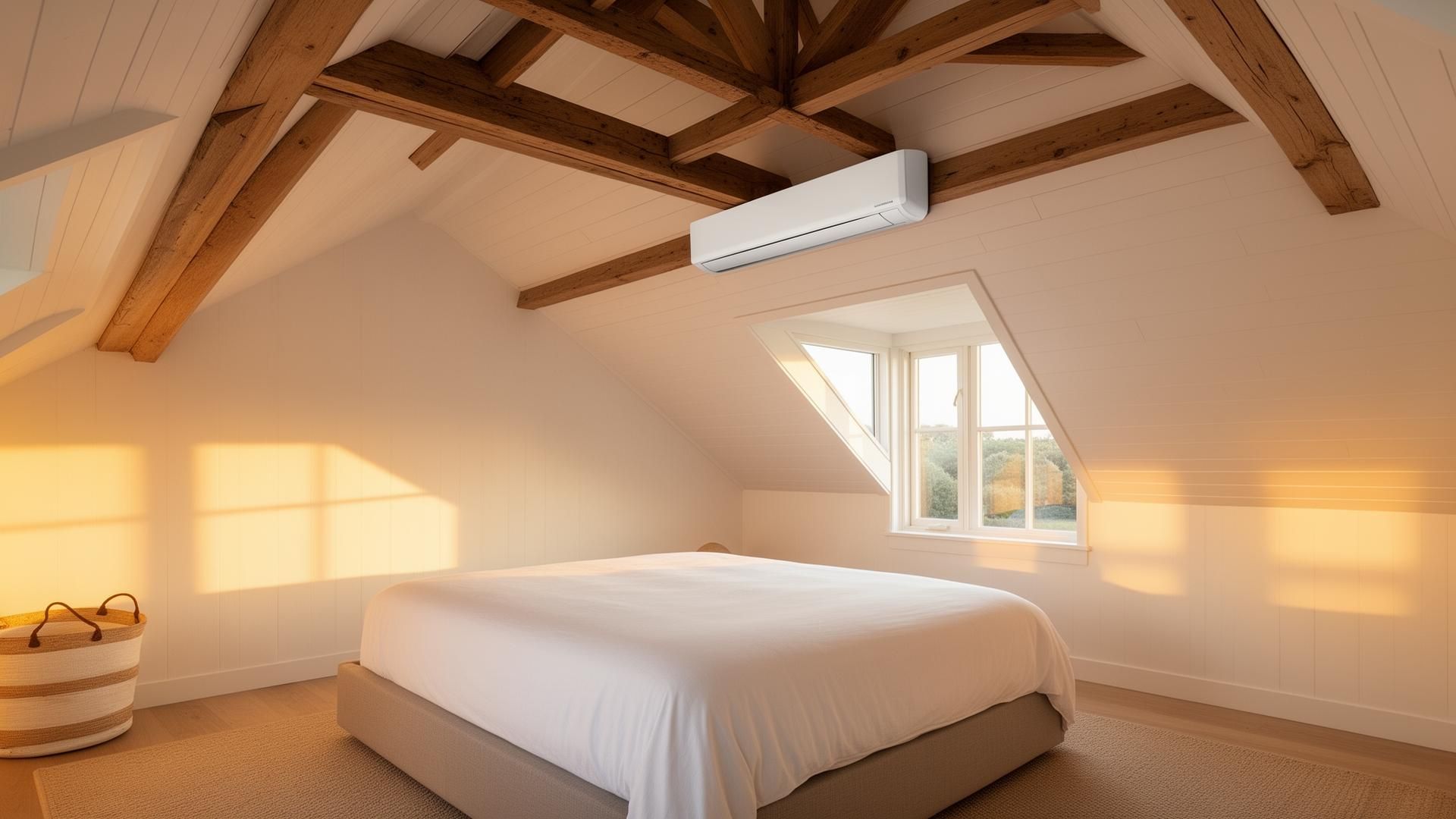
Why it works: Attics are notoriously hot and impossible to duct. By installing the head between the existing beam structure, the unit becomes part of the rhythm of the ceiling instead of fighting it.
Recommended head type: Slim wall head, or — for the most premium look — a concealed-duct horizontal head feeding two slot diffusers between the beams.
076. Backyard ADU / Garage Conversion
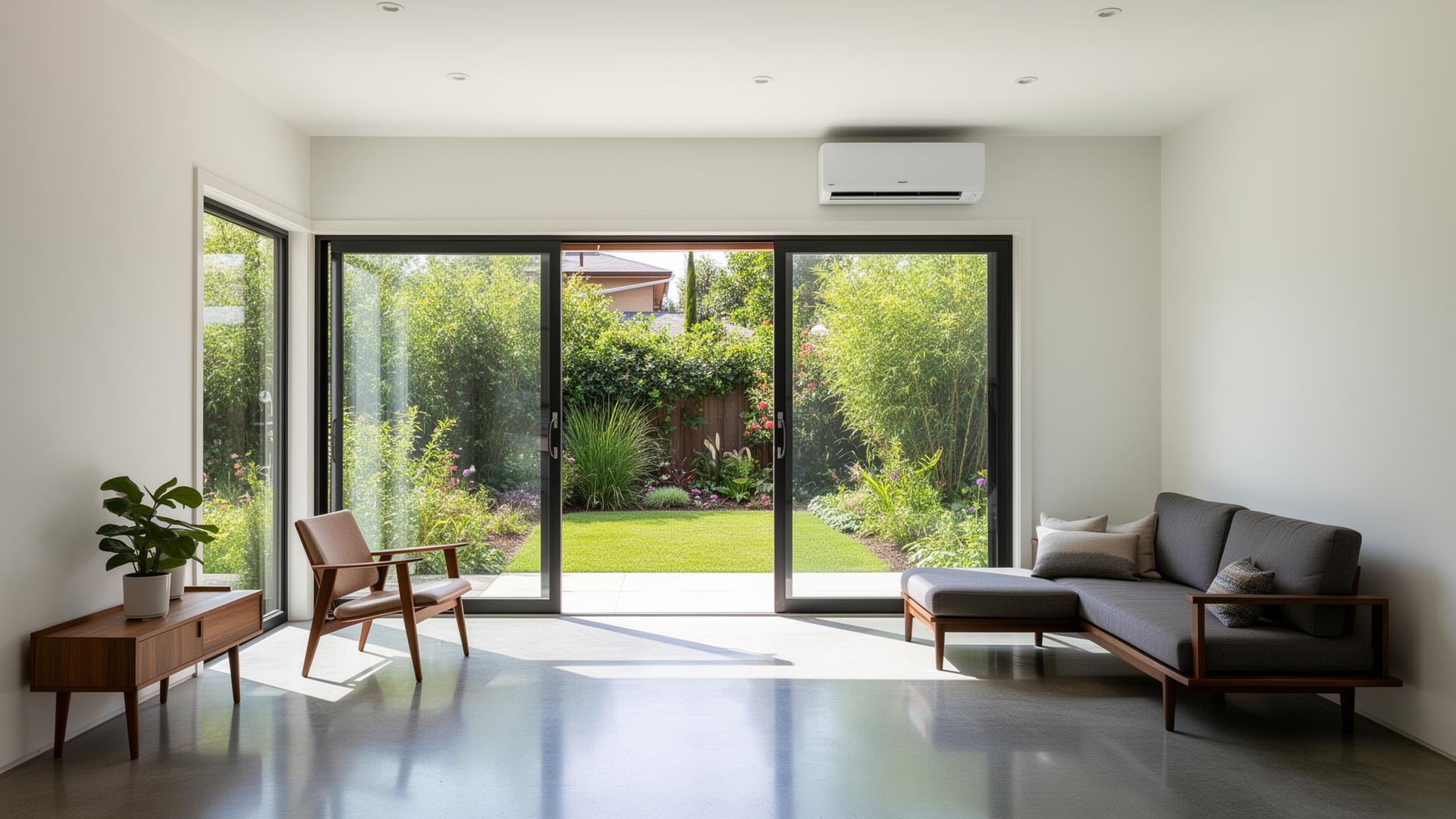
Why it works: Backyard ADUs, garage conversions, and pool houses are the highest-growth use case for ductless. A single 12k or 18k BTU head handles heating and cooling year-round in 400–800 sq ft, which is why this category exploded in 2024–2025.
Recommended head type: Single-zone heat pump rated to at least 5°F operating temperature.
🔧 Do You Need AC Repair?
Answer 5 quick questions
Is your AC blowing warm air?
087. Cheerful Kids' Bedroom
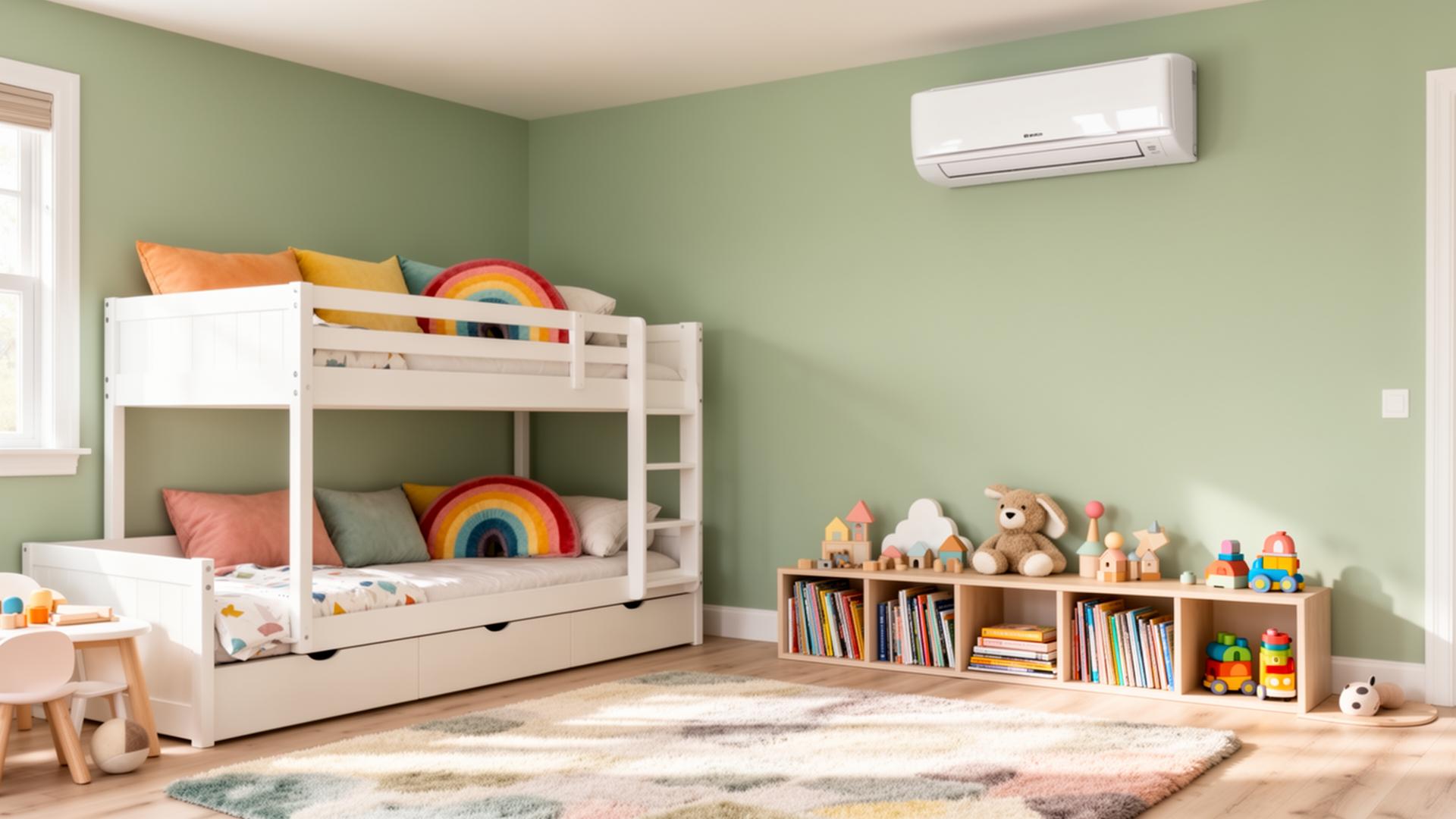
Why it works: Kids' rooms double as nap rooms, study rooms, and play rooms — all needing different temperatures at different times of day. A standalone mini split lets you cool just that room without overcooling the rest of the house.
Recommended head type: Slim wall head with the quietest indoor sound rating you can find (look for under 21 dBA).
098. Open Concept Kitchen + Dining
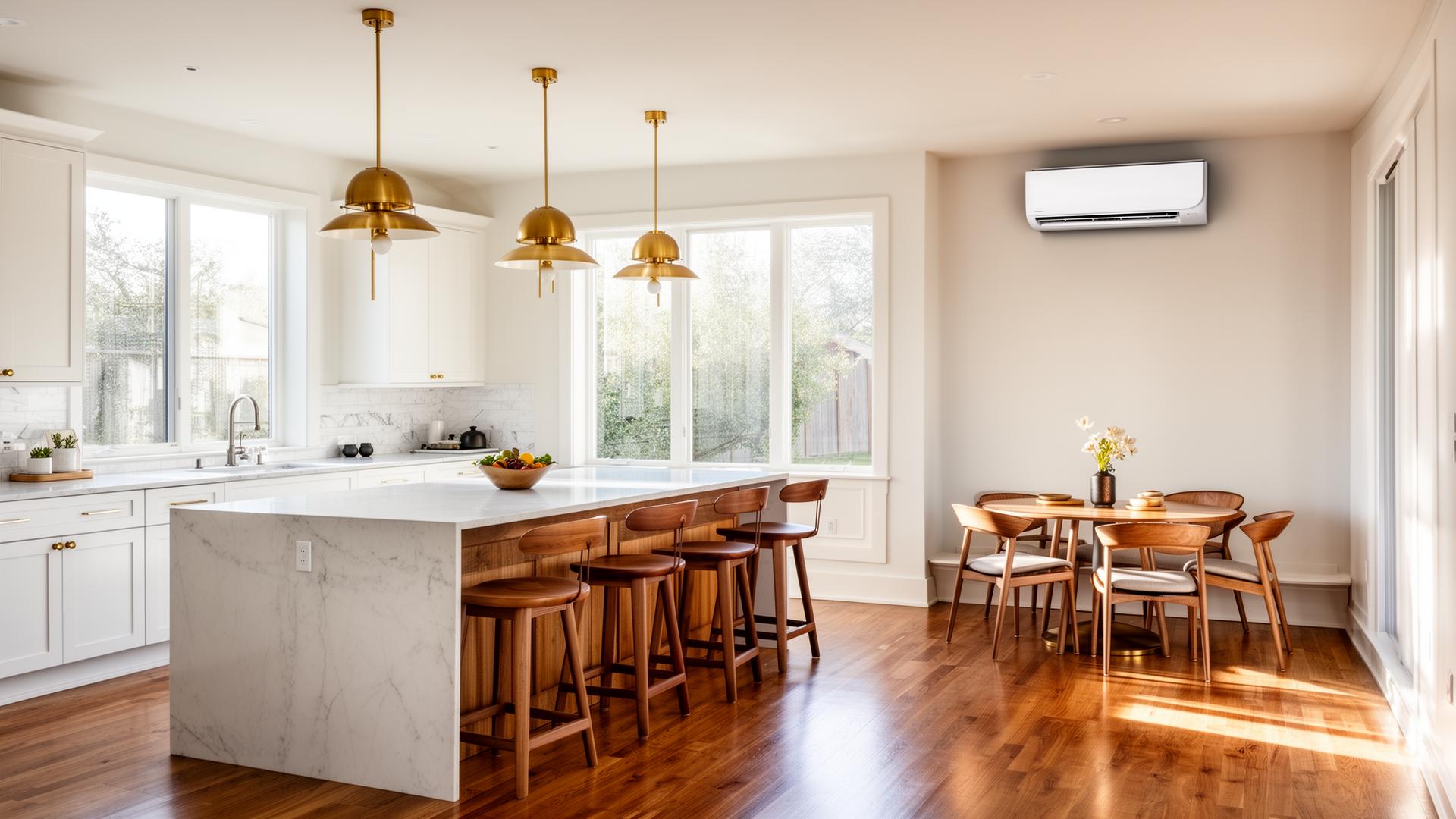
Why it works: Kitchens generate enormous heat loads (cooktop, oven, dishwasher, sunlight through big windows). Mounting the head opposite the heat source — typically over the dining nook — pulls warm air across the room and conditions the entire open plan.
Recommended head type: 18k–24k BTU slim wall head, or a multi-zone outdoor unit feeding both the kitchen and an adjacent room.
10The Three Rules That Make Any Mini Split Look Good
- Mount it high. 7 feet from the floor minimum. The head should be in your peripheral vision, not your eye line.
- Align it with architecture. Center it on a wall, align it with window or door trim, or tuck it between beams. Random placement is what makes mini splits look like equipment.
- Match the wall. Standard heads come in white. If your wall isn't white, ask your installer about color-matched vinyl wraps or — for darker walls — a recessed-mount or ceiling cassette instead.
If you can't follow all three, switch head types. A ceiling cassette or concealed-duct head solves almost every "but it'll look ugly" objection.
11Designed for Long Island Homes
Most of these scenarios are common Long Island retrofits — sunrooms, finished basements, attic conversions, garage ADUs, and primary-bedroom additions where extending ductwork is impractical or impossible. Home+ Air and Heat installs ductless systems across Nassau County and Western Suffolk with a focus on placement that respects the room's design intent.
If you're weighing a ductless install, our 2026 mini split brand rankings compare every major manufacturer on efficiency, warranty, and noise, our ductless installation page details the install process, and our guide on mini split vs central air on Long Island covers when ductless is the right call vs sticking with traditional central AC.
We install ductless across Nassau and Western Suffolk including Garden City, Manhasset, Great Neck, and Huntington — neighborhoods full of older homes, additions, and finished basements where extending central ductwork isn't practical.
Frequently Asked Questions
Home+ Design Team
Home+ Air and Heat editorial team
Service articles are reviewed against current company pricing, coverage and scheduling terms. Technician credentials are confirmed for the person and work assigned to each appointment.
Continue Reading
Mini Split vs Central Air on Long Island (2026): Cost, Efficiency & Best Choice
Real 2026 install costs, SEER2 efficiency, retrofit options, and current incentive-verification guidance for mini split vs central AC across Nassau and Suffolk County.
Ductless Heating Systems: Efficient Home Comfort
Explore the benefits of ductless heating systems for energy-efficient and personalized home comfort, and discover how they compare to traditional systems.
Need help with the next HVAC step?
Call to confirm service-area fit, equipment capability, written terms and current scheduling.
5.0 Google rating · 94 reviews