
Key Takeaways
- Verify NY Home Improvement License (Nassau Consumer Affairs or Suffolk DCA) before any other step — unlicensed installers void manufacturer warranties
- Demand a written Manual J load calculation. Rule-of-thumb sizing oversizes most Long Island homes by 30–50%
- Confirm NATE certification on the actual technicians who will install — not just the company
- Get three written, line-itemized estimates — never trust verbal quotes or one-page proposals
- Confirm in writing who pulls the permit. On Long Island, the contractor must pull it, not the homeowner
- Workers' comp + general liability certificates should come directly from the insurer, not the contractor
- Warranty floor: 1-year labor, 10-year parts. Anything less is a red flag on a major install
01Quick Answer — The 12-Point HVAC Contractor Checklist
To choose an HVAC contractor on Long Island, verify these 12 items in writing before signing anything: (1) NY HIC license, (2) Nassau or Suffolk consumer affairs registration, (3) workers' comp and general liability certificates, (4) NATE-certified installing technicians, (5) EPA Section 608 refrigerant certification, (6) written Manual J load calculation, (7) line-itemized estimate with model numbers, (8) permit pulled by contractor, (9) brand-authorized dealer status, (10) written warranty (1 yr labor / 10 yr parts minimum), (11) physical local address and verifiable Long Island install history, (12) at least 50 Google reviews with a 4.7+ rating.
If a contractor pushes back on any single item above, walk away. The good installers expect these questions.
02Why Hiring the Right Installer Matters More Than the Brand
HVAC industry data is unambiguous on this point: installation quality predicts system performance and lifespan more than brand choice. A correctly installed mid-tier Goodman will out-perform a sloppily installed Carrier Infinity every time. Refrigerant charge that's off by 10%, duct leakage above 15%, an oversized condenser short-cycling — these install errors quietly cost Long Island homeowners $300–$700 per year in extra utility spend and 3–7 years of equipment life.
On Long Island specifically, three local factors raise the stakes:
- Salt-air corrosion on the South Shore demands coil coatings and specific brand selection most contractors won't volunteer.
- 1947–1975 housing stock in Hicksville, Levittown, Massapequa, and East Meadow has undersized returns and brittle ductwork that needs evaluation, not just an equipment swap.
- Current incentive requirements can vary by customer, equipment, project, contractor, installation date, funding, and program rules. Participating-contractor status may be one requirement, but it does not guarantee eligibility, approval, or payment; get the estimated amount and filing scope in writing.
Need professional help?
Nassau County service · Written scope and pricing · Scheduling confirmed by dispatch
03Step 1 — Verify the NY Home Improvement License First
This is the gatekeeper check. Every HVAC contractor working on a Long Island home needs a Home Improvement License from the relevant county consumer affairs office:
- Nassau County: Nassau County Office of Consumer Affairs — search by business name.
- Suffolk County: Suffolk County Department of Consumer Affairs — license lookup tool.
Unlicensed work voids your manufacturer warranty (Trane, Carrier, Lennox, Mitsubishi all require licensed installs), exposes you to a code-violation lien at sale, and leaves you with zero legal recourse if anything goes wrong.
04Step 2 — Insurance Certificates Direct From the Insurer
Ask for two certificates, mailed or emailed by the insurer with you as the certificate holder:
- General liability: $1M minimum per occurrence. Covers damage to your home during install.
- Workers' compensation: Required for any company with employees. If a technician falls off your roof and the contractor has no workers' comp, you can be held liable.
A contractor who emails you a PDF they typed themselves is hiding something. The insurer's office takes 2 minutes to send a verified COI.
Get a Quick Callback
No email required — we'll call you.
05Step 3 — NATE-Certified Installing Technicians
NATE (North American Technician Excellence) is the industry's only nationally recognized HVAC technician certification. It tests installation, service, and senior-level competency on real equipment. The distinction matters: ask which specific technicians will be on your job, then look them up at natex.org. A company can claim "NATE-certified" because one tech in the office passed an exam in 2014.
AC trouble during hot weather?
Call to confirm current repair availability or request written maintenance terms.
(516) 259-119106Step 4 — Written Manual J Load Calculation
Manual J is the ACCA-standard heating and cooling load calculation that determines what size system your home actually needs. It accounts for window orientation, insulation, infiltration, occupancy, and the Long Island design temperatures (15°F winter, 88°F summer). Any contractor who sizes a system by "matching what's there" or by square footage alone will oversize you by 30–50%, which causes short cycling, poor humidity removal, and shorter compressor life.
You don't need to read the report yourself — but the report should exist, name your address, and be signed. Some current programs may require a particular Manual J sizing range or documentation format; confirm the current requirements in writing for your exact project.
07Step 5 — Line-Itemized Written Estimate (Get Three)
A real HVAC proposal lists:
- Exact model numbers (outdoor unit, indoor coil, furnace, thermostat)
- Tonnage and SEER2 / HSPF2 ratings
- Line items for refrigerant lineset, electrical work, condensate, permit fees, removal of old equipment
- Labor warranty, parts warranty, and start-up commissioning
- Total price with payment schedule
A one-page handwritten proposal with "Central AC install — $9,800" is not an estimate, it's a price. Get three line-itemized estimates and compare them apples-to-apples. If one is 30% lower than the others, ask what's missing — it's almost always permit, electrical, or warranty.
🔧 Do You Need AC Repair?
Answer 5 quick questions
Is your AC blowing warm air?
08Step 6 — The Contractor Pulls the Permit (Always)
On Long Island, HVAC replacement and new installs require a building/mechanical permit from your township (Hempstead, North Hempstead, Oyster Bay, Babylon, Islip, etc.). The licensed contractor is legally responsible for pulling it — never sign anything that asks you, the homeowner, to pull the permit. That's a tell that the company is unlicensed or trying to dodge inspection.
The permit triggers a mechanical inspection that catches install errors (refrigerant lineset insulation, condensate routing, electrical disconnect) you'd never notice until something fails.
09Step 7 — Real Long Island Review Footprint
Look for at least 50 Google reviews with a 4.7+ rating, and skim the photos and replies. Specifically:
- Reviews that name specific Long Island cities (Garden City, Massapequa, Hicksville, Smithtown) — generic "great service" reviews are easy to fake.
- Photos of completed installs, not stock images.
- Owner responses to negative reviews that explain rather than attack.
- Cross-check on Yelp, Angi, and BBB. A clean Google profile with terrible Yelp coverage is a yellow flag.
10Step 8 — Written Warranty (1 Year Labor, 10 Year Parts Minimum)
The Long Island industry standard for a quality install is 1 year of labor warranty and 10 years of parts coverage (parts coverage usually requires online registration within 60 days of install — confirm the contractor does this for you). Premium installers offer 2–10 year labor coverage on flagship systems. Anything less than the 1/10 floor on a $10K+ project is a hard no.
11Step 9 — Confirm Brand-Authorized Dealer Status
If you're being sold a Trane, Carrier, Lennox, Mitsubishi, or Bosch system, the contractor should be a factory-authorized dealer. Authorized dealers get:
- Real technical training on that brand's equipment
- Access to extended parts warranties (12-year vs 5-year)
- Direct factory tech support during install
- Priority parts during shortages
Verify directly on the brand's "find a dealer" tool — contractors sometimes claim authorization they don't currently hold.
12Step 10 — Verifiable Long Island Footprint
HVAC is a hyper-local service. A contractor whose nearest office is in Queens or Westchester is one summer heat wave away from being unable to honor your warranty calls. Look for:
- Physical Long Island address (not a UPS box)
- Service area that explicitly covers your township
- 5+ years of operating history in Nassau or Suffolk (verifiable via NY Department of State entity search)
- Photos and case studies from homes within 10 miles of yours
13Next Step — Compare the Top Long Island Contractors Side-by-Side
If you've worked through the checklist above, use our Long Island comparison guide to verify county records and technician credentials, then normalize three written proposals across scope, equipment, permits, price, warranty, exclusions, and service-area support.
Frequently Asked Questions
Home+ Air and Heat Team
Home+ Air and Heat editorial team
Service articles are reviewed against current company pricing, coverage and scheduling terms. Technician credentials are confirmed for the person and work assigned to each appointment.
Continue Reading
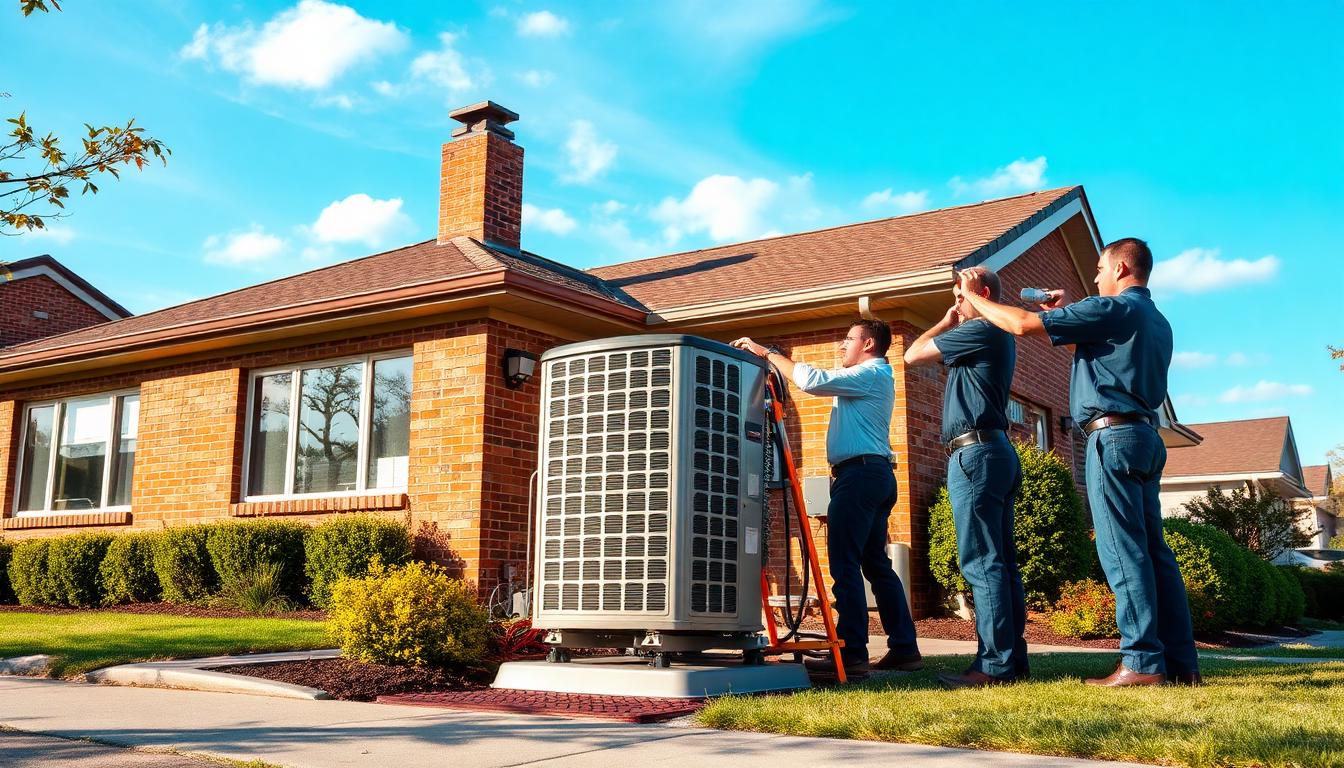
15 Questions to Ask During an HVAC Estimate on Long Island
The 15 questions that separate a real HVAC contractor from a price-shopper. Includes red flags to watch for, what a proper line-itemized estimate looks like, and how to compare three Long Island bids apples-to-apples.
NATE Certification Explained: Why It Matters for Your HVAC Install
What NATE certification actually is, what each specialty covers, how to verify a technician's credentials, and why NATE coverage correlates with installation quality and longer equipment life.
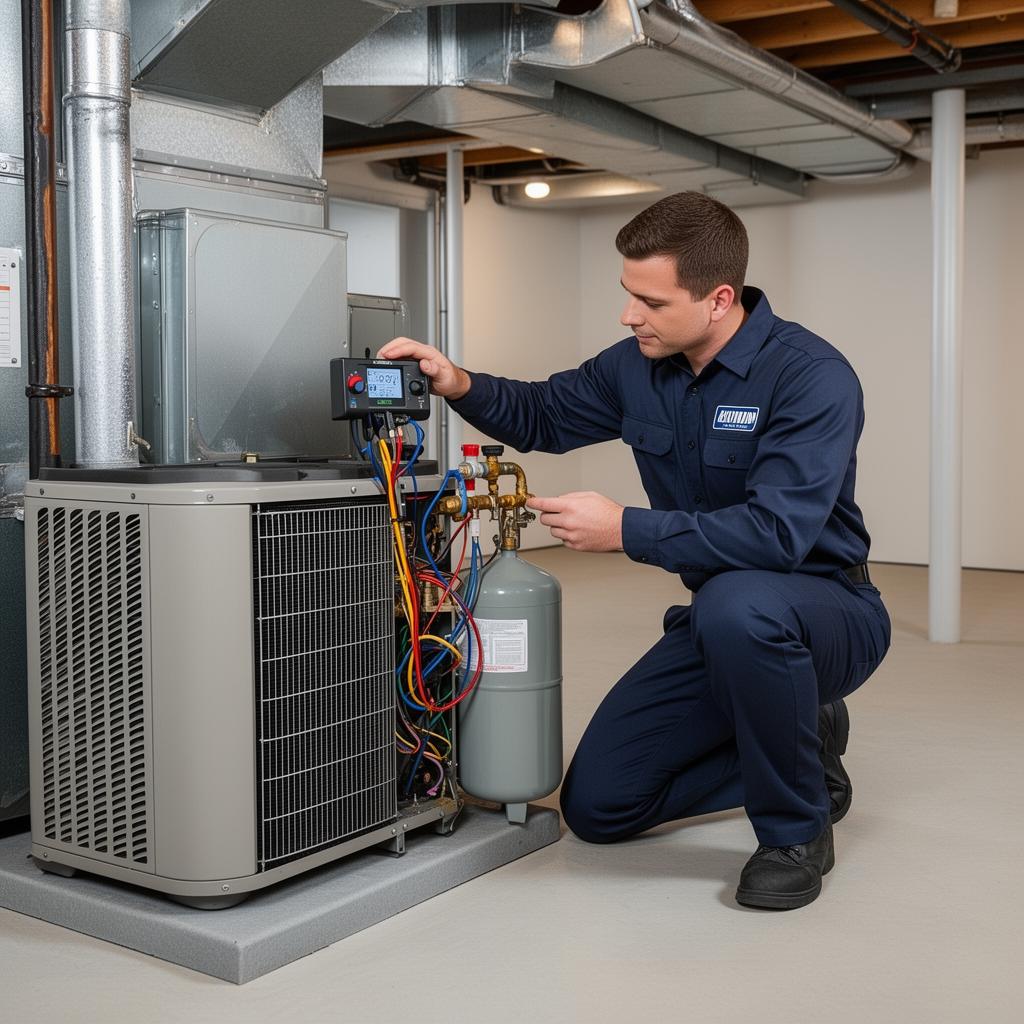
HVAC License & Insurance Check: Nassau and Suffolk County Verification Guide
Step-by-step verification: how to look up an HVAC contractor's license in Nassau County, Suffolk County, and NY State — plus how to confirm workers' comp, general liability, and EPA Section 608 in under 10 minutes.
Need help with the next HVAC step?
Call to confirm service-area fit, equipment capability, written terms and current scheduling.
5.0 Google rating · 88 reviews