
Key Takeaways
- Ask for general liability and workers' comp certificates sent directly from the insurer, with your address as Certificate Holder
- The NY Workers' Compensation Board has a free online lookup to confirm active coverage
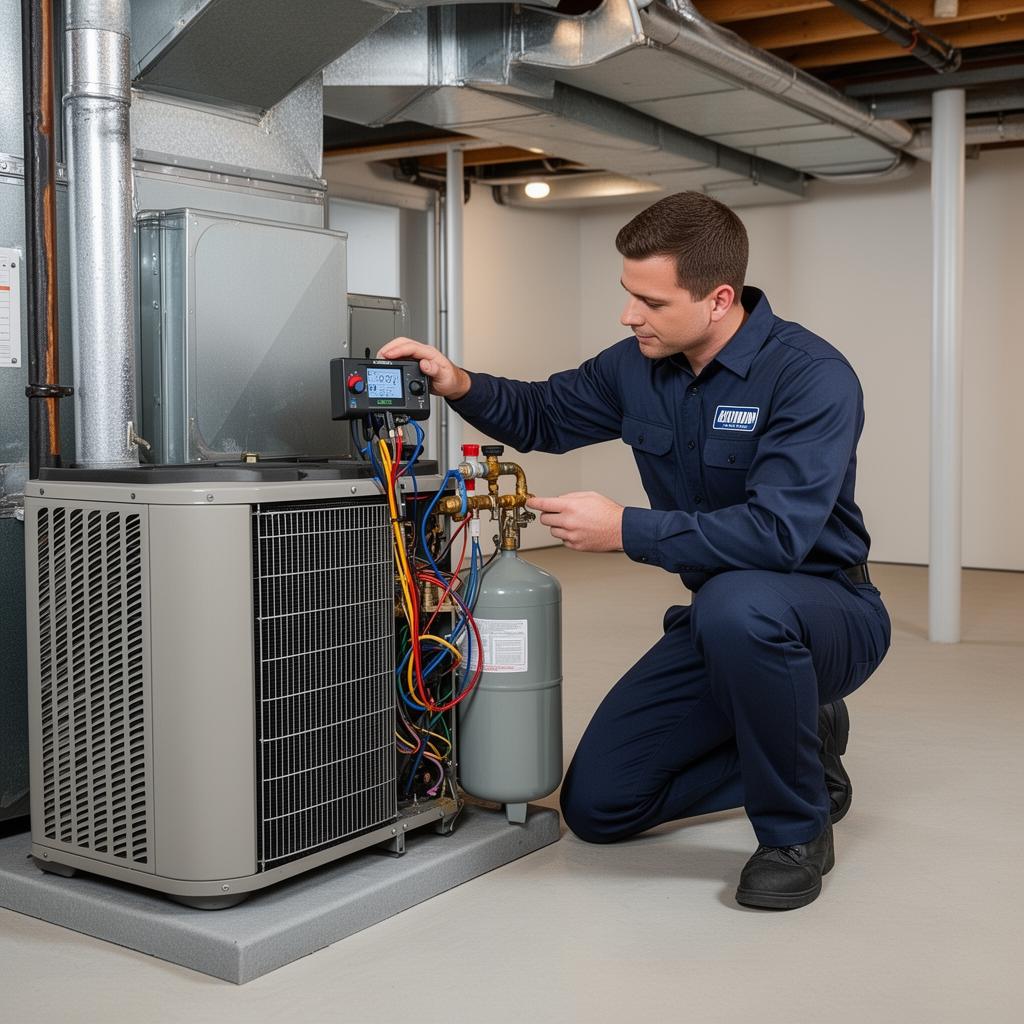
- EPA Section 608 is federally required for any technician handling refrigerant
- Confirm the business is a registered NY entity and that the name on the estimate matches
- Get a written, itemized scope with equipment model numbers, written warranty terms, and manufacturer product registration confirmed in writing
01Quick Answer — The 10-Minute Vetting Check
To vet a Long Island HVAC contractor in 10 minutes: (1) ask for general liability and workers' comp certificates sent directly from the insurer, (2) check the NY Workers' Compensation Board lookup for active workers' comp coverage, (3) confirm EPA Section 608 certification on the technicians handling refrigerant, (4) verify the business exists at the NY Department of State entity search, and (5) get a written, itemized scope and warranty terms before you sign.
02Step 1 — General Liability Certificate of Insurance
Ask the contractor to have their insurance broker email you a Certificate of Insurance (COI) directly. The COI should:
- Be issued by the insurance company or broker (Acord 25 form), not typed up by the contractor
- List you (the homeowner) and your property address as Certificate Holder
- Show at least $1,000,000 per occurrence and $2,000,000 aggregate
- Show effective dates that cover your scheduled install
A contractor-provided PDF that didn't come from the insurer is easy to fake. Brokers can typically issue a COI to a property owner quickly and at no charge.
Need professional help?
Nassau County service · Written scope and pricing · Scheduling confirmed by dispatch
03Step 2 — Workers' Compensation Verification
If a contractor's technician is injured on your property and the contractor has no workers' comp, you can be held financially liable. Verify two ways:
- Request the workers' comp COI from the contractor's broker, same as general liability.
- Independently confirm at the NY Workers' Compensation Board: wcb.ny.gov has a free coverage lookup tool. Enter the business name and confirm active coverage.
Sole proprietors with no employees may be exempt from workers' comp — but they should still carry general liability, and any sub-contractor they bring on must be covered.
04Step 3 — EPA Section 608 (Refrigerant Handling)
Federal law (Clean Air Act Section 608) requires EPA certification for anyone who buys, recovers, or handles refrigerant. Every working HVAC technician needs this — it's the legal minimum, not a premium credential.
There's no public lookup directory for EPA 608 (it's tracked by certifying organizations), so ask the contractor to provide a copy of the certification card for each technician on your job. Real cards show the technician's name, certification type (Type I, II, III, or Universal), and issuing organization.
Get a Quick Callback
No email required — we'll call you.
05Step 4 — NY State Entity Search
Confirm the business actually exists as a registered entity:
- Where: NY Department of State Entity Search
- What to confirm: Active status, formation date, and that the legal name matches the name on your estimate and contract
A business with no NY entity registration is hard to hold accountable if something goes wrong. The formation date also gives useful context against marketing claims about how long they've been in business.
Get Ready for Winter ❄️
Call to confirm the current furnace-maintenance scope, price and appointment window.
(516) 259-119106Step 5 — Written Scope, Warranty, and Registration
Insurance and credentials tell you who is on your property. The paperwork tells you what you're getting. Before you sign, make sure you have:
- An itemized written scope with outdoor unit, indoor coil, and furnace or air handler model numbers, tonnage, and efficiency ratings.
- Written warranty terms for both labor and parts, in a document you can keep.
- Manufacturer product registration confirmed in writing. Manufacturers require installation to their specifications and registration of the product; ask who registers the equipment and get confirmation after install.
- Payment terms in writing — deposit amount, balance due date, and what triggers final payment.
07County Consumer Affairs Offices
Nassau County Office of Consumer Affairs (nassaucountyny.gov) and Suffolk County Department of Consumer Affairs (suffolkcountyny.gov) oversee home improvement licensing in their counties, and homeowners can ask any contractor about it. Both offices also take consumer complaints if a job goes wrong.
🔧 Do You Need AC Repair?
Answer 5 quick questions
Is your AC blowing warm air?
08What Goes Wrong If You Skip the Basics
The downside scenarios are real and expensive:
- Worker injury liability. No workers' comp can pull your homeowners' insurance into the claim.
- Uninsured property damage. Without general liability, damage to your home during the install comes out of your pocket or a lawsuit.
- Warranty gaps. Manufacturer warranties depend on installation to the manufacturer's specifications and on product registration. If nobody registers the equipment, you may find out only when a compressor fails years later.
- No paper trail. With no written contract, itemized scope, or insurance certificate, a dispute becomes your word against theirs, and small claims court is your main path.
09Skip the Legwork — Use Our Comparison Guide
If checking insurance and credentials on three contractors sounds like a chore, our Long Island HVAC comparison guide walks through what to verify and how to line up three written proposals on scope, equipment, price, and warranty terms.
Frequently Asked Questions
Home+ Air and Heat Team
Home+ Air and Heat editorial team
Service articles are reviewed against current company pricing, coverage and scheduling terms. Technician credentials are confirmed for the person and work assigned to each appointment.
Continue Reading
How to Choose an HVAC Contractor on Long Island: 12-Point Vetting Checklist
The exact 12-point checklist Nassau and Suffolk homeowners should run before hiring an HVAC contractor — insurance, EPA refrigerant certification, Manual J, written scope and warranty, and the questions that separate real installers from price-shoppers.
14 Questions to Ask During an HVAC Estimate on Long Island
The 14 questions that separate a real HVAC contractor from a price-shopper. Includes red flags to watch for, what a proper line-itemized estimate looks like, and how to compare three Long Island bids apples-to-apples.
HVAC Contractor Red Flags: Scams and Tactics to Avoid on Long Island
The 9 biggest red flags that signal a bad HVAC contractor — from door-knockers and same-day pressure to vague quotes and mystery brands. How to spot them, and what a legitimate contractor does instead.
Need help with the next HVAC step?
Call to confirm service-area fit, equipment capability, written terms and current scheduling.
5.0 Google rating · 120 reviews