
HVAC Installation Warranties: Real Examples Explained
Discover real examples of HVAC installation warranties. Learn how these warranties protect you, ensuring peace of mind with your system.

HVAC Installation Warranties: Real Examples Explained
HVAC installation warranties are defined as written guarantees that protect homeowners against defects in equipment parts or installation workmanship after a new system is put in. Most homeowners don’t realize they actually receive two separate warranties at installation: one from the manufacturer covering parts, and one from the installer covering labor. Knowing the difference between these protections determines which party you call when something goes wrong, and whether your claim gets approved or denied.
1. Examples of HVAC installation warranties: the two core types
Every HVAC installation comes with at least two distinct warranty protections. The first is the manufacturer parts warranty. The second is the installer labor warranty, also called a workmanship warranty. These two warranties have separate claim processes, different coverage periods, and completely different exclusions. Treating them as one protection is the most common mistake homeowners make.
The manufacturer warranty covers defects in the equipment itself, such as a faulty compressor or a cracked heat exchanger that fails due to a production flaw. The installer warranty covers errors made during the installation process, such as incorrect refrigerant charge, improper electrical connections, or ductwork mistakes. Neither warranty covers the other’s territory.
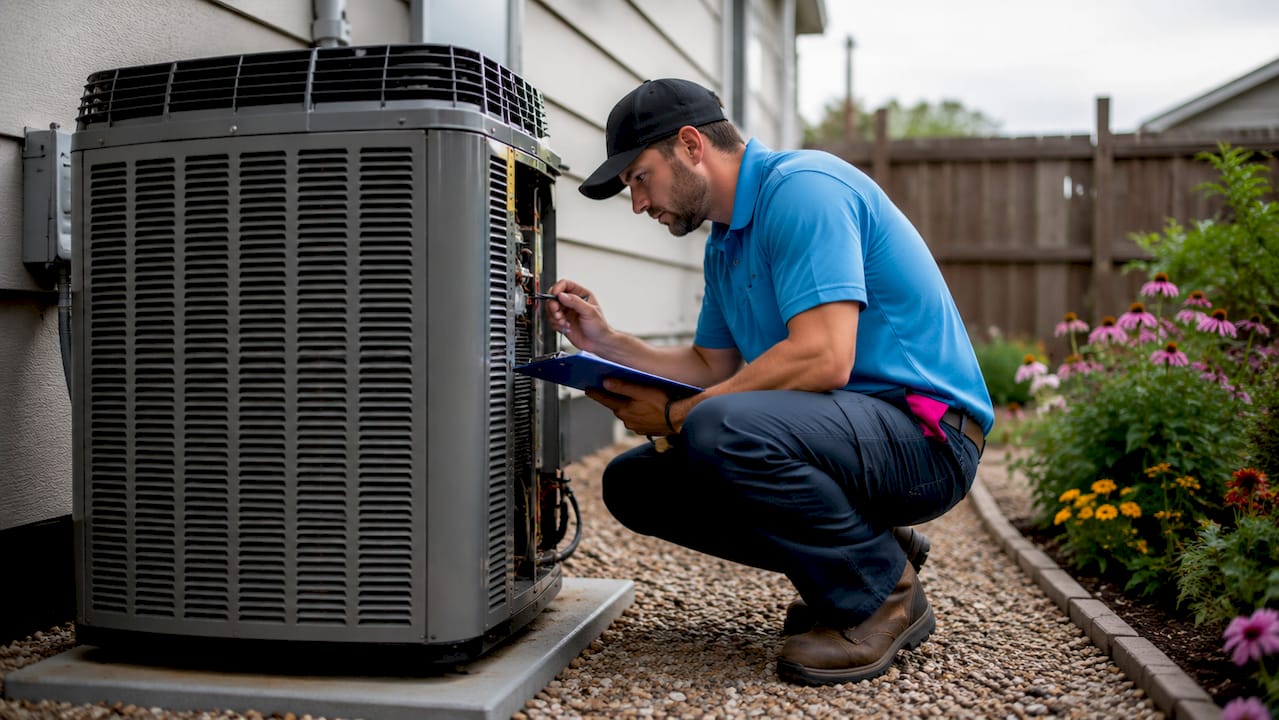
2. Five examples of manufacturer parts warranty coverage
Manufacturer warranties cover manufacturing defects on components like compressors, heat exchangers, and coils. Coverage periods commonly run 5–10 years, though specific components may carry different terms. Here are five real coverage examples you will encounter:
- Compressor warranty: Most manufacturers cover the compressor for 5–10 years. The compressor is the most expensive single part in a central AC system, so this coverage matters most.
- Heat exchanger warranty: Furnace heat exchangers often carry a 20-year or lifetime limited warranty because a cracked heat exchanger is a safety issue, not just a performance issue.
- Parts and coils warranty: Evaporator and condenser coils typically fall under the standard 5-year base warranty, extendable through registration.
- Extended registered warranty: Extended warranties can include both parts and labor and are often offered as add-ons at installation. Some extend protection up to 12 years.
- Registration-based extended coverage: Trane, for example, requires registration within 60 days of installation to unlock extended parts coverage up to 10 years. Miss that window and coverage drops to the base 5-year term.
Manufacturer warranties universally exclude damage caused by improper installation, maintenance neglect, or unauthorized modifications. A part that fails because of a bad installation is not a manufacturing defect, and the manufacturer will deny that claim.
Pro Tip: Register your equipment the same day it is installed. Set a phone reminder for day 55 as a backup. Missing a 60-day registration window can cut your parts coverage in half.
3. What installer labor warranties actually cover
Installation warranties are separate workmanship guarantees offered by the installing contractor, distinct from anything the manufacturer provides. They typically cover installation-related defects for 1–5 years depending on the contractor. Here is what a standard installer labor warranty includes and excludes:
Covered under a typical installer warranty:
- Labor costs to correct faulty refrigerant line connections
- Rework on improperly sized or installed ductwork
- Electrical wiring corrections tied to the original installation
- Labor to fix improper drain line placement causing water damage
Not covered under a typical installer warranty:
- Manufacturer part defects (those go to the manufacturer)
- Diagnostic trips, travel fees, or non-corrective service visits
- Damage caused by the homeowner or a third party after installation
- Normal wear and tear on any component
The installer warranty only activates when the root cause of a failure traces back to a workmanship error. If a technician diagnoses a refrigerant leak and finds it at a factory joint rather than an installer connection, the installer warranty does not apply. That is why identifying the cause of failure is the first step in any warranty claim.
Pro Tip: Ask your installer for a written copy of their workmanship warranty before the job starts. Verbal promises are not enforceable. A written document specifies the coverage period, what triggers a claim, and what costs are excluded.
Verifying that your installer holds a valid state license is also a warranty condition, not just a legal formality. Unlicensed or improper installation commonly voids manufacturer warranties outright. If an unlicensed contractor installs your system and a part fails, the manufacturer can legally deny the claim.
4. How registration timing and maintenance records protect your coverage
Warranty registration and maintenance documentation are not optional paperwork. They are active conditions that determine whether a future claim gets paid.
- Register immediately after installation. Most manufacturers set a 30–60 day registration window. Missing it reduces your coverage to the base warranty period. Trane’s policy is a well-known example: register within 60 days or lose the extended coverage tier.
- Schedule annual maintenance and keep every receipt. Failure to perform required maintenance can void coverage entirely. Missing maintenance records and service history are among the most common reasons claims get denied.
- Store documents in one place. Keep your registration confirmation, installation invoice, and all maintenance receipts together. A digital folder with photos of each document works well.
- Track your warranty expiration dates. Missing timely product registration silently reduces your coverage period. Property managers overseeing multiple units should build a warranty tracking spreadsheet with registration deadlines and annual service dates.
- Use manufacturer-approved service providers. Some warranties require that all maintenance be performed by a licensed HVAC technician. DIY filter changes are fine, but refrigerant work or coil cleaning done by an unlicensed person can trigger a void.
Property managers should prioritize obtaining and tracking registration and maintenance documents immediately after installation. Warranty disputes center on causation and documentation far more often than on headline warranty length.
5. Home warranties vs. manufacturer and installer HVAC warranties
Home warranties operate differently from manufacturer or installer warranties. Home warranties function as service contracts with annual fees and per-visit service charges. They are not original equipment guarantees. The table below clarifies the key differences:
| Feature | Manufacturer warranty | Installer warranty | Home warranty |
|---|---|---|---|
| What it covers | Part defects | Workmanship errors | System repairs, multiple appliances |
| Cost to homeowner | Free with purchase | Free with installation | Annual fee plus service charge |
| Coverage trigger | Manufacturing flaw | Installation error | System breakdown, any cause |
| Typical duration | 5–10 years | 1–5 years | Annual contract, renewable |
| Claim process | Contact manufacturer | Contact installer | Contact home warranty company |
A home warranty can complement manufacturer and installer warranties by covering breakdowns that fall outside both. For example, if your system fails in year seven due to a worn contactor, and your installer warranty has expired, a home warranty service contract may cover the repair cost minus the deductible. The overlap is minimal in the first few years when both original warranties are active.
6. Common causes of HVAC warranty voidance
Warranty voidance is rarely dramatic. Most homeowners lose coverage through small, avoidable oversights. Here are the most common causes:
- Unlicensed installation. Manufacturers require licensed professional installation. An unlicensed contractor’s work voids the manufacturer warranty before the system even runs.
- Skipped or undocumented maintenance. Annual tune-ups must be performed and documented. A single missed year can give a manufacturer grounds to deny a claim.
- Missed registration deadline. Not registering within the required window reduces or eliminates extended coverage.
- Unauthorized modifications. Adding components, bypassing safety switches, or altering refrigerant charge without manufacturer approval voids coverage.
- Environmental damage. Warranties generally exclude damage caused by environmental factors like corrosion or salt air. Homeowners in coastal areas, including Long Island, face this risk directly. Manufacturers treat salt-air corrosion as an environmental condition, not a product defect.
- Using non-approved refrigerants or parts. Substituting off-brand components during a repair can void the entire system warranty, not just the replaced part.
The practical fix for all of these is the same: use a licensed HVAC contractor, register on time, and keep every service record.
Key takeaways
HVAC installation warranties consist of three separate protections: manufacturer parts coverage, installer workmanship coverage, and optional home service contracts, each with distinct terms and claim processes.
| Point | Details |
|---|---|
| Two warranties at installation | Every new HVAC system comes with a manufacturer parts warranty and a separate installer labor warranty. |
| Registration is time-sensitive | Missing a 60-day registration window can cut parts coverage from 10 years down to 5 years. |
| Maintenance records are required | Undocumented maintenance is one of the most common reasons warranty claims are denied. |
| Installer warranty has limits | Installer warranties cover workmanship errors only, not diagnostic trips, travel fees, or part defects. |
| Environmental damage is excluded | Salt-air corrosion and similar climate-related damage fall outside standard warranty coverage. |
What I’ve learned about HVAC warranties that most guides skip
Most warranty guides focus on coverage length. The real issue is documentation. I have seen homeowners with 10-year registered warranties get claims denied because they could not produce a single maintenance receipt. The manufacturer does not care that you changed the filter every month. They care that a licensed technician performed annual service and signed off on it.
The second thing most guides miss: the cause of failure determines which warranty applies, and that determination is not always obvious. A refrigerant leak could be a factory defect in the coil, an installer connection error, or damage from a maintenance visit gone wrong. Each scenario points to a different warranty and a different claim process. Homeowners should manage manufacturer parts warranties, installer labor warranties, and home service contracts as three separate protections with three separate contact points.
My strongest advice for property managers: build a simple spreadsheet the day of installation. Log the registration deadline, the annual service due date, and the warranty expiration for both the manufacturer and installer coverage. That spreadsheet has saved clients thousands of dollars in denied claims. Pair it with a heating system maintenance schedule and you have a complete protection plan.
— Blake
Warranty-backed HVAC installation from Hometsair
Hometsair’s NATE-certified technicians install every system to meet manufacturer warranty requirements, which means your parts coverage stays intact from day one. Every installation includes transparent documentation, proper registration guidance, and zero overtime fees regardless of when you need service.

Long Island’s coastal climate creates real warranty risks. Salt-air corrosion is a documented exclusion in most manufacturer policies, and Hometsair technicians know how to install and maintain systems that hold up in that environment. Hometsair currently offers $1,000 off AC installations. If you are in Nassau County, get a free AC installation quote and ask about the full warranty package included with every job.
FAQ
What is an HVAC installation warranty?
An HVAC installation warranty is a written guarantee from the installing contractor that covers labor costs to correct workmanship errors. It is separate from the manufacturer parts warranty and typically lasts 1–5 years.
What causes HVAC warranty voidance?
The most common causes are unlicensed installation, missing maintenance records, skipped product registration, and unauthorized system modifications. Environmental damage like salt-air corrosion is also a standard exclusion.
How long do HVAC manufacturer warranties last?
Manufacturer warranties commonly cover parts for 5–10 years. Some components like heat exchangers carry longer coverage. Extended coverage up to 10 or 12 years is often available through timely product registration.
Does a home warranty replace a manufacturer warranty?
No. A home warranty is a service contract with annual fees and deductibles. It covers system breakdowns from any cause but does not replace the original manufacturer or installer warranty. The three protections work independently.
What does an installer warranty not cover?
Installer warranties do not cover manufacturer part defects, diagnostic trip fees, travel charges, or damage caused after installation. They cover only corrective labor directly tied to the original workmanship error.