
HVAC Upgrades That Lower Energy Bills Fast
Discover how lower energy bills HVAC upgrades can cut costs quickly. Upgrade your system for greater efficiency and savings today!
HVAC Upgrades That Lower Energy Bills Fast
HVAC upgrades are targeted improvements to your heating, ventilation, and air conditioning systems that reduce energy consumption and lower monthly utility costs. The U.S. Department of Energy measures heating efficiency with AFUE (Annual Fuel Utilization Efficiency) and cooling efficiency with SEER2 ratings. Both metrics directly predict how much energy your system wastes. Replacing outdated equipment, sealing ductwork, and adding smart controls are the three most effective ways to lower energy bills through HVAC upgrades. Homeowners who combine all three typically see the largest and fastest returns.
How do high-efficiency HVAC systems reduce energy bills?
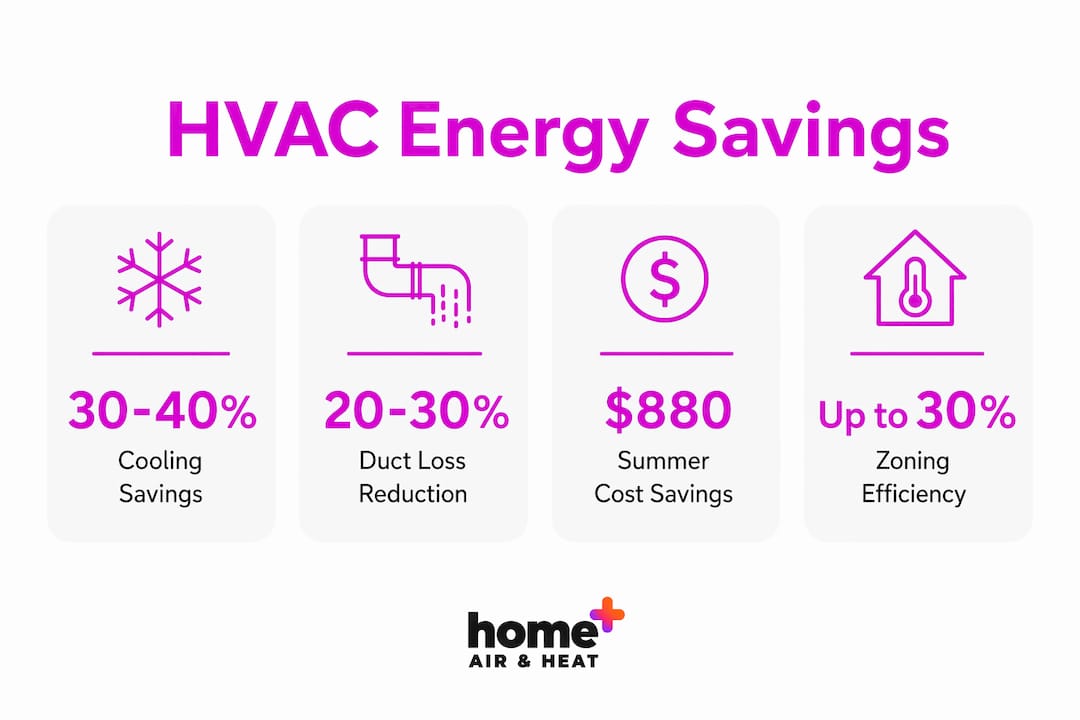
The efficiency gap between old and new equipment is larger than most homeowners expect. Upgrading from a 10 SEER system to a modern 18 SEER2 unit cuts cooling energy use by 30–40%, with payback in 4–7 years. On a $200 monthly cooling bill, that upgrade can save around $880 in a single summer. That is not a marginal gain. It is a structural change in what your home costs to cool.
High-efficiency furnaces tell a similar story. A standard 80% AFUE furnace wastes 20 cents of every dollar spent on fuel. A 96% AFUE unit wastes less than 4 cents. For homes in colder climates, that difference compounds across every heating season. High-efficiency AC units with variable-speed compressors also run longer at lower capacity, which reduces temperature swings and humidity spikes.
Heat pumps add another option for homeowners in mild climates. Heat pumps are most cost-effective where electricity rates stay below $0.15–$0.18 per kWh, with payback periods of 8–15 years. Federal tax credits available in 2026 help offset the higher upfront cost. In Long Island’s coastal climate, where winters are moderate and summers are humid, a heat pump paired with a backup heating source is a practical choice.
Ductless mini-splits offer a third path. Ductwork loses 20–30% of conditioned air through leaks before it ever reaches a room. Mini-splits bypass that problem entirely by delivering air directly inside each zone. They work especially well in older homes without existing ductwork.
Pro Tip: Match your upgrade to your climate first. A high-SEER2 central system makes sense in a hot, humid area. A heat pump fits mild winters. A mini-split solves the ductless home problem without major renovation.
What role does HVAC maintenance play in lowering energy costs?
Maintenance is the most underrated cost-reduction tool available to homeowners. Monthly filter checks and replacements every 30–90 days reduce HVAC energy use by 5–15%. A clogged filter forces the blower motor to work harder, which raises electricity consumption without improving comfort. That is a direct, avoidable cost.
A practical maintenance schedule looks like this:
- Check air filters monthly. Replace them every 30 days during peak season and every 90 days during lighter use periods.
- Clean evaporator and condenser coils annually. Dirty coils reduce heat transfer and force the compressor to run longer.
- Clear condensate drain lines each spring. Blockages cause water damage and reduce dehumidification efficiency.
- Inspect refrigerant levels every two years. Low refrigerant makes the system work harder and shortens compressor life.
- Schedule a professional tune-up each year. A certified technician catches small problems before they become expensive failures.
Duct sealing belongs on the same list. Duct losses account for 20–30% of energy inefficiency in ducted systems. Sealing gaps with mastic sealant or metal tape and adding duct insulation in unconditioned spaces like attics and crawl spaces recovers that lost energy at a fraction of new equipment costs. Many homeowners skip this step and then wonder why a new system still produces high bills.
Pro Tip: Before scheduling a duct seal, ask your technician to run a duct blaster test. It measures exactly how much air your ducts are losing and tells you whether sealing will pay off in your specific home.
The most common maintenance mistake is waiting for a problem to appear. Heating system maintenance done proactively keeps efficiency high and avoids the emergency repair costs that come with neglected equipment.
How can HVAC zoning and smart thermostats optimize energy use?
HVAC zoning divides your home into separate temperature-controlled areas, each with its own thermostat and dampers inside the ductwork. You stop conditioning rooms nobody is using. That alone changes the economics of home cooling and heating.
Key benefits of zoning include:
- Targeted comfort. Bedrooms stay cooler at night without overcooling the living room.
- Reduced runtime. The system runs only for occupied zones, cutting total operating hours.
- Lower annual costs. Zoning reduces annual heating and cooling costs by up to 30%, with homes saving $600–$750 per year on a typical $3,000 installation.
- Payback in 4–7 years. That timeline improves when zoning is added during a full system replacement.
Installing HVAC zoning during a full system replacement saves $500–$1,000 in labor compared to retrofitting it later. Timing matters as much as the technology itself.
Smart thermostats amplify zoning benefits. A programmable or learning thermostat adjusts temperatures automatically based on your schedule. It prevents the common mistake of forgetting to raise the setpoint before leaving the house. Devices like Google Nest or Ecobee learn your patterns within a few weeks and make adjustments without any manual input.
HVAC zoning works best in two-story homes, large square footage, or houses with rooms that heat and cool at different rates. It delivers less value in small homes or open-concept layouts where temperature differences between zones are minimal. Knowing which category your home falls into before investing in zoning saves you from buying a solution to a problem you do not have.
Pro Tip: If you are already replacing your HVAC system, add zoning at the same time. Combining zoning with replacement cuts labor costs by up to $1,000 versus a later retrofit.
What additional strategies lower HVAC energy use in summer and winter?
Equipment upgrades deliver the biggest savings, but daily habits and home adjustments extend those gains further. The following strategies work alongside any HVAC system to reduce hvac energy use in summer and cut heating costs in winter:
- Set your thermostat to 78°F in summer. The Department of Energy recommends 78°F as the sweet spot between comfort and efficiency when you are home.
- Use reflective blinds on south and west-facing windows. Managing solar heat gain with reflective window coverings prevents the AC from overworking at no equipment cost.
- Run heat-generating appliances at night. Dishwashers, ovens, and dryers add heat load during the day. Shifting them to evening hours reduces peak AC demand.
- Avoid large temperature swings. Letting your home get very hot and then blasting the AC to recover costs more energy than holding a steady setpoint throughout the day.
- Winterize your system before the heating season. Checking insulation, sealing drafts around windows and doors, and confirming your furnace filter is clean before the first cold snap keeps heating bills lower all season.
- Improve indoor air quality alongside HVAC performance. Clean ducts and properly sized filtration reduce particulate buildup on coils, which maintains heat transfer efficiency over time.
Each of these steps costs little or nothing. Combined with upgraded equipment, they push total savings well beyond what any single upgrade delivers alone.
How do you decide between repairing and replacing your HVAC system?
The $5,000 rule gives homeowners a clear starting point. Multiply your system’s age by the repair cost. If the result exceeds $5,000, replacement is the smarter financial choice. A 12-year-old system facing a $500 repair scores $6,000 on that scale. Replacement wins.
Several other signals point toward replacement regardless of the math:
- R-22 refrigerant. Systems using R-22 (Freon) are obsolete. The refrigerant is no longer manufactured in the U.S., making repairs expensive and parts scarce.
- Age over 15 years. Most central AC units and furnaces reach peak inefficiency by year 15. Efficiency ratings that were average in 2010 are well below current standards.
- Frequent breakdowns. Two or more repairs in a single season signal a system in terminal decline.
Government incentives in 2026 make replacement more affordable. Federal tax credits cover a portion of qualifying heat pump and high-efficiency furnace installations. Some Long Island utility programs add rebates on top of federal credits. A NATE-certified technician can identify which credits apply to your specific equipment choice.
For homeowners weighing options, maximizing efficiency in your existing system through maintenance and duct sealing buys time before a full replacement becomes necessary. That approach makes sense when a system is 8–12 years old and still running reliably.
Key Takeaways
The most effective way to lower energy bills through HVAC upgrades is to combine high-efficiency equipment with duct sealing, zoning, and consistent maintenance rather than relying on any single fix.
| Point | Details |
|---|---|
| Upgrade equipment first | Moving from 10 SEER to 18 SEER2 cuts cooling costs by 30–40% with payback in 4–7 years. |
| Seal ducts before buying new gear | Duct leaks waste 20–30% of conditioned air; sealing recovers that energy at low cost. |
| Add zoning during replacement | Installing zoning with a new system saves $500–$1,000 in labor versus retrofitting later. |
| Maintain filters every 30–90 days | Regular filter changes reduce HVAC energy use by 5–15% with no equipment investment. |
| Use the $5,000 rule to decide | Multiply system age by repair cost; replace when the result exceeds $5,000. |
What I have learned after years of watching homeowners upgrade HVAC systems
Most homeowners focus entirely on the equipment and ignore the ductwork. That is the single most common and costly mistake I see. You can install a brand-new 18 SEER2 system in a house with leaking ducts and still pay nearly the same utility bills as before. The equipment is only as efficient as the delivery system behind it.
The second thing I have learned is that zoning gets oversold for the wrong homes. A 1,200-square-foot ranch with an open floor plan does not need a $3,000 zoning system. The temperature differences between zones are too small to justify the investment. Zoning earns its cost in two-story homes, large houses, or properties where one wing runs significantly hotter or cooler than another.
Smart thermostats are genuinely worth the money, but not because they are clever. They work because they remove human error from the equation. People forget to adjust the thermostat before leaving. A learning thermostat does not forget. That consistency, compounded over months, produces real savings.
My honest advice: start with a professional energy audit and duct test before spending anything on new equipment. Know exactly where your home is losing energy. Then spend your upgrade budget in order of return, starting with duct sealing, then controls, then equipment. That sequence almost always outperforms buying the most expensive system and hoping for the best.
— Blake
Hometsair serves Long Island homeowners ready to cut energy costs
Hometsair’s NATE-certified technicians work across Nassau County and Bayville, handling everything from full AC installation in Nassau County to targeted efficiency upgrades built around your home’s specific needs. The coastal climate on Long Island creates real challenges: salt-air corrosion, homes without existing ductwork, and humidity levels that push AC systems hard all summer. Hometsair addresses all of it with same-day response, transparent pricing, and zero overtime fees.
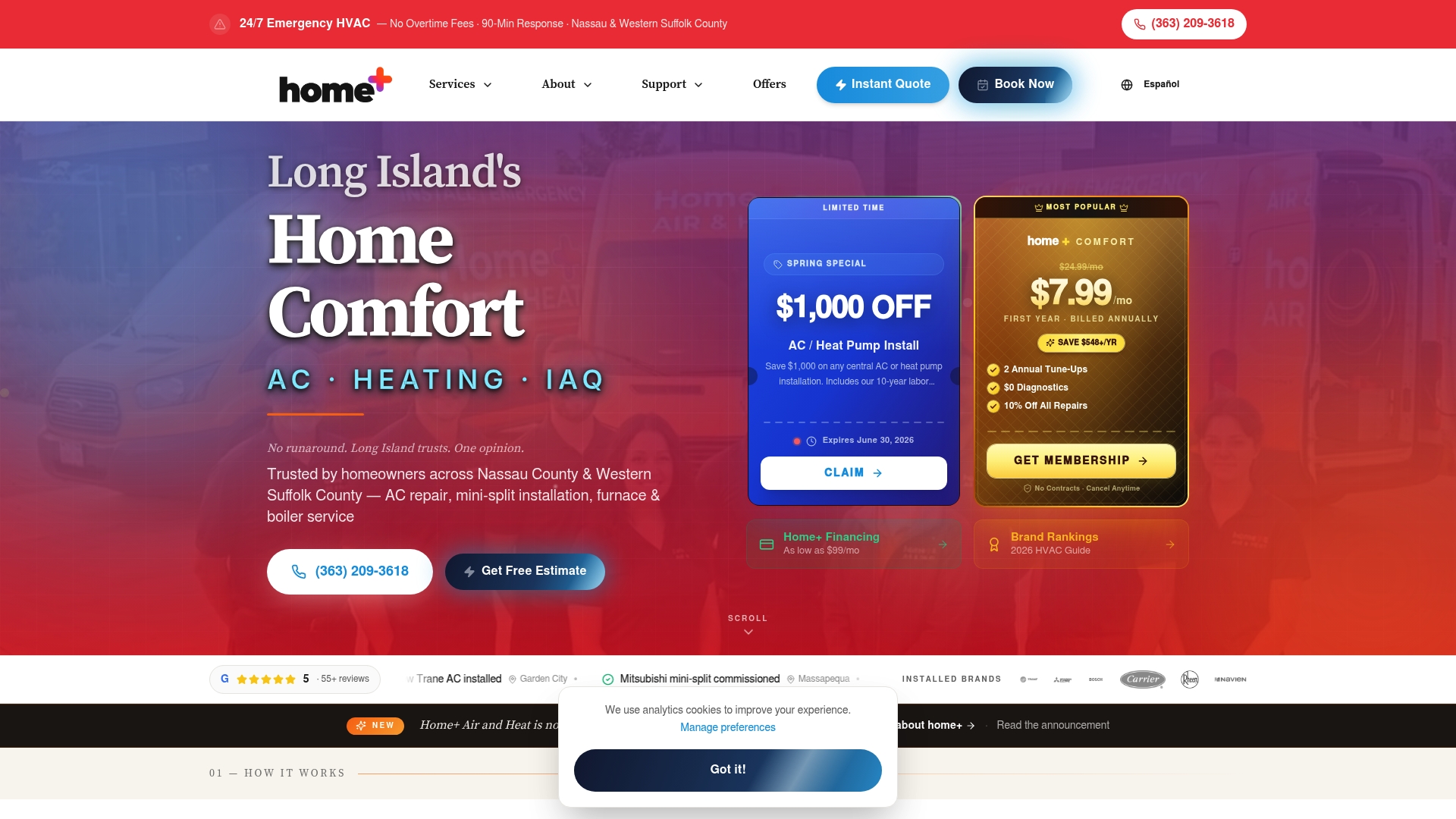
Current promotions include $1,000 off AC installations and membership plans that cover annual tune-ups. Hometsair reports a 90% first-visit fix rate, which means fewer callbacks and faster results. Contact Hometsair in Bayville for a free quote and a professional assessment of where your system is losing energy.
FAQ
How much can I save by upgrading my HVAC system?
Upgrading from a 10 SEER to an 18 SEER2 system reduces cooling energy use by 30–40%, saving around $880 per summer on a $200 monthly bill. Actual savings depend on your current system’s age, local energy rates, and how well your ductwork is sealed.
What is the fastest way to lower HVAC energy use in summer?
Setting your thermostat to 78°F, using reflective blinds on sun-facing windows, and replacing clogged air filters are the fastest no-cost or low-cost steps. Each one reduces the load on your AC without any equipment change.
Is HVAC zoning worth the cost?
Zoning reduces annual HVAC costs by up to 30% in homes with multiple levels or distinct temperature zones, with payback in 4–7 years. It delivers less value in small or open-concept homes where temperature differences between areas are minimal.
When should I replace rather than repair my HVAC system?
Use the $5,000 rule: multiply your system’s age by the repair cost, and replace if the result exceeds $5,000. Systems using R-22 refrigerant or older than 15 years are also strong replacement candidates regardless of repair cost.
Do smart thermostats actually reduce energy bills?
Smart thermostats reduce energy waste by automatically adjusting temperatures based on your schedule, eliminating the cost of conditioning an empty home. Their value compounds over months of consistent use, making them one of the highest-return low-cost upgrades available.