
One or more zones have no heat
Identify which tenant areas are affected and whether the fan, pump or rooftop unit appears to be running.
Nassau County light-commercial heating
Heating diagnostics, repair and planning for supported light-commercial equipment serving offices, retail spaces, restaurants, houses of worship and other local properties.
Share the equipment nameplate, affected zone and building-access details first. Dispatch confirms equipment capability, current availability and the appropriate next step before a visit is scheduled.
Heating repair signals
The symptom can involve the heating equipment, controls, airflow, fuel or the building. It helps define the information dispatch needs and the first diagnostic steps.
Identify which tenant areas are affected and whether the fan, pump or rooftop unit appears to be running.
Short cycling can involve controls, safeties, airflow, fuel, temperature limits or equipment condition.
Share the exact thermostat, boiler, rooftop-unit or building-control message when requesting service.
Shut down equipment when site procedures or visible conditions indicate a safety concern, then describe what changed.
Zone controls, dampers, pumps, airflow, radiation or load conditions may need review alongside the heat source.
Provide prior findings and repairs so the next visit can distinguish a repeated fault from a broader planning issue.
Diagnostic scope
The supported work depends on equipment, size, fuel, controls, application, access and safe operating conditions. These are common checkpoints, not a promise that every system or component is supported.
Home+ focuses on residential and light-commercial HVAC. Large industrial, process, high-pressure, specialty-control or unsupported equipment may require another contractor. Dispatch reviews the nameplate and site requirements before confirming a visit.
Commercial service process
Identify the cold zones, operating symptoms, building schedule and any immediate access or safety concerns.
Share the nameplate, fuel, controls, site contact and roof or mechanical-room requirements.
The technician documents findings observable within the supported equipment and approved visit scope.
Repair, maintenance or replacement work proceeds only after scope and price are presented for approval.
Equipment and building context
Controls, zones, airflow, pumps, radiation, fuel, ventilation, operating hours and access can all shape the diagnosis and the practical service plan.
Gas heat or heat-pump operation may involve safeties, ignition, defrost, auxiliary heat, airflow and zone controls.
Equipment size, pressure, fuel, pumps, controls, distribution and venting help determine whether the system fits the light-commercial scope.
Affected zones, occupied periods and shutdown constraints should be documented before timing is confirmed.
The decision should compare the current fault and repair history with the complete installed replacement assumptions.
Request commercial service
Submit the building contact, Nassau County ZIP, equipment count and any available nameplate, symptom or access details. The team will confirm capability, current availability and the next step by phone.
Prefer to speak with dispatch?
(516) 259-1191Service area
Current coverage is centered on Nassau County. Dispatch confirms the address, equipment, roof access, project fit and current availability before scheduling.
Home+ focuses on residential and light-commercial HVAC. Equipment type, capacity, controls, fuel, roof access and site requirements must be reviewed so the team can confirm capability and the right next step.
Recent work
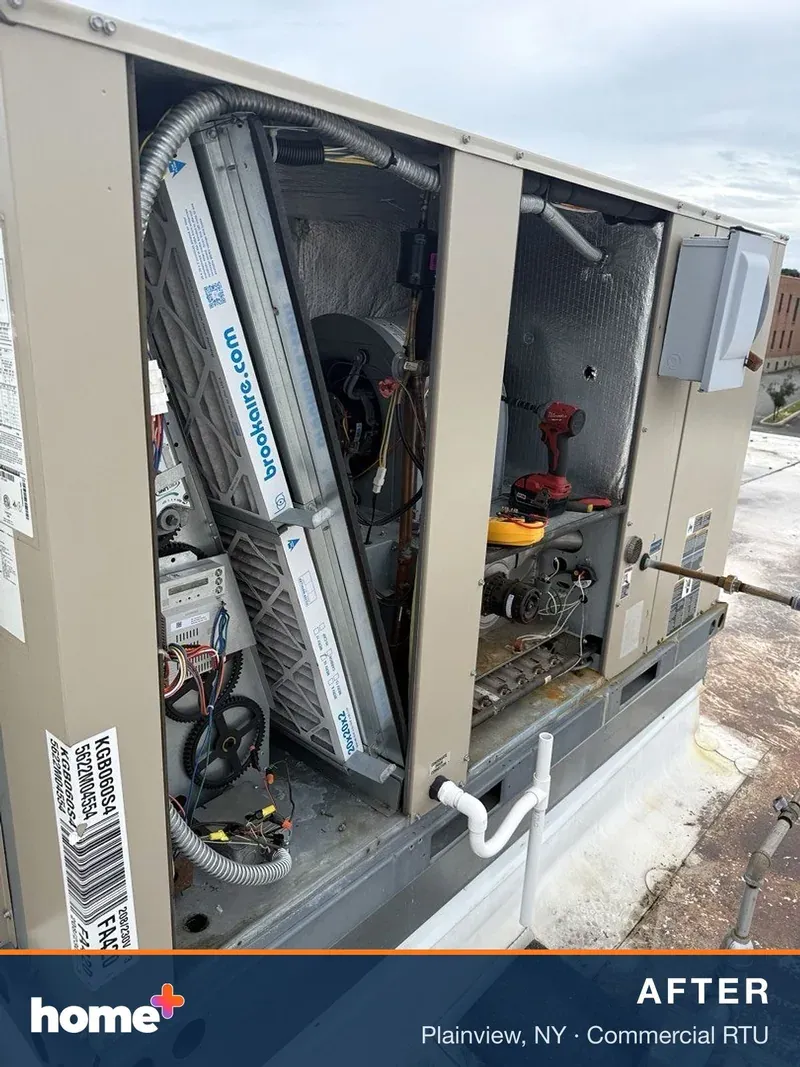 Maintenance
Plainview, NY·Commercial rooftop units
See the job
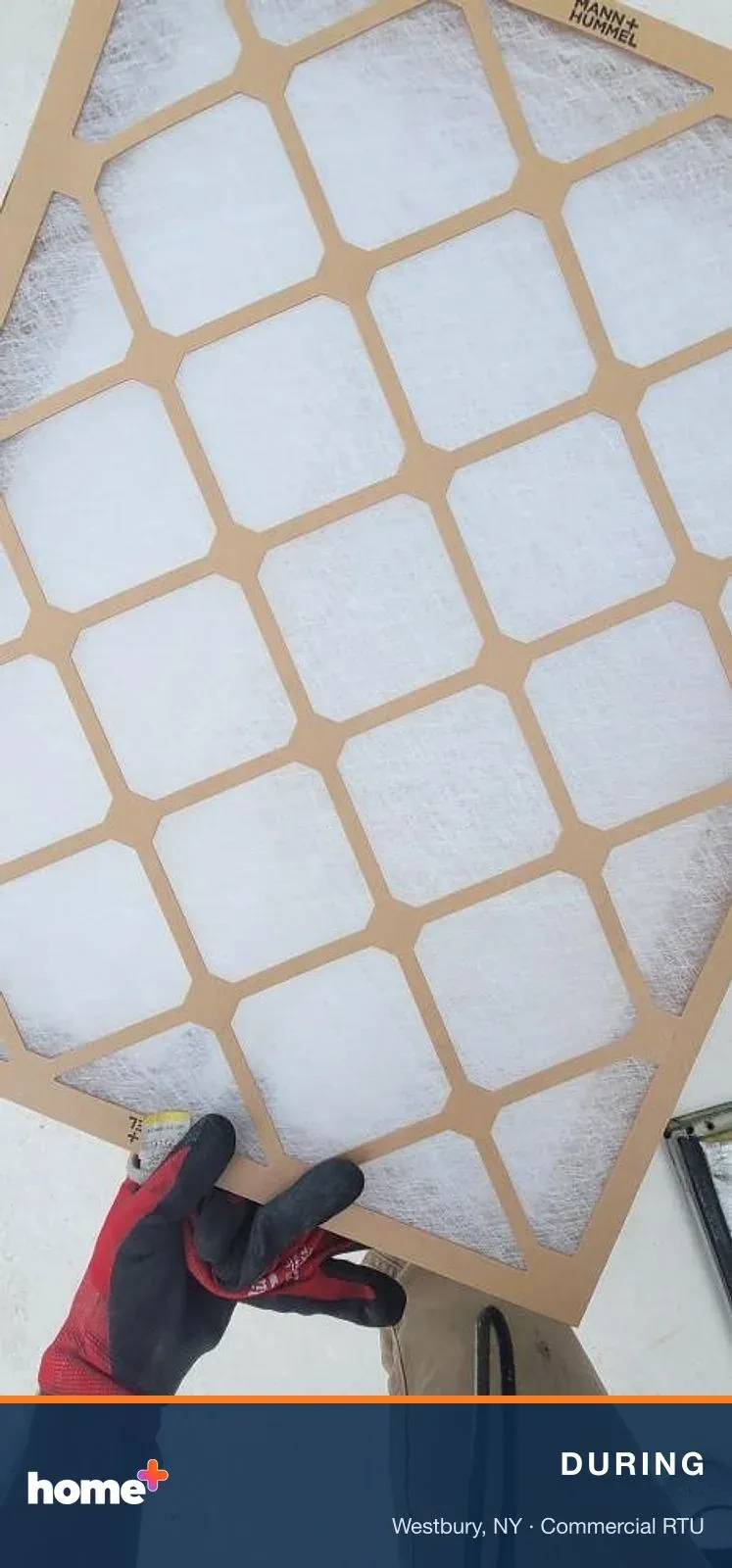 Maintenance
Westbury, NY·Commercial rooftop units
See the job
Photos enhanced for clarity.
Frequently asked questions
Home+ focuses on residential and light-commercial HVAC. Depending on the confirmed equipment and site, the team may evaluate packaged rooftop heat, light-commercial boilers, furnaces, heat pumps or unit heaters. Share the nameplate, capacity, fuel, controls and access details so dispatch can verify capability before scheduling.
Provide the property address, affected tenant or zone, equipment make and model, fuel, thermostat or control message, symptoms, operating hours and access instructions. Photos of the nameplate and visible condition are useful when they can be obtained safely.
For packaged rooftop equipment within the confirmed scope, a diagnostic visit may review the heat call, controls, safeties, ignition or heat-pump operation, airflow and accessible components. The exact work depends on the unit and approved visit scope.
Some light-commercial boiler equipment may fit the team's scope, but boiler size, fuel, pressure, application, controls, venting and site conditions must be confirmed first. Large, industrial, process or specialty systems may require another contractor.
Call to describe the affected space, equipment and access requirements. Current appointment and after-hours availability depends on call volume, technician availability, location, weather, roof or building access, parts and the work required.
The decision depends on the diagnosis, equipment age and condition, repair history, parts and refrigerant availability where applicable, efficiency, comfort needs and the complete installed replacement scope. Home+ can document the current finding and present an applicable option before work is approved.
Potentially. Start with an equipment inventory and the building schedule. Home+ will confirm which equipment is supported and whether a one-time maintenance visit or a Business+ recurring plan fits the site and current availability.
Compare repair, maintenance, replacement planning and recurring commercial coverage.
Dispatch confirms equipment, access and current availability.