
Heat Pumps in Winter: Your Complete Efficiency Guide
Discover the role of heat pump in winter. Learn how efficient heat pumps work to save you money while keeping your home warm.
Heat Pumps in Winter: Your Complete Efficiency Guide
A heat pump is defined as a device that moves heat from the outdoor air into your home during winter, rather than generating heat by burning fuel. Modern cold-climate heat pumps maintain this function even when temperatures drop well below freezing, making them a reliable primary heating system for millions of American homeowners. The key efficiency metric is the Coefficient of Performance (COP), which measures how many units of heat a system delivers per unit of electricity consumed. Understanding the role of heat pump in winter means understanding that you are paying to move heat, not create it. That distinction is what makes heat pumps so much cheaper to run than electric resistance heaters or gas furnaces.
How do heat pumps work in winter to extract heat from cold air?
Heat pumps reverse the refrigeration process to pull heat from outdoor air and deliver it inside your home. Even at very low temperatures, outdoor air contains usable heat energy. The system uses a refrigerant with a very low boiling point, which absorbs that heat energy as it evaporates in the outdoor coil, then carries it indoors where it releases the heat as the refrigerant condenses.
The technology that makes this work reliably in cold weather is the inverter-driven compressor. Unlike older single-speed compressors that simply switched on and off, inverter-driven compressors adjust their speed continuously. This means the system can run at low capacity during mild cold and ramp up when temperatures drop sharply, maintaining steady indoor warmth without dramatic energy spikes.
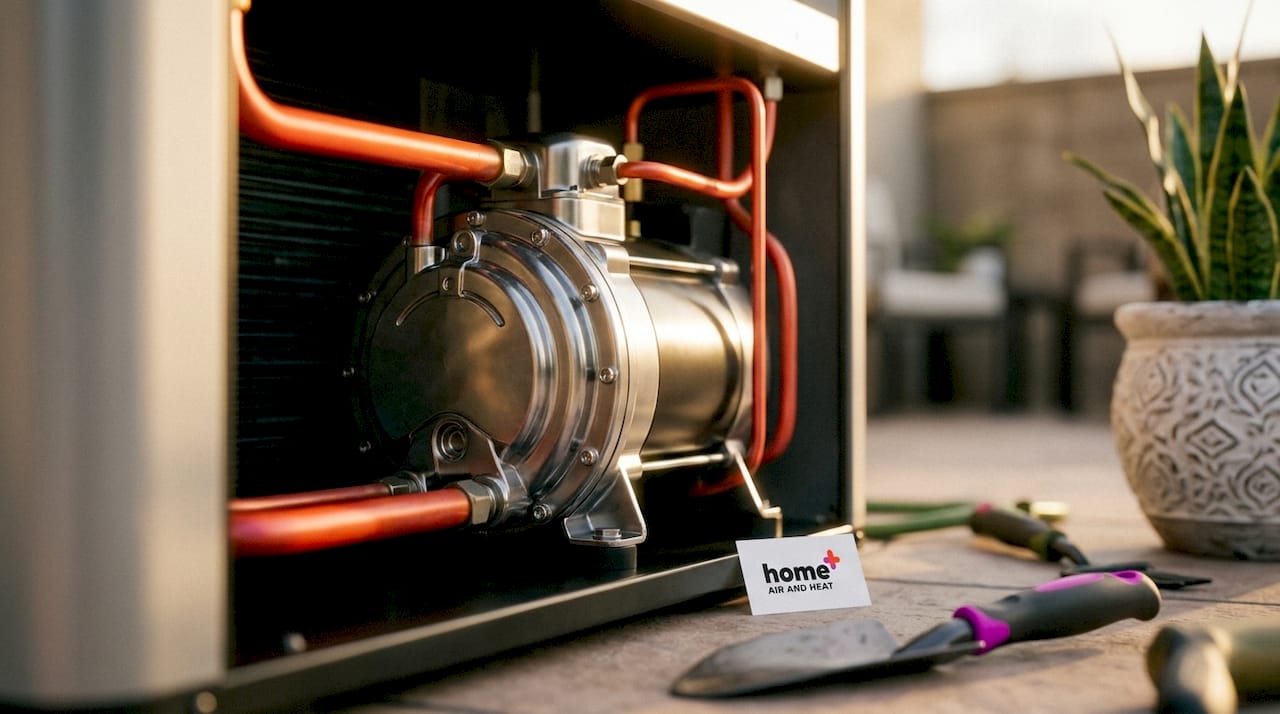
One winter-specific function homeowners often misunderstand is the defrost cycle. When outdoor temperatures hover near freezing, moisture in the air can ice up on outdoor coils, reducing airflow and efficiency. The system temporarily reverses its operation to melt that ice. This process lasts only a few minutes and has minimal impact on indoor temperature stability. Modern systems manage defrost cycles automatically and intelligently.
Here is what happens during a typical winter heating cycle:
- The outdoor unit draws in cold air across the refrigerant coil.
- The refrigerant absorbs heat from the air and evaporates.
- The compressor increases the refrigerant’s pressure, raising its temperature.
- The hot refrigerant moves to the indoor coil, releasing heat into your living space.
- The refrigerant cools, returns outdoors, and the cycle repeats.
Pro Tip: Never turn your heat pump off during a cold spell to “save energy.” Reheating a cold home forces the system to run at maximum demand for an extended period, which costs more than simply maintaining a steady temperature.
What is the efficiency of heat pumps in winter compared to other heating systems?
Heat pump winter efficiency far exceeds both electric resistance heaters and most gas furnaces when measured by energy consumed per unit of heat delivered. At temperatures as low as -4°F, modern cold-climate heat pumps achieve a COP of 2.0, meaning they deliver 2 kWh of heat for every 1 kWh of electricity used. At a mild 54°F, that COP can reach 10.0. An electric resistance heater, by comparison, always has a COP of exactly 1.0. It can never exceed 100% efficiency because it converts electricity directly into heat with no multiplication effect.
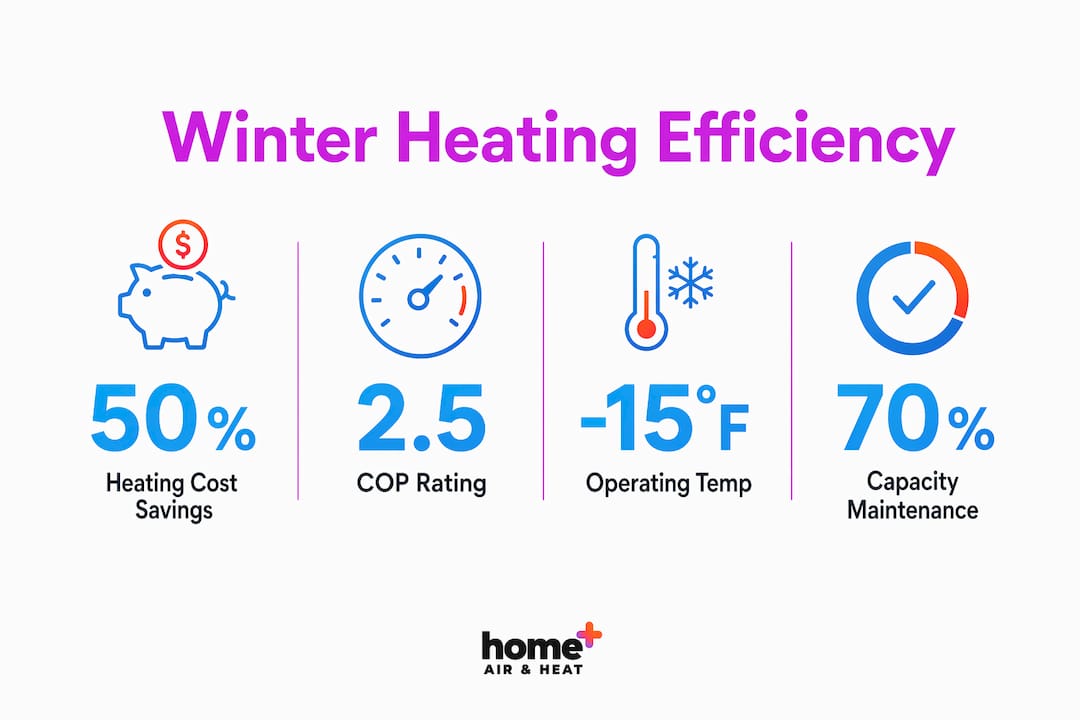
The real-world savings are significant. Households in cold climates like Sweden save over 50% on heating bills after switching to heat pumps. In moderate climates, savings reach at least 30%. Massachusetts projected that heat pump users could save $540 annually on electric bills. That figure reflects a meaningful reduction in household operating costs, not a marginal improvement.
| Heating system | Typical winter COP | Energy cost relative to heat pump |
|---|---|---|
| Cold-climate heat pump (at -4°F) | 2.0 | Baseline |
| Cold-climate heat pump (at 54°F) | Up to 10.0 | Far below baseline |
| Electric resistance heater | 1.0 | 2x or more |
| Gas furnace (high-efficiency) | 0.95 (AFUE) | Varies by gas price |
Cold-climate heat pumps maintain at least 70% of rated heating capacity at 5°F and operate efficiently down to -15°F or lower. That performance floor matters for Long Island homeowners, where winter temperatures regularly dip into the teens and single digits during cold snaps. The environmental benefit is equally real. When paired with cleaner electricity sources, heat pumps produce far fewer carbon emissions than any fossil fuel system.
How do backup heating systems complement heat pumps in cold climates?
Every heat pump has a balance point, which is the outdoor temperature at which the system can meet your home’s full heating load on its own. Below that balance point, supplemental heat kicks in to make up the difference. Understanding this concept is the key to sizing a heat pump correctly and avoiding unnecessary energy costs.
The two most common forms of backup heat are electric resistance strips built into the air handler and dual-fuel systems that pair a heat pump with a gas furnace. Electric strips are simple and inexpensive to install but costly to run. Dual-fuel systems use the furnace only when outdoor temperatures drop below the point where gas becomes cheaper than electricity, which makes them a practical choice in regions with very cold winters and affordable natural gas.
Proper sizing via load calculations is the single most important factor in minimizing backup heat use. Right-sizing a heat pump prevents oversizing, reduces backup heat reliance, and maximizes comfort throughout winter. An oversized system short-cycles, meaning it turns on and off too frequently, which wastes energy and creates uneven temperatures. An undersized system leans on backup heat constantly, erasing the efficiency advantage.
Follow these steps to get the most from your heat pump in cold weather:
- Schedule a Manual J load calculation before installation. This is the industry-standard method for determining the exact heating and cooling capacity your home needs.
- Set your thermostat to a consistent temperature. Continuous low-level operation is more efficient than large setbacks that force the system to recover from a cold house.
- Seal air leaks and add insulation before installing a heat pump. Reducing your home’s heating load lowers the balance point and reduces backup heat use.
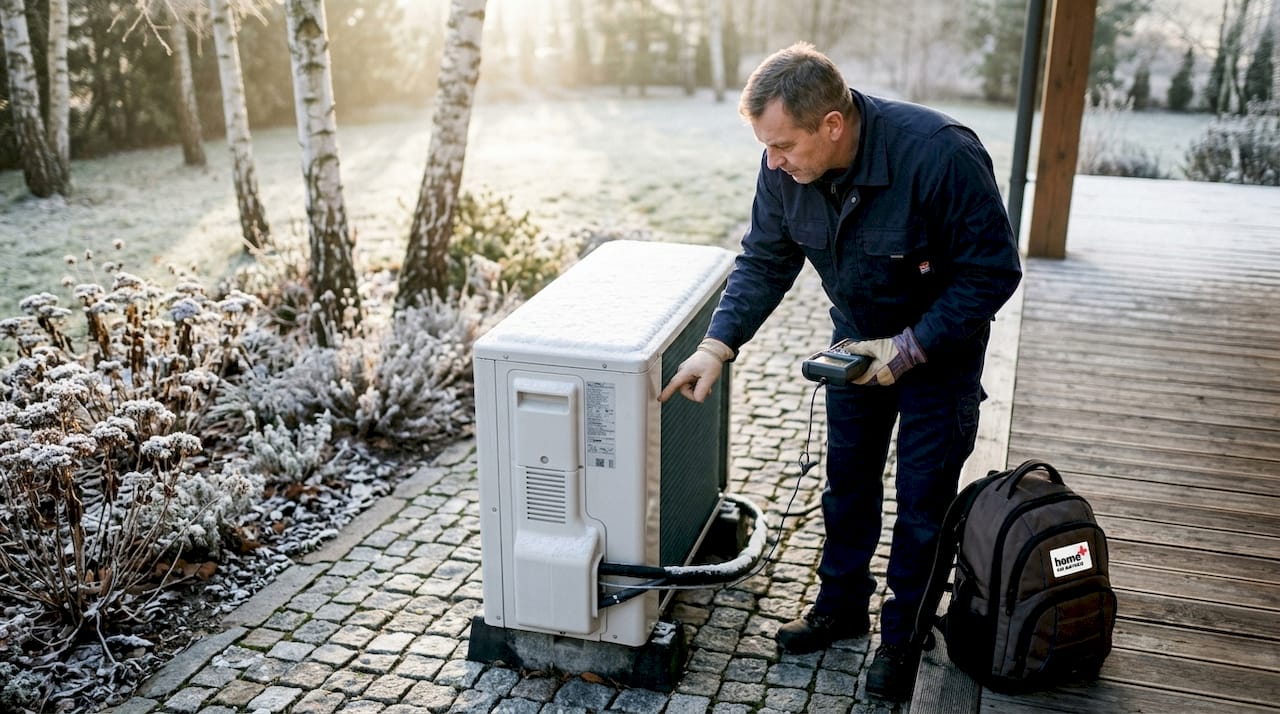
- Check your outdoor unit monthly during winter for ice buildup beyond the normal defrost cycle, which can signal a refrigerant or airflow issue.
Pro Tip: If your home has poor indoor air quality due to excess moisture, a heat pump’s built-in dehumidification can help. Pairing it with good ventilation reduces the conditions that allow mold to affect air quality in your home during winter.
What are the practical benefits of using heat pumps for winter heating?
Heat pumps deliver comfort advantages that gas furnaces simply cannot match. A furnace blasts hot air in short bursts, which creates noticeable temperature swings between cycles. A heat pump running at low continuous speed maintains a steadier, more even temperature throughout your home. Heat pumps provide steady, gentle heat and improve indoor air quality through dehumidification and filtration. That combination makes a measurable difference in day-to-day comfort, especially for homeowners with allergies or respiratory sensitivities.
The benefits of heat pumps in winter extend beyond comfort:
- Quieter operation. Inverter-driven heat pumps run at low speeds most of the time, producing far less noise than a furnace firing up.
- Improved air quality. The system circulates and filters air continuously, reducing dust, allergens, and excess humidity. This is especially valuable in tightly sealed winter homes where heating efficiency in your existing system depends on clean airflow.
- Higher home value. Cold-climate heat pumps increase home value by 4%–7%, according to current market data. Buyers recognize energy-efficient heating as a long-term cost reducer.
- Lower carbon footprint. A heat pump running on grid electricity produces fewer emissions than a gas furnace in most U.S. regions, and that advantage grows as the grid gets cleaner.
- Year-round utility. The same system that heats in winter cools in summer, eliminating the need for separate heating and cooling equipment.
Modern inverter-driven heat pumps have resolved the outdated cold-weather performance concerns that gave earlier models a bad reputation. The technology has advanced to the point where a properly sized and installed cold-climate heat pump can serve as the sole heating system in most North American winters.
Key Takeaways
A properly sized, inverter-driven cold-climate heat pump is the most energy-efficient winter heating system available to American homeowners today.
| Point | Details |
|---|---|
| Heat pumps move heat, not create it | This is why they achieve COP values of 2.0 or higher even at -4°F, far outperforming electric resistance heaters. |
| Cold-climate models hold capacity in extreme cold | Modern units maintain at least 70% rated capacity at 5°F and operate down to -15°F or lower. |
| Proper sizing reduces backup heat use | A Manual J load calculation is the industry standard for right-sizing and minimizing costly supplemental heat. |
| Consistent thermostat settings save money | Large temperature setbacks force inefficient recovery cycles; steady low-level operation costs less. |
| Heat pumps add home value and comfort | Energy-efficient heating increases property value by 4%–7% and delivers steadier indoor temperatures than furnaces. |
Why I stopped recommending furnaces as the default for cold-climate homes
The conventional wisdom used to be simple: if you live somewhere cold, get a gas furnace. I held that view for years, and I was wrong. The technology shifted faster than the advice did.
The homeowners I see making the biggest mistakes are not the ones who chose heat pumps. They are the ones who bought oversized systems based on a contractor’s gut estimate rather than a proper load calculation. An oversized heat pump short-cycles, leans on backup heat constantly, and delivers exactly the kind of inconsistent performance that gives the technology a bad name. The system is not the problem. The installation is.
The other mistake I see constantly is turning the heat pump off or way down overnight. That habit made sense with a furnace. With an inverter-driven heat pump, it actively costs you money. These systems are built to run steadily, not to sprint from a cold start. Treat them like a slow cooker, not a microwave.
My honest recommendation for Long Island homeowners is to look at whether your home is ready for a heat pump this winter before committing to another season of high fuel bills. The coastal climate here is actually well-suited to heat pump performance. Temperatures rarely stay below the balance point for extended periods, which means backup heat use stays low and savings stay high.
— Blake
Hometsair can handle your winter heating upgrade
Long Island winters demand a heating system that performs reliably, not one that struggles when temperatures drop. Hometsair’s NATE-certified technicians specialize in cold-climate heat pump installation across Nassau County, with same-day response and zero overtime fees.
Every installation starts with a proper load calculation, so your system is sized for your home, not a rough estimate. Hometsair reports a 90% first-visit fix rate, and pricing is fully transparent before any work begins. If you are in the Cedarhurst or Roslyn area, get a free installation quote and find out how much you could save this heating season. Homeowners in Hewlett can also request a local quote and take advantage of current installation promotions.
FAQ
How do heat pumps work in winter when it’s below freezing?
Heat pumps use a refrigerant with a very low boiling point to absorb heat from outdoor air even at sub-freezing temperatures. Inverter-driven compressors then concentrate that heat and deliver it indoors at usable temperatures.
What is a good COP for a heat pump in cold weather?
A COP of 2.0 at -4°F is considered strong performance for a cold-climate heat pump. That means the system delivers twice the heat energy it consumes in electricity, which is twice as efficient as electric resistance heating.
Do heat pumps need backup heat in winter?
Most cold-climate heat pumps include backup heat for extreme cold, but a properly sized system minimizes how often it activates. Right-sizing through load calculations is the most effective way to reduce backup heat reliance.
How does a heat pump compare to a furnace in winter energy costs?
Heat pumps typically cost significantly less to operate than gas furnaces or electric resistance heaters in winter. Homeowners in cold climates report savings of at least 30%, with some regions seeing over 50% reductions in heating bills.
What maintenance does a heat pump need in winter?
Keep the outdoor unit clear of snow and ice, check that airflow is unobstructed, and schedule a professional tune-up before the heating season. The defrost cycle handles routine ice buildup automatically, but heavy snow accumulation requires manual clearing.