
How Mini-Split Heating Works: A Homeowner's Guide
Discover how mini-split heating works to boost efficiency in your home. Learn the benefits of this energy-saving system today!
How Mini-Split Heating Works: A Homeowner’s Guide
Mini-split heating is defined as a refrigerant-based heat pump system that moves thermal energy from outdoor air into your home rather than burning fuel or generating heat directly. Understanding how mini-split heating works explains why these systems deliver 50–70% more efficiency than traditional forced-air systems. The U.S. Department of Energy recognizes ductless mini-splits as ideal for homes without existing ductwork, and their zonal control capability makes them a practical fit for additions, renovated spaces, and older Long Island homes built before central air became standard.
How does mini-split heating work?
A mini-split system operates on a heat pump principle. It does not create heat. Instead, it transfers heat from outdoor air to the inside of your home using refrigerant as the transfer medium. This distinction is the foundation of the system’s efficiency advantage over electric resistance heaters, which burn electricity to generate warmth from scratch.
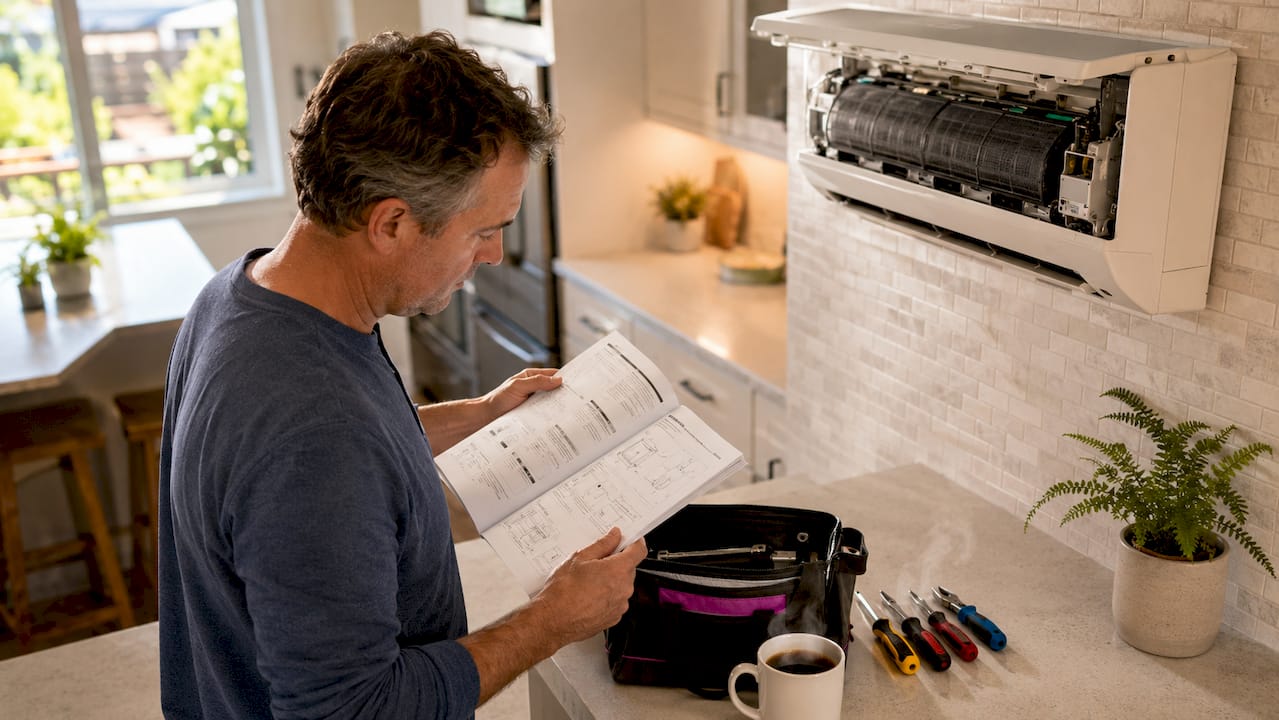
The system consists of two main units connected by refrigerant lines and electrical wiring. The outdoor unit houses the compressor and condenser coil. The indoor unit, called an air handler, contains the evaporator coil and a fan that distributes conditioned air into the room. A small bundle of lines runs through a 3-inch hole in the wall to connect them, which is why no ductwork is needed.
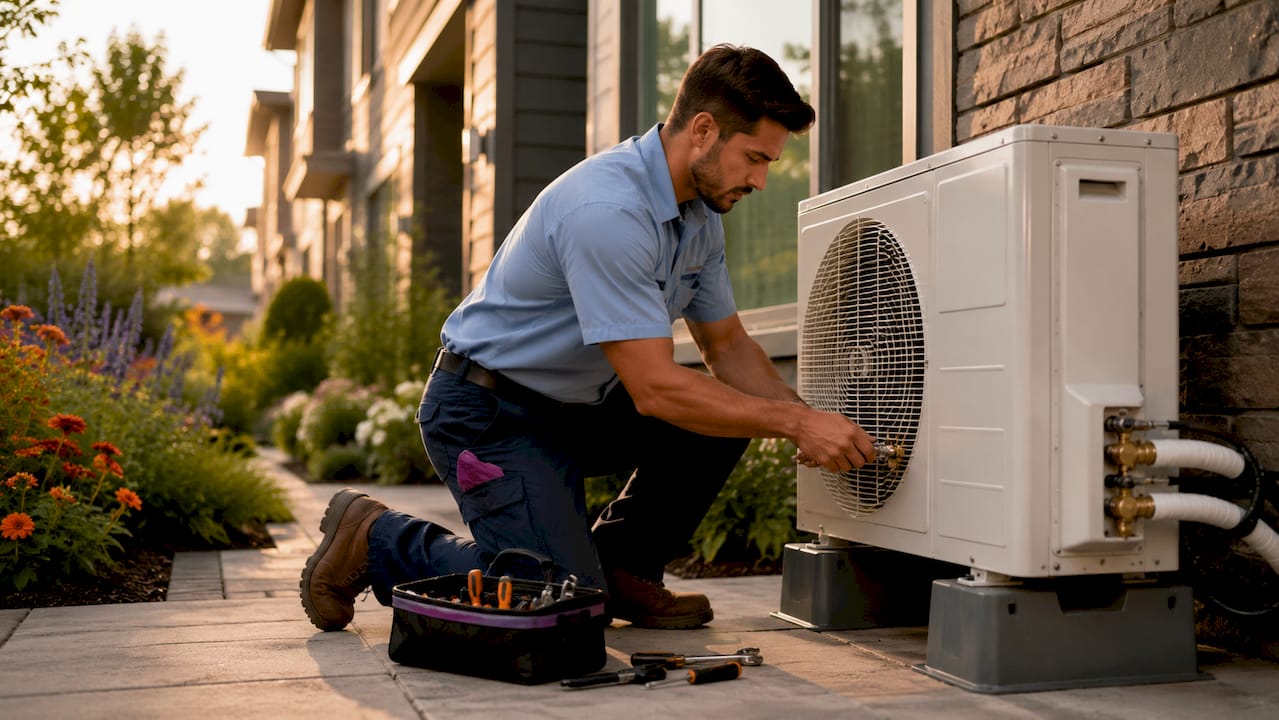
Refrigerant cycles continuously between the two units, absorbing heat in one location and releasing it in another. In heating mode, the refrigerant absorbs heat from outdoor air and carries it inside. In cooling mode, the process reverses. That reversal is controlled by a component called the 4-way reversing valve, which is the key innovation that makes a mini-split both a heater and an air conditioner in one unit.
What components make up a mini-split system?
Each component in a mini-split plays a specific role. Understanding them helps you operate and maintain the system correctly.
- Outdoor compressor/condenser: The compressor pressurizes the refrigerant, raising its temperature. The condenser coil then releases or absorbs heat depending on the operating mode.
- Indoor air handler: Mounted high on a wall, typically 7–8 feet from the floor, the air handler blows room air across the evaporator coil to deliver heated or cooled air into the space.
- Refrigerant lines: Copper lines carry refrigerant between the indoor and outdoor units. They are insulated and run through the wall opening.
- 4-way reversing valve: This valve reverses refrigerant flow to switch between heating and cooling modes. Without it, a mini-split could only cool.
- Inverter-driven compressor: Unlike older fixed-speed compressors that cycle fully on and off, inverter technology allows the compressor to run at variable speeds between 10% and 100% capacity. This prevents energy-intensive start-up surges and keeps room temperatures steady.
Pro Tip: When comparing mini-split models, check whether the system uses an inverter-driven compressor. Non-inverter units cost less upfront but consume significantly more electricity over time.
Multi-zone configurations connect one outdoor unit to up to five indoor air handlers, each controlled independently. This means you can heat the bedroom while leaving the living room at a lower temperature, which is something a single-zone central system cannot do without additional damper hardware.
How does the heating cycle transfer heat in winter?
The refrigerant cycle in heating mode follows a clear sequence. Many homeowners assume a heat pump stops working when it gets cold outside. That assumption is wrong. Refrigerant can absorb heat from outdoor air even at temperatures well below freezing, because heat energy exists in air as long as the temperature is above absolute zero.
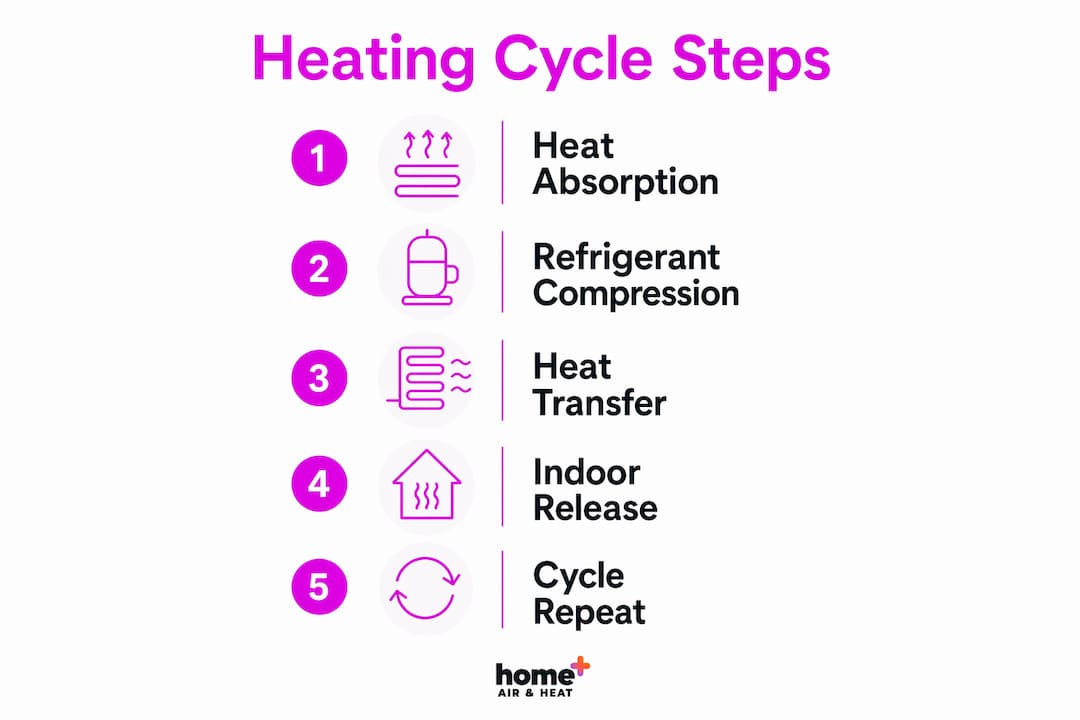
Here is how the heating cycle works step by step:
- Refrigerant enters the outdoor coil as a cold liquid. At low pressure, it has a very low boiling point, which allows it to absorb heat from the outdoor air even in cold weather.
- The refrigerant evaporates into a gas. As it absorbs outdoor heat, it changes from liquid to vapor inside the outdoor coil.
- The compressor pressurizes the gas. Compression raises the refrigerant’s temperature significantly, making it hot enough to heat your home.
- The hot gas travels to the indoor coil. The indoor air handler blows room air across this coil. Heat transfers from the refrigerant to the air, which then circulates into the room.
- The refrigerant cools and returns to liquid. It passes through an expansion valve, drops in pressure and temperature, and cycles back to the outdoor unit to repeat the process.
Mini-split heat pumps deliver 250–400% efficiency in heating mode. That means for every 1 watt of electricity consumed, the system moves 2.5 to 4 watts of heat energy into your home. Electric resistance heaters, by comparison, convert 1 watt of electricity into exactly 1 watt of heat. The difference in your monthly electric bill is substantial.
The 4-way reversing valve is what makes this cycle reversible. In summer, it flips the direction of refrigerant flow so the indoor coil absorbs heat from your room and the outdoor coil releases it outside. One system handles both seasons without any separate equipment.
What are the advantages over traditional forced-air heating?
Mini-split heating benefits go beyond efficiency numbers. The practical differences show up in daily comfort and monthly costs.
Energy savings from eliminating duct losses
Traditional forced-air systems lose a significant portion of their heated air through leaky or uninsulated ducts before it ever reaches the room. Mini-splits eliminate duct losses entirely by delivering conditioned air directly into each zone. The U.S. Department of Energy identifies this as the primary reason mini-splits achieve their efficiency advantage over ducted systems.
Quiet operation
Indoor mini-split units operate at 19–30 decibels. A whispered conversation registers at about 30 dB. That means a mini-split running at its quietest is nearly silent. Traditional forced-air systems, with their blower motors and duct vibration, are noticeably louder and often disruptive in bedrooms or home offices.
Zonal control and flexibility
Each indoor air handler operates independently. You set different temperatures in different rooms without complex zoning hardware. For Long Island homes with additions, finished basements, or converted garages, this flexibility is a practical solution where extending existing ductwork would be expensive or structurally difficult.
Pro Tip: Pair your mini-split with a programmable schedule through its remote or app. Running the system at a lower setpoint overnight and ramping up before you wake uses less energy than reheating a cold room from scratch.
For homeowners researching home energy efficiency improvements, mini-splits consistently rank among the highest-return upgrades available. The combination of inverter technology, zonal control, and no duct losses creates compounding savings across a heating season.
What should homeowners know about using and maintaining mini-splits?
Getting the most from a mini-split requires attention to a few practical details that installers often underemphasize.
- Indoor unit placement matters. Mount the air handler high on the wall with clear airflow in all directions. Curtains, shelving, or furniture placed directly below or beside the unit block air circulation and force the system to work harder, raising energy consumption.
- Run the system continuously at a moderate setpoint. Turning a mini-split fully off and then reheating a cold room wastes more energy than maintaining a steady temperature. Inverter-driven compressors are designed for continuous low-load operation, not repeated cold starts.
- Clean the filters monthly. Dirty filters restrict airflow across the evaporator coil. Restricted airflow reduces heating output and can cause the coil to ice over in extreme cases.
- Check the condensate drain line. The indoor unit removes moisture from the air and drains it outside. A properly sloped drain line prevents water from backing up and leaking indoors. Incorrect installation of this line is one of the most common failure points in ductless systems.
- Schedule annual professional maintenance. A technician checks refrigerant levels, inspects electrical connections, and cleans the coils. Systems on Long Island face salt-air corrosion on outdoor units, which makes annual inspection especially important.
Mini-splits recirculate indoor air rather than drawing in fresh outside air. This contributes to their efficiency but also means indoor air quality depends on clean filters and occasional ventilation. Open a window periodically during mild weather to refresh the air in tightly sealed rooms.
Key Takeaways
Mini-split heating systems move heat from outdoor air into your home using a refrigerant cycle, delivering 250–400% efficiency compared to electric resistance heating.
| Point | Details |
|---|---|
| Heat transfer, not generation | Mini-splits move existing heat rather than creating it, which is why they outperform electric resistance heaters. |
| Reversing valve enables both modes | The 4-way reversing valve switches refrigerant flow direction, making one unit handle both heating and cooling. |
| Inverter technology saves energy | Variable-speed compressors avoid energy-intensive on/off cycling and maintain steady room temperatures. |
| Duct-free design cuts losses | Eliminating ductwork removes a major source of energy waste common in traditional forced-air systems. |
| Placement and maintenance are critical | Mounting height, clear airflow, and a properly sloped drain line determine long-term system performance. |
What I’ve learned after years of watching mini-splits installed and misused
Most homeowners who call with mini-split complaints have the same two problems: the unit is mounted in the wrong spot, or they keep turning it off completely between uses. Both mistakes are fixable, but they cost real money before anyone catches them.
The efficiency numbers are real. A system delivering 3 watts of heat per watt of electricity is not marketing language. It is physics. But those numbers assume the system is sized correctly for the space, installed with a proper refrigerant charge, and placed where air can actually circulate. A unit crammed into a corner behind a bookshelf is not going to perform like the spec sheet says.
The other misconception I hear constantly is that heat pumps stop working in cold weather. Modern mini-splits with ductless heating technology operate effectively at outdoor temperatures well below freezing. The efficiency does drop as it gets colder, but the system keeps running. For Long Island winters, that is rarely a limitation.
My honest advice: mini-splits are best suited for specific zones, additions, or homes without ductwork. They are not always the right answer for whole-home heating in a large open floor plan with high ceilings. Assess your space honestly before committing. A good installer will tell you the same thing.
— Blake
Professional mini-split installation on Long Island
Getting a mini-split installed correctly the first time prevents the efficiency losses and water damage that come from poor workmanship.

Hometsair serves homeowners across Long Island with NATE-certified technicians who understand the specific challenges of coastal homes, including salt-air corrosion on outdoor units and older housing stock without existing ductwork. Hometsair reports a 90% first-visit fix rate and charges zero overtime fees, so you get reliable service without surprise costs. Current promotions include $1,000 off AC installations. For a free quote on mini-split installation services or to book a same-day assessment, contact Hometsair directly through the HVAC services page.
FAQ
How does a mini-split heat a room without burning fuel?
A mini-split uses refrigerant to absorb heat from outdoor air and release it indoors through a heat pump cycle. No combustion is involved, which is why it runs on electricity alone.
Is mini-split heating efficient in cold weather?
Yes. Mini-splits deliver 250–400% efficiency in heating mode, meaning they move more heat energy than the electricity they consume, even at low outdoor temperatures.
How many rooms can one mini-split outdoor unit serve?
A single outdoor unit supports up to five indoor air handlers in a multi-zone configuration, each controlled independently for different rooms.
What causes a mini-split to leak water indoors?
Water leaks almost always trace back to an incorrectly installed condensate drain line. The line must slope consistently downward to allow condensate to drain outside without backing up into the unit.
How loud is a mini-split compared to a traditional heating system?
Indoor mini-split units operate at 19–30 decibels, which is quieter than a whispered conversation. Traditional forced-air systems with blower motors and duct vibration run noticeably louder.