
Lower Your Heating Costs With a Ductless System
Discover how a lower heating costs ductless system can save you $1,530 annually. Upgrade to a ductless heat pump for significant savings!
Lower Your Heating Costs With a Ductless System
A ductless heat pump, also called a mini split, is the most cost-effective heating upgrade available to homeowners who want to cut utility bills without replacing their entire HVAC system. Homeowners replacing electric resistance heat with a high-efficiency ductless system save about $1,530 annually, with lifetime savings reaching $23,000 over 15 years. The core reason is simple: ductless systems transfer heat from outside air into your home rather than generating heat from scratch. That fundamental difference is what makes lower heating costs with a ductless system a realistic goal, not a marketing promise.
How does a ductless heating system work to save energy?
A ductless heat pump moves heat rather than creating it. That distinction matters more than any other technical detail when you are trying to understand your energy bill.
Traditional electric resistance heaters convert one unit of electricity into one unit of heat. A ductless heat pump uses that same unit of electricity to move three to four units of heat from outdoor air into your home. Modern heat pumps deliver 2–4 times the heat output per unit of electricity compared to resistance heaters or oil furnaces. That multiplier effect is the engine behind every dollar you save.

Inverter technology is the second major advantage. Older heating systems cycle fully on and fully off, drawing maximum power each time they restart. Ductless systems with inverter compressors adjust their output continuously, maintaining your target temperature without those power spikes. The result is steadier comfort and lower electricity draw over the course of a day.
The third advantage is the complete elimination of ductwork. Duct losses in traditional systems account for up to 30% of wasted heating energy. That heat escapes through leaky joints and unconditioned attic or crawl space runs before it ever reaches your living room. A ductless system delivers conditioned air directly into the room through a wall-mounted indoor unit, so none of that energy disappears into your walls.
- Heat pump technology delivers 3–4 units of heat per unit of electricity consumed.
- Inverter compressors eliminate power spikes by running at variable speeds.
- No ductwork means no duct losses, saving up to 30% of heating energy.
- Installation requires only a small hole in an exterior wall, with most jobs completed in a single day.
Pro Tip: If your home has rooms that are always too cold or too hot, a ductless system lets you heat only those zones, cutting waste immediately.
What are the typical costs and savings of a ductless system?
Understanding the numbers upfront prevents sticker shock and helps you evaluate the investment clearly.
A single-zone ductless system, covering one room or area, typically costs $3,500 to $6,000 installed. A multi-zone system designed to replace heating throughout an entire home runs $14,000 to $22,000. Those figures include equipment and professional installation. They do not include any available federal tax credits or utility rebates, which can meaningfully reduce your out-of-pocket cost.
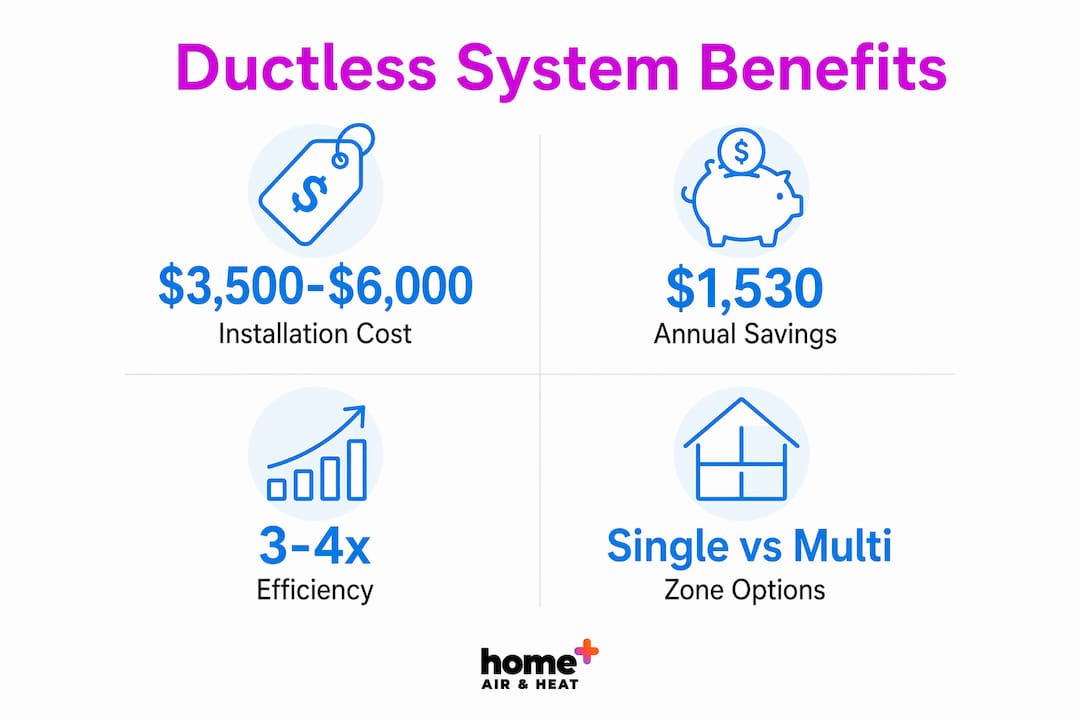
The savings side of the equation is equally concrete. Switching from electric resistance or older forced-air heating to a ductless system produces a 30–50% reduction in annual heating costs. For a homeowner spending $3,000 per year on heat, that is $900 to $1,500 back in your pocket every year. Lifetime savings of $23,000 over 15 years make the payback period on a single-zone system as short as three to four years in many cases.
| Cost or savings factor | Typical range |
|---|---|
| Single-zone installed cost | $3,500 to $6,000 |
| Multi-zone whole-home cost | $14,000 to $22,000 |
| Annual heating cost reduction | 30–50% |
| Average annual savings (vs. resistance heat) | $1,530 |
| Estimated lifetime savings over 15 years | $23,000 |
Financing options from HVAC contractors, utility programs, and the federal Inflation Reduction Act tax credit can spread the upfront cost across several years. That makes the monthly payment smaller than the monthly savings in many scenarios, meaning the system pays for itself from day one of financing.
Pro Tip: Ask your utility company about heat pump rebates before signing any contract. Many Long Island homeowners leave hundreds of dollars on the table by skipping this step.
How to maximize your savings with a ductless heating system
Getting a ductless system installed is the first step. Getting the most out of it requires a few deliberate choices about your home and your habits.
1. Seal the building envelope first
A ductless system cannot overcome a leaky home. Combining ductless heat pumps with insulation and air sealing produces the largest utility bill reductions. Weatherstrip doors, seal attic bypasses, and add insulation to the attic floor before or alongside your installation. Every dollar spent on air sealing multiplies the savings from your new system.
2. Size the system correctly
An undersized unit runs constantly and never reaches your target temperature. An oversized unit short cycles, wearing out components faster and wasting energy. A qualified HVAC technician performs a Manual J load calculation to match system capacity to your actual home. Proper sizing is the single biggest factor in whether your system performs as advertised. Check the best mini split brands to understand what capacity options are available before your consultation.
3. Use consistent temperature settings
Ductless heat pumps operate most efficiently when holding a steady setpoint rather than recovering from large temperature drops. Setting the thermostat back 10 degrees at night sounds like a savings strategy, but it forces the system to work harder during recovery, often erasing the overnight savings. Set a consistent temperature and let the inverter compressor do its job.
4. Keep up with maintenance
A dirty filter forces the system to work harder, raising electricity use and reducing output. Clean or replace filters every four to six weeks during heavy use seasons. Schedule a professional tune-up once a year to check refrigerant levels, clean coils, and verify electrical connections. A well-maintained system holds its efficiency rating for its full lifespan.
Pro Tip: Most ductless systems have an “eco” or “energy-saving” mode in the remote settings. Activating it during mild weather can reduce electricity draw by a meaningful margin without any comfort loss.
Common concerns about ductless heating and electricity costs
The most frequent worry homeowners raise is this: “My electricity bill went up after I installed a ductless system. Did I make a mistake?”
The answer is almost always no. Electricity use may rise when you switch from oil, gas, or propane to a ductless system, because you are now running more of your home’s heating on electricity. But total utility costs drop significantly because electricity delivered through a heat pump is far cheaper per unit of heat than any fossil fuel at current prices. The bill you need to watch is your combined energy bill, not just the electric portion.
- Electricity use increases, total costs decrease. This is the normal outcome when replacing oil or gas heat with a ductless system.
- Cold climate performance. Modern cold-climate heat pumps maintain efficiency down to 5°F or below. Older models struggled below freezing, but current units handle Long Island winters without supplemental heat in most cases.
- Avoid deep temperature setbacks. Dropping your thermostat 10 or more degrees overnight forces a hard recovery cycle that spikes electricity use and negates the savings.
- Unusual efficiency drops. If your system is working harder than expected, check the filter first. A clogged filter is the most common cause of reduced output and higher bills.
“The biggest mistake I see is homeowners judging a ductless system by their electric bill alone. The right metric is total energy spending across all fuel sources.”
For homeowners dealing with high energy bills before switching, the comparison is even more favorable. The baseline cost of inefficient resistance heat or aging oil systems is high enough that the ductless savings show up clearly within the first full heating season.
Key takeaways
A ductless heat pump is the most efficient heating upgrade available for homes without existing ductwork, delivering $1,530 in average annual savings and up to 50% lower heating costs compared to electric resistance or older forced-air systems.
| Point | Details |
|---|---|
| Core efficiency advantage | Heat pumps deliver 3–4 units of heat per unit of electricity, far outperforming resistance heaters. |
| Duct loss elimination | Removing ductwork prevents up to 30% energy waste seen in traditional forced-air systems. |
| Installation cost range | Single-zone systems run $3,500 to $6,000; whole-home multi-zone systems cost $14,000 to $22,000. |
| Maximize savings with insulation | Air sealing and insulation upgrades multiply the efficiency gains from a ductless system. |
| Consistent temperature settings | Holding a steady setpoint outperforms nightly setbacks for ductless heat pump efficiency. |
What I’ve learned after years of watching homeowners heat their homes the hard way
Blake here. The pattern I see most often is homeowners who install a ductless system and then undermine it with habits built around their old heating equipment.
With a gas furnace or baseboard heaters, aggressive temperature setbacks made sense. Those systems could blast heat quickly and recover fast. A ductless heat pump works on a completely different logic. It is designed to maintain, not recover. Homeowners who treat it like a furnace, cranking it down at night and back up in the morning, consistently report worse savings than those who simply set it and leave it.
The second thing I have observed is that the homes getting the best results are the ones where the ductless installation was part of a broader plan. The ductless heating systems that perform best are paired with attic insulation, sealed crawl spaces, and weatherstripped doors. The system does not have to fight the building. That combination is where the 50% savings figures actually materialize in real homes, not just in lab conditions.
My honest recommendation: do not treat a ductless system as a plug-and-play solution. Treat it as the centerpiece of a home efficiency upgrade. The upfront thinking pays off every month for the next 15 years.
— Blake
Hometsair can help you get the savings right from day one
Getting the full benefit of a ductless system depends on correct sizing, proper installation, and ongoing maintenance. A system that is even slightly mismatched to your home will underperform for its entire lifespan.
Hometsair serves Long Island homeowners with NATE-certified technicians who specialize in homes without existing ductwork, including the coastal housing stock that presents unique installation challenges. The team offers same-day response, transparent pricing, and a 90% first-visit fix rate. Whether you are ready for a ductless installation in Cedarhurst or want a professional assessment of your current system’s efficiency, Hometsair provides the expertise to make the investment worthwhile. Financing options are available to reduce the upfront barrier and let your monthly savings cover the cost from the start.
FAQ
How much can a ductless system lower my heating bill?
Homeowners replacing electric resistance heat with a ductless system save an average of $1,530 per year, with annual reductions of 30–50% compared to older forced-air or resistance systems.
What is a ductless heating system?
A ductless heating system, also called a mini split, is a heat pump that moves heat from outdoor air into your home without using ductwork. It consists of an outdoor compressor unit and one or more indoor air handlers mounted directly in the rooms being heated.
Why did my electric bill go up after installing a ductless system?
Electricity consumption often rises when a ductless system replaces oil, gas, or propane heat, because more heating now runs on electricity. Total energy costs still drop because heat pumps deliver far more heat per dollar of electricity than any fossil fuel.
How long does it take to install a ductless system?
Most single-zone ductless installations are completed in one day with minimal structural modification, requiring only a small hole through an exterior wall for the refrigerant line set.
Do ductless systems work in cold winters?
Modern cold-climate ductless heat pumps maintain efficient operation at outdoor temperatures as low as 5°F, making them a practical primary heating source for most Long Island winters without requiring a backup system.