
PSEG Long Island Heat Pump Rebates Explained: Eligibility, Application, and Energy Savings for Nassau and Suffolk Homeowners
Discover how Nassau and Suffolk homeowners can secure PSEG Long Island heat pump rebates up to $7,500. Learn about eligibility, equipment standards, and professional installation requirements.
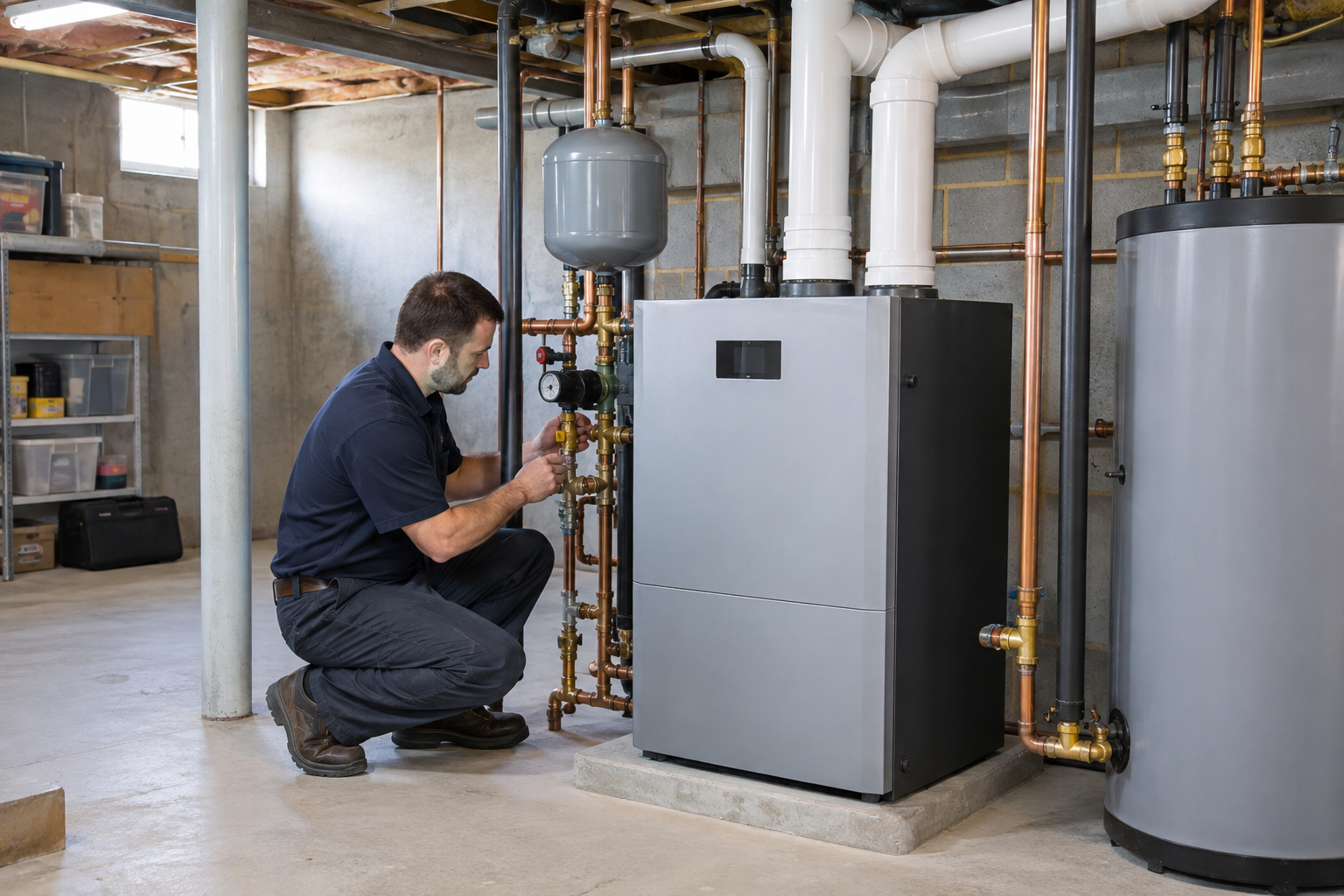
PSEG Long Island heat pump rebates: start with eligibility, not equipment
A heat pump can replace aging air conditioning and provide heating from the same system. For a Long Island homeowner, however, the right decision depends on more than the rebate: winter capacity, ductwork, electricity costs, and the condition of the house all matter.[2][3]
The PSEG Long Island rebate amounts to use for planning are $4,000 for the market-rate offer or $7,500 for the income-qualified offer. These are flat amounts—not per-ton incentives. Eligibility and payment depend on the applicable program requirements; confirm the current offer for your address and proposed installation before signing a contract.[1]
This guide focuses on residential air-source heat pumps for Nassau County and western Suffolk homeowners. Start with our Long Island heat pump rebate overview, then use the checklist below to separate a promising project from an eligible, properly designed one.

Who qualifies for PSEG Long Island heat pump rebates?
A Nassau or Suffolk address alone does not establish eligibility. Verify the property's electric utility account, the applicable residential program, the proposed equipment, and any contractor participation requirements against PSEG Long Island's current Home Comfort materials.[1]
| Planning category | Flat rebate | Confirm before purchasing |
|---|---|---|
| Market-rate | $4,000 | Customer, property, equipment, installation, and application eligibility |
| Income-qualified | $7,500 | Income qualification method, documentation, and approval requirements |
Treat these as alternative qualification categories, not two rebates to add together. Do not multiply the amount by outdoor units, indoor heads, or system tonnage unless PSEG explicitly authorizes a different project calculation in writing.[1]
Questions to resolve before paying a deposit
- Is this account and property type eligible?
- Does the proposed project need to serve the entire home?
- What rules apply to retaining an existing boiler or furnace?
- Must a participating contractor submit the application?
- Is advance approval required, particularly for income qualification?
- Who receives the rebate, and when does the homeowner receive its value?
For rentals, multifamily buildings, or unusual ownership arrangements, request a program-specific determination rather than assuming eligibility or exclusion. Our rebate planning resources can help organize those questions, but the utility's written requirements control.[1]
Which equipment qualifies?
A brand name or efficiency label is not enough. Ask for the exact outdoor model, indoor equipment, and documented matched-system ratings. AHRI certification helps establish rated performance; ENERGY STAR and the Northeast Energy Efficiency Partnerships cold-climate database provide additional equipment information. None independently guarantees a PSEG rebate.[1][4][5][6]
When comparing cold-climate heat pumps, look beyond headline efficiency. Ask how much heating capacity the selected combination delivers at the project's winter design temperature and how backup heat will operate.
How to apply without avoidable surprises
1. Establish eligibility and responsibility
Before authorizing heat pump installation, have the contractor identify the applicable program documents, qualifying equipment, submission deadline, and person responsible for filing. Do not assume a universal 90-day deadline or a guaranteed payment date. Use the current application instructions.[1]
Ask whether the proposal shows an instant discount, an assigned incentive, or a rebate received after installation. Those arrangements affect the cash you need at installation.
2. Design the system before ordering it
Request a room-by-room heating and cooling load calculation. ACCA Manual J addresses residential loads, Manual S addresses equipment selection, and Manual D addresses residential duct design. Square footage alone does not capture insulation, windows, infiltration, or room exposure.[7][8][9]
For a furnace-to-heat-pump conversion, include duct capacity, electrical work, thermostat controls, and backup strategy in the scope—not as unresolved installation-day decisions.
3. Build a project file
Use the actual application checklist to determine required submissions. As a practical recordkeeping measure, retain:
- The proposal and written eligibility correspondence.
- Equipment model numbers and matched-system documentation.
- The invoice, payment records, and installation date.
- Any required income-qualification approval.
- Permit and inspection records where applicable.
- The submitted application, attachments, and confirmation number.
Not every item is necessarily a rebate submission requirement. Keeping them together helps resolve discrepancies and supports future service.[1]
4. Track the submission through approval
Check that the installed model numbers match the application. Ask for submission confirmation and respond promptly to requests for clarification. Keep the gross contract price and expected incentive separate in your budget until the payment arrangement is clear.
If you need installation financing, compare total payments and borrowing costs, not just the advertised monthly payment. Use a financing calculator to test what happens if rebate payment arrives later than expected.
What makes a heat pump suitable for a Long Island house?
Long Island projects must address both winter heating and summer cooling. Local climate observations are available through the National Weather Service's New York office, but equipment design should use an appropriate local design condition—not simply the average winter temperature.[10][7]
A Levittown Cape, a Garden City colonial, and a Huntington split-level should not receive the same design solely because their floor areas are similar. An energy assessment can identify insulation gaps and leakage that change equipment needs. Air sealing and insulation can reduce heating and cooling demand before replacement equipment is selected.[11][12][13]
Ducted, ductless, or a combination?
| Approach | Potential advantage | Important trade-off |
|---|---|---|
| Ducted heat pump | Central distribution with fewer visible indoor units | Existing ducts need evaluation for leakage, airflow, and sizing |
| Ductless system | Useful where there are no suitable ducts or rooms need separate control | Head placement and closed-door bedrooms require careful planning |
| Mixed ducted and ductless design | Can accommodate additions or difficult room layouts | More equipment and controls can complicate cost and maintenance |
These are design choices, not rebate categories. DOE guidance explains the distribution differences and the importance of installation quality.[3][14][15] Compare ductless mini-split options with central ducted installation considerations before choosing a layout.
If an existing system struggles, investigate why. Persistent high cooling bills or short cycling warrant an air-conditioning diagnostic assessment; replacing equipment without addressing the underlying problem can leave comfort issues unresolved.[16]
Plan for cold-weather operation
Air-source heat pumps transfer heat rather than create it through combustion. Their capacity and efficiency vary with outdoor conditions, and systems may use defrost cycles or supplemental heat. Ask for low-temperature performance data and the control settings that determine when backup starts.[2][3]
If retaining oil or gas heat, specify how the two systems coordinate and confirm that arrangement's rebate eligibility. Include continuing boiler service or furnace maintenance in the ownership budget. Keeping old equipment is not automatically the cheapest or simplest solution.
Will a heat pump actually lower your energy bills?
Lower energy use does not guarantee lower bills compared with every heating fuel. Heat pumps can deliver more heat energy than the electrical energy they consume, but operating cost depends on electricity prices, displaced fuel costs, seasonal performance, and backup use.[2][3]
For an oil-heated home, compare electricity with actual oil purchases and realistic existing-system efficiency. For a gas-heated home, the financial comparison may differ. National fuel information provides context, but your own bills and PSEG Long Island's applicable rates are the better budgeting inputs.[17][18][19]
Ask for a transparent savings estimate
- Use a full year of electricity and heating-fuel records when available.
- Separate space heating from domestic hot water and other uses.
- State the assumed seasonal heat pump efficiency and backup consumption.
- Account for changed comfort habits or newly conditioned rooms.
- Compare total annual household energy cost, not just the electric bill.
Also check whether unexplained high boiler bills or high furnace energy use reflect a service problem. A neglected baseline system can make a replacement savings estimate misleading.[20]
For environmental comparisons, distinguish on-site emissions from electricity-generation emissions. A heat pump has no combustion exhaust at the home, but its broader emissions depend partly on the electricity supply. EPA's Power Profiler provides regional generation context; a universal emissions-reduction percentage would be inappropriate.[2][21]
Compare complete installation costs and other incentives
A useful estimate itemizes equipment, labor, duct changes, electrical work, controls, condensate disposal, outdoor support, removal, and any required permits. Avoid generic price ranges that omit the work your house actually needs.
If your air conditioner is already near replacement, compare the heat pump proposal with the cost components of AC replacement. The relevant decision may be the added cost of gaining efficient heating—not the entire heat pump invoice versus doing nothing.
Keep domestic hot water separate. Replacing a boiler that also heats household water requires a plan for that load; space-heating equipment does not automatically replace water-heating service. Review water heater installation options before approving boiler removal.[22]
NYSERDA's residential programs may offer additional assistance, but eligibility and incentive-combination rules need separate confirmation. Federal tax incentives also depend on current law and the installation date. Check current IRS guidance rather than relying on an older advertisement or assuming a tax benefit applies.[23][24]
A sound comparison shows the gross price, confirmed utility incentive, other independently verified assistance, and financing costs on separate lines.
Choose an installer and document commissioning
Look for an insured and EPA 608-certified team, and verify any program-specific contractor participation separately. EPA Section 608 certification concerns refrigerant-handling activities; it is not proof of utility participation or a guarantee of design quality.[25]
Use our certification information and company background as starting points for questions. Avoid treating directory inclusion as a blanket utility endorsement.
Request a handover covering thermostat settings, backup operation, filter access, condensate drainage, equipment registration, and service instructions. Proper airflow, refrigerant charge, and duct performance affect efficiency and comfort.[3][15][16] When comparing heat pump brands, weigh local service support and the actual equipment match alongside specifications.
Protect efficiency, comfort, and safety after installation
Follow the manufacturer's filter and maintenance instructions. Keep outdoor airflow clear and arrange professional servicing at the recommended interval. DOE recommends professional heat pump service at least annually. Refrigerant and electrical troubleshooting belong with qualified personnel.[26][25] Our heat pump repair guidance can help you describe symptoms when requesting service.
Heat pumps are not stand-alone air cleaners. Filtration, ventilation, and source control address different indoor-air concerns, and filters must suit the system.[27] Discuss indoor air quality improvements separately; persistent moisture may justify evaluating dedicated dehumidification rather than simply lowering the thermostat.[28]
An electric heat pump does not produce carbon monoxide through combustion. Retained boilers, furnaces, water heaters, generators, and other fuel-burning equipment still create potential exposure risks. Maintain appropriate carbon monoxide detectors and follow CPSC safety guidance.[29]
Frequently asked questions
How much is the PSEG Long Island heat pump rebate?
The planning amounts are $4,000 market-rate or $7,500 income-qualified, as flat incentives. Confirm your project's eligibility and current application terms before purchasing; do not calculate a per-ton rebate.[1]
Does every ENERGY STAR heat pump qualify?
No. ENERGY STAR certification and utility rebate eligibility are separate determinations. Verify the exact equipment combination and installation scope against PSEG Long Island's requirements.[1][5]
Can I keep my existing boiler?
A backup-heating arrangement may be technically possible, but rebate eligibility is a separate question. Get written confirmation of program rules and a clear control strategy before committing.[1][3]
Will my electric bill increase?
It may increase when electricity replaces oil or gas for heating. Evaluate the combined electricity and fuel budget, including backup heat and any remaining fuel-service costs. No fixed annual savings amount applies to every home.[2][17][18]
Can a renter apply?
Do not assume either approval or exclusion. Ask PSEG Long Island which applicant, account-holder, property, and owner-authorization requirements apply to the specific rental or multifamily property.[1]
Make the next step a documented comparison
Home+ Air & Heat serves Nassau County and western Suffolk. For a project discussion, call (516) 259-1191 or request a heat pump installation estimate. Bring your utility bills, existing equipment details, and comfort concerns. Ask for a written scope that separates system design, rebate eligibility, and expected operating costs—so the decision works for your house, not just the advertised incentive.
Sources
- [1] PSEG Long Island — Home Comfort program; confirm current eligibility, rebate terms, and application documents
- [4] Air-Conditioning, Heating, and Refrigeration Institute — Directory of Certified Product Performance
- [5] ENERGY STAR — Air-Source Heat Pumps
- [6] Northeast Energy Efficiency Partnerships — Cold Climate Air Source Heat Pump Product List
- [7] Air Conditioning Contractors of America — Manual J Residential Load Calculation
- [8] Air Conditioning Contractors of America — Manual S Residential Equipment Selection
- [9] Air Conditioning Contractors of America — Manual D Residential Duct Systems
- [10] National Weather Service, New York — Local Climate Information
- [17] PSEG Long Island — Rates and Tariffs
- [18] U.S. Energy Information Administration — Heating Oil Explained: Prices and Outlook
- [19] U.S. Energy Information Administration — Natural Gas Explained: Prices
- [21] U.S. Environmental Protection Agency — Power Profiler
- [24] Internal Revenue Service — Energy Efficient Home Improvement Credit; check current installation-date rules
- [25] U.S. Environmental Protection Agency — Section 608 Technician Certification Requirements
- [27] U.S. Environmental Protection Agency — Air Cleaners and Air Filters in the Home
- [28] U.S. Environmental Protection Agency — A Brief Guide to Mold, Moisture and Your Home
- [29] U.S. Consumer Product Safety Commission — Carbon Monoxide
- New York State Clean Heat: Heat Pump Education and Incentive Resources
Related Home+ Air & Heat services
Talk to a local technician. Home+ Air & Heat serves Nassau County and western Suffolk with insured, EPA 608-certified technicians. Call (516) 259-1191 or book online.
Your Long Island HVAC team
Home+ Air & Heat55 Jericho Tpke, Suite 203
Jericho, NY 11753
Phone: (516) 259-1191
View us on Google Maps
Serving homeowners across Nassau County and western Suffolk County.