
Types of Home HVAC Systems: Your 2026 Decision Guide
Discover the essential types of home HVAC systems for your 2026 decisions. Make informed choices to enhance comfort and efficiency.

Types of Home HVAC Systems: Your 2026 Decision Guide
The main types of home HVAC systems are central ducted units, ductless mini-splits, heat pumps, and hybrid dual-fuel systems. Each serves a different combination of home layout, climate zone, and budget. Choosing the wrong type costs you money every month and leaves rooms uncomfortable year-round. This guide breaks down each system with real efficiency numbers, installation realities, and the situations where each one wins. Whether you are buying your first home or replacing aging equipment, understanding these options is the first step toward a smarter decision.
1. What are the main types of home HVAC systems?
Central ducted systems, ductless mini-splits, heat pumps, and hybrid dual-fuel systems are the four primary categories. Each category handles heating and cooling differently, and each carries its own installation requirements and efficiency profile. The industry term for the full category is “HVAC,” which stands for Heating, Ventilation, and Air Conditioning. Knowing the standard terminology helps you read contractor quotes and efficiency labels accurately.
Two metrics define modern HVAC efficiency: SEER2 (Seasonal Energy Efficiency Ratio 2) for cooling and HSPF2 (Heating Seasonal Performance Factor 2) for heating. These updated standards took effect in 2023 and replaced the older SEER and HSPF ratings. A higher number means lower operating costs.
2. Central ducted systems: the most common home heating and cooling setup
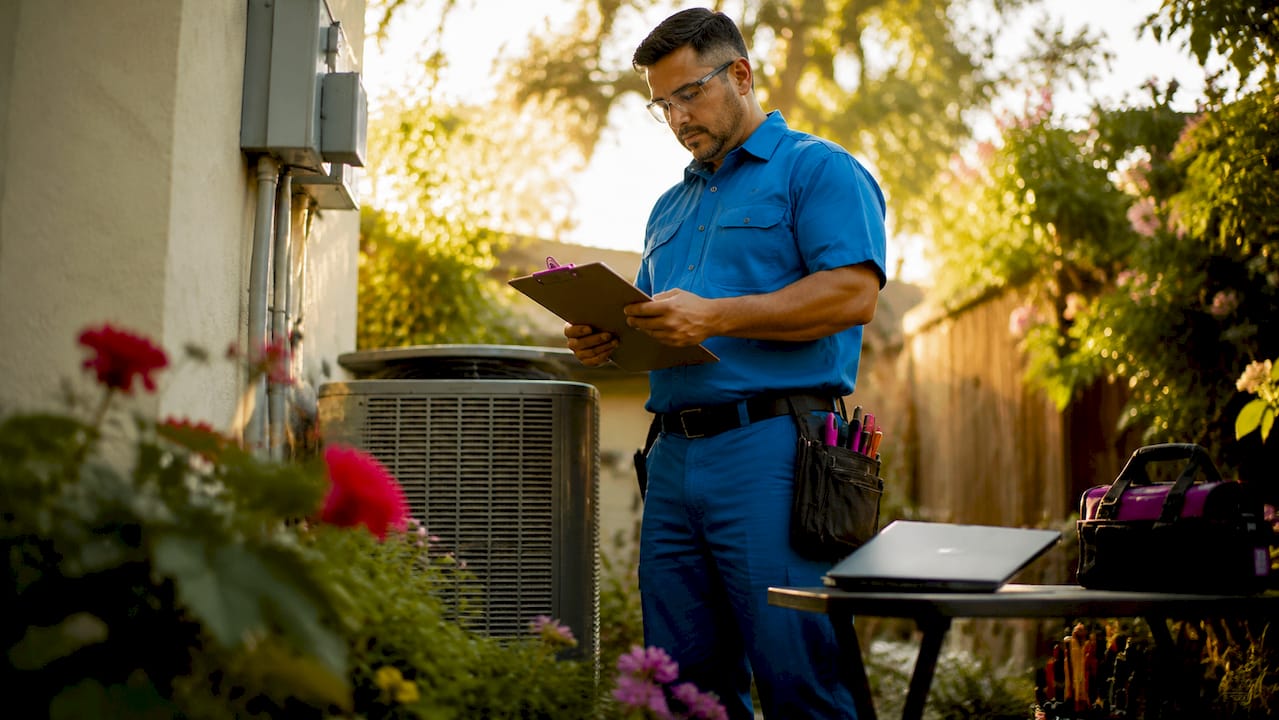
Central ducted HVAC is the standard system in most American homes. A central air handler or furnace connects to a network of ducts that distribute conditioned air through vents in every room. One outdoor condenser unit handles the refrigeration cycle for cooling, while a furnace or air handler manages heating.
Advantages of central ducted systems:
- Whole-home coverage from a single system
- Compatible with whole-home air filtration and humidification
- Familiar technology with a wide pool of qualified installers
- Lower upfront cost per square foot compared to multi-zone ductless setups
The biggest weakness is duct performance. Duct losses in poorly sealed systems can waste 25–40% of HVAC capacity, even when the equipment itself is high quality. Ducts routed through unconditioned attics are the worst offenders.
Pro Tip: Ask your installer to perform a duct blaster test before and after installation. A sealed duct system in conditioned space can recover most of that wasted capacity at minimal cost.
Central ducted systems work best in homes built with ductwork already in place. Retrofitting ducts into an older home without them is expensive and disruptive. For those homes, ductless or heat pump options are worth a serious look.
3. How ductless mini-split systems work
A ductless mini-split system uses one outdoor compressor connected to one or more indoor air-handling units mounted on walls or ceilings. There are no ducts. Refrigerant lines run through a small hole in the wall to connect the indoor and outdoor units.
Key benefits of ductless mini-splits:
- SEER2 ratings up to 30+, making them among the most efficient cooling options available
- Independent zone control: each indoor unit has its own thermostat
- Ideal for home additions, garages, sunrooms, and older homes without ductwork
- No duct losses, so rated efficiency translates directly to real-world performance
The tradeoff is visibility. Indoor wall units are noticeable, and some homeowners dislike the aesthetic. Multi-zone systems also carry a higher upfront cost than a single central system covering the same square footage.
Mini-splits are the right call for Long Island homes built before central air became standard. Many of those houses have no duct infrastructure at all, and adding ductwork is rarely cost-effective. A NATE-certified technician can size a multi-zone mini-split to cover an entire home without touching a single wall cavity.
4. Why heat pumps are the leading choice for energy-efficient HVAC
A heat pump moves heat rather than generating it. In summer, it pulls heat out of your home and dumps it outside. In winter, it reverses the process and pulls heat from outdoor air into your home. This transfer process is far more efficient than burning fuel or using electric resistance heating.
Efficiency and savings
Heat pumps deliver 25–40% savings on combined heating and cooling bills compared to a standard AC and gas furnace setup in mixed climates. That is a meaningful reduction on a Long Island utility bill. Moving from a 14 SEER2 to a 16 SEER2 rated system cuts annual cooling costs by about 12%, which adds up to roughly $1,728 in savings over 12 years.
Cold climate performance
The old knock on heat pumps was that they failed in cold weather. Modern cold-climate heat pumps maintain full capacity down to 5°F and continue operating efficiently to around -15°F. That covers virtually every winter scenario on Long Island.
Pro Tip: Look for a heat pump with a variable-speed compressor. Variable-speed technology avoids the on/off cycling of single-stage units, which means better humidity control and lower energy use during mild weather.
| Feature | Standard Heat Pump | Cold-Climate Heat Pump |
|---|---|---|
| Effective heating range | Down to ~20°F | Down to -15°F |
| SEER2 range | 15–20 | 18–24+ |
| Best climate | Mild to mixed | Mixed to cold |
| Typical lifespan | 15 years | 15–20 years |
Heat pumps are the best single-system option for most Long Island homeowners who want to reduce both their carbon footprint and their monthly bills. Pairing one with a heat pump winter guide helps you get maximum performance through the coldest months.
5. What are hybrid dual-fuel systems and when should you choose them?
A hybrid or dual-fuel system pairs an electric heat pump with a gas furnace. The heat pump handles all heating and cooling during moderate temperatures. When outdoor temps drop below a set threshold, usually 20–30°F, the gas furnace takes over automatically.
When a hybrid system makes sense:
- You already have a functioning gas furnace and want to add heat pump efficiency
- Your climate includes occasional deep freezes that push past heat pump limits
- Natural gas prices in your area are low relative to electricity costs
- You want backup heating reliability without relying solely on electricity
Dual-fuel systems are pragmatic for cold climates, blending heat pump efficiency at moderate temperatures with reliable gas backup during deep freezes. The heat pump handles the majority of heating hours in most winters, so you still capture most of the efficiency savings.
The upfront cost of a hybrid system is higher than either a standalone heat pump or a furnace alone. You are essentially buying two systems. The payback depends on your local utility rates and how many extreme-cold days your area sees each year. For most of Long Island, a cold-climate heat pump alone is sufficient, but homeowners in the North Shore’s colder inland areas may find the hybrid setup worth the investment.
6. How to compare home HVAC systems for your specific situation
Choosing between system types comes down to five factors: installation complexity, upfront cost, energy efficiency, climate suitability, and zoning needs. HVAC selection is a systemic design process where zoning and indoor air quality should be planned early to avoid costly retrofits later.
| Factor | Central Ducted | Ductless Mini-Split | Heat Pump | Hybrid Dual-Fuel |
|---|---|---|---|---|
| Upfront cost | Moderate | Moderate to high | Moderate to high | High |
| Energy efficiency | Moderate | Very high | High to very high | High |
| Zoning capability | Limited | Excellent | Moderate | Moderate |
| Best climate | Any (with ducts) | Any | Mild to cold | Cold to mixed |
| Installation complexity | High (if no ducts) | Low to moderate | Moderate | High |
Understanding HVAC zoning options before you buy prevents the common mistake of installing a single-zone system in a home where different floors have very different heating and cooling needs. Zoning adds cost upfront but eliminates the frustration of hot upstairs bedrooms and cold basements.
Lifespan also factors into the comparison. Central ducted systems and heat pumps typically last 15–20 years with proper maintenance. Ductless mini-splits often reach the same range. Hybrid systems depend on the individual components, with the furnace potentially lasting 20+ years and the heat pump component following standard heat pump lifespan.
Pro Tip: When replacing an older system, replacing only the outdoor unit is a common mistake. Mismatched components degrade SEER2 efficiency, and a full system replacement often costs less than $1,500 more while preserving warranty coverage and real-world performance.
For homeowners planning a full installation, the HVAC installation checklist covers every step from load calculation to final commissioning.
Key takeaways
The right HVAC system type depends on your home’s existing ductwork, your climate zone, and your efficiency goals. No single system wins in every situation.
| Point | Details |
|---|---|
| Duct quality determines central system performance | Poorly sealed ducts waste 25–40% of capacity regardless of equipment quality. |
| Mini-splits lead in zoning and efficiency | SEER2 ratings above 30 and independent room control make them ideal for non-ducted homes. |
| Heat pumps cut bills by up to 40% | Cold-climate models now operate efficiently down to -15°F, covering most U.S. climates. |
| Hybrid systems suit cold-climate homes | A dual-fuel setup uses the heat pump for most hours and gas backup only during deep freezes. |
| Proper sizing is non-negotiable | Manual J load calculation prevents oversized units that short-cycle and fail to control humidity. |
What I’ve learned after years of watching homeowners choose the wrong system
The most expensive HVAC mistake I see is not choosing the wrong brand. It is choosing the wrong system type for the home’s structure, then compounding it with a poor installation. A premium heat pump installed without a Manual J load calculation will short-cycle, fail to dehumidify, and wear out years ahead of schedule. The industry standard for sizing exists precisely because rules of thumb based on square footage consistently produce oversized units.
My second observation: installation quality outweighs brand name every time. A well-installed mid-tier system beats a premium unit with sloppy refrigerant charging and unsealed duct connections. Vet your installer harder than you vet the equipment.
The third thing I would tell any homeowner is to think about zoning before signing a contract. Adding zone control after installation is expensive. Planning it in from the start costs a fraction of the retrofit price and makes a real difference in daily comfort, especially in two-story homes where heat rises and creates uneven temperatures.
Future-proofing matters too. If your utility is moving toward time-of-use electricity pricing, a heat pump with a variable-speed compressor and a smart thermostat gives you the ability to shift loads to off-peak hours. That is a real financial advantage that a gas furnace cannot offer.
— Blake
Hometsair serves Long Island homeowners across every HVAC system type
Picking the right system is only half the equation. The installation determines whether you actually get the efficiency and comfort the equipment promises.
Hometsair’s NATE-certified technicians handle central ducted systems, ductless mini-splits, heat pumps, and hybrid setups across Long Island. Every installation starts with a proper load calculation, not a square-footage guess. Hometsair reports a 90% first-visit fix rate and charges zero overtime fees, so you get reliable service without surprise costs. Current promotions include $1,000 off AC installations. For homeowners in Nassau County, AC installation in Roslyn and AC installation in Cedarhurst are available with free quotes. Contact Hometsair to find the right system for your home and budget.
FAQ
What is the most energy-efficient home HVAC system?
Ductless mini-splits and cold-climate heat pumps lead in efficiency, with SEER2 ratings above 30 and heating savings of 25–40% over traditional AC and furnace combinations.
How do I choose an HVAC system for a new home?
Start with a Manual J load calculation to determine the correct size, then match the system type to your home’s ductwork, climate zone, and zoning needs.
What is a dual-fuel HVAC system?
A dual-fuel system pairs an electric heat pump with a gas furnace backup. The heat pump runs during moderate temperatures, and the furnace activates automatically below 20–30°F.
Can a heat pump work in cold climates?
Modern cold-climate heat pumps maintain capacity down to 5°F and operate efficiently to around -15°F, making them viable across most of the northeastern United States.
What does SEER2 mean on an HVAC system?
SEER2 is the current federal efficiency standard for cooling. A higher SEER2 rating means lower annual cooling costs, with each rating point representing measurable savings over the system’s lifespan.