
HVAC Replacement Cost in Nassau County: Starting Prices and What Changes Them
What HVAC replacement costs in Nassau County: central AC starts from $5,200, furnaces from $4,800, heat pumps from $7,500, and what raises the price.
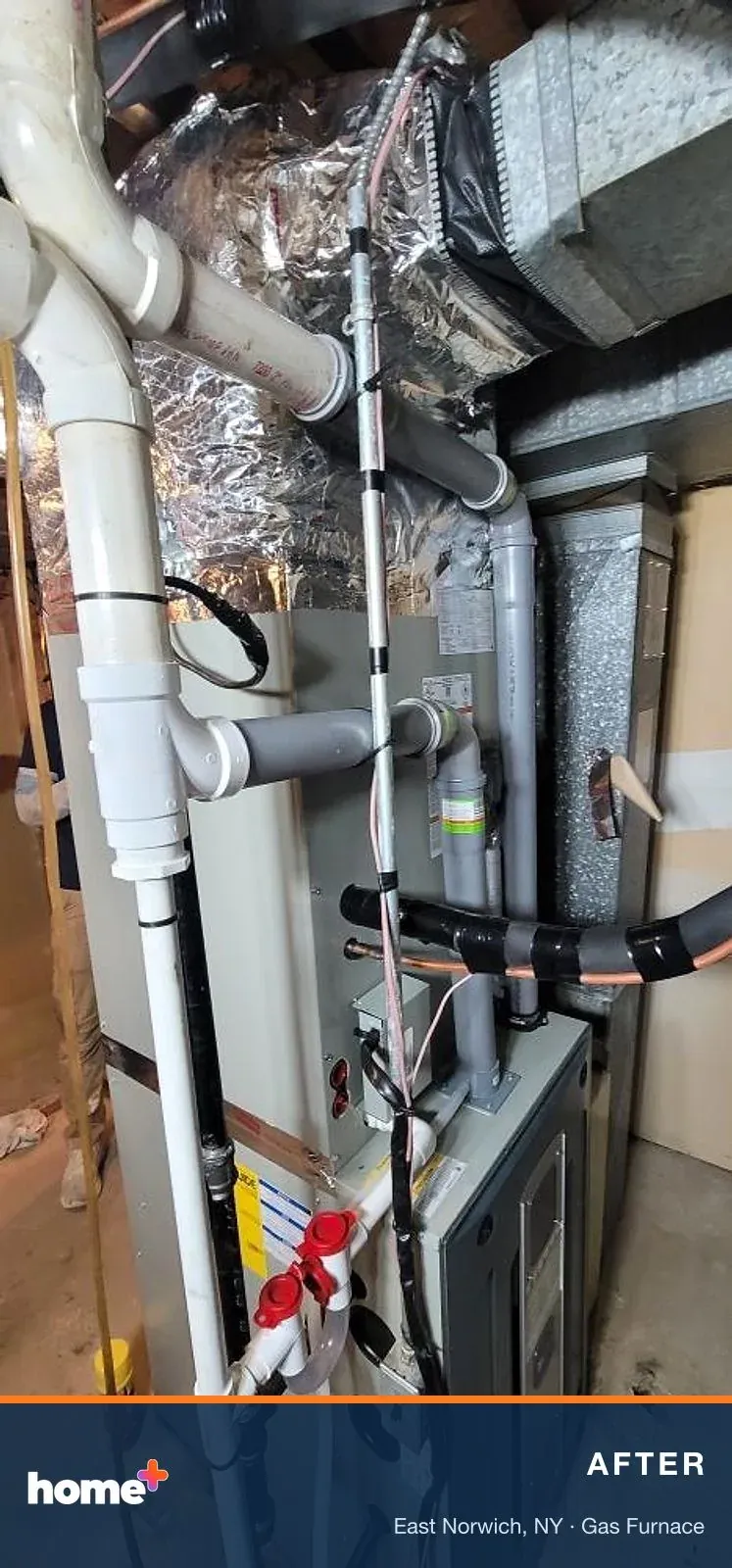
HVAC replacement in Nassau County is priced by scope, not by a national average. At Home+ Air and Heat, central AC replacement starts from $5,200, furnace replacement starts from $4,800, heat pump installation starts from $7,500, and a matched AC plus furnace or air-handler system starts from $12,000. Your written in-home estimate sets the final number.
Those starting points cover a like-for-like swap in a home whose ductwork, electrical service and equipment location are already in usable shape. Everything else on this page explains what moves a Long Island project above the starting price, and how to read a quote so you can compare contractors fairly. If you only need cooling numbers, our AC replacement cost guide for Long Island goes deeper; for heating, see the furnace replacement cost breakdown.
Starting prices by system type
| Project | Starts from | What usually raises it |
|---|---|---|
| Central AC replacement | $5,200 | Larger tonnage, variable-speed equipment, new line set, attic air handler access |
| Furnace replacement | $4,800 | Two-stage or modulating burners, venting changes, gas piping, tight basements |
| Heat pump installation | $7,500 | Cold-climate models, electrical upgrades, backup heat, new ductwork |
| Matched AC + furnace or air handler | $12,000 | Duct modifications, zoning, high-efficiency pairings |
Equipment efficiency matters to the price and to your bills. ENERGY STAR lists qualifying furnaces and air-source equipment, and certified matched systems can be checked in the AHRI directory.[2][4][11] A higher-efficiency model costs more up front; whether it pays back depends on how long you plan to stay and on local energy rates.[16][20]
What drives the final price on a Long Island home
Correct sizing comes first
A replacement should be sized with a room-by-room load calculation, not by copying the old unit's label. ACCA Manual J is the industry method for that calculation.[9] Many Long Island capes and colonials were fitted with oversized equipment decades ago; right-sizing can change the equipment you need and, with it, the price. Our furnace size calculator gives a rough starting point before the visit.
Ductwork and air handler location
Leaky or undersized ducts waste conditioned air and can make a new system look like it underperforms.[1][7] Attic air handlers, common in split-level and raised-ranch homes, add labor for access and condensate protection. If the ducts need sealing or partial replacement, a good quote lists that work separately. Related services: air duct cleaning and ventilation upgrades.
Electrical, gas and venting
Heat pumps and larger condensers may need a new circuit or panel capacity. High-efficiency furnaces usually vent through PVC to the outside rather than up the old chimney, and some jobs need gas line changes. Work must meet New York State building code requirements.[23]
Refrigerant and older equipment
Older R-22 systems cannot simply be topped up and swapped piece by piece; replacing them usually means a new condenser and a matched indoor coil or air handler. Refrigerant handling must be done by EPA Section 608-certified technicians.[12] We documented one such job in our Westbury R-22 to R-32 replacement.
Repair or replace?
There is no single dollar rule that fits every home. Weigh the age of the system, how often it has failed this year, whether the refrigerant is still supported, and how a repair quote compares with the replacement price above. If you are not sure, start with an AC diagnostic or a furnace diagnostic so the decision is based on measured readings. Our guide to how long a furnace lasts and the furnace repair cost guide can help frame it.
Rebates, credits and financing
PSEG Long Island's Home Comfort program offers heat pump rebates when a Participating Partner installs a qualifying, properly sized system: a flat $4,000 market-rate rebate, or $7,500 for income-qualified households. Eligibility is confirmed by PSEG Long Island, so check the current program terms before you sign.[19][22] Our Long Island heat pump rebate guide and rebates page explain the steps. Federal tax credits may also apply; confirm with a tax professional.
If you would rather spread the cost out, see the financing options or estimate a payment with the financing calculator. Terms depend on credit approval.
How to compare replacement quotes
- Is the equipment named by model number, with the matched indoor coil or air handler?
- Was a load calculation done, or was the old size copied?[10]
- Are duct, electrical, venting and permit work listed line by line?
- What labor warranty is offered, and is manufacturer registration included?
- Is old equipment and refrigerant removal included?
Comparing these items side by side is more useful than comparing totals. Brand matters less than installation quality; see our AC brand comparison and furnace brands for Long Island.
Seasonal timing on Long Island
Nassau County winters are cold enough that a heating failure in January is urgent, and summer heat waves fill cooling schedules fast.[25] Replacing in spring or fall gives you more choice of equipment and installation dates. Regular service also helps you plan rather than react: see the AC tune-up and furnace tune-up, and the ENERGY STAR maintenance checklist.[5]
Comparing heating types first? Read our boiler vs. furnace guide for older Long Island homes or the overview of types of HVAC systems. Fuel costs also shape the choice.[17][18]
Get a written estimate
Home+ Air and Heat serves Nassau County and Western Suffolk. Call (516) 259-1191 or request a free in-home estimate; you will get a written, itemized price before any work begins.
Sources
- ENERGY STAR — Heating and cooling
- ENERGY STAR — Furnaces
- ENERGY STAR — Boilers
- ENERGY STAR — Product finder
- ENERGY STAR — Maintenance checklist
- ENERGY STAR — Guide to energy-efficient heating and cooling (PDF)
- U.S. Department of Energy — Energy Saver
- U.S. DOE FEMP — Residential gas boilers
- ACCA — Manual J residential load calculation
- ACCA — Technical manuals
- AHRI — Air-Conditioning, Heating, and Refrigeration Institute
- EPA — Section 608 technician certification
- EPA — Indoor air quality
- EPA — Should you have the air ducts in your home cleaned?
- EPA — Carbon monoxide and indoor air quality
- U.S. EIA — Natural gas prices explained
- U.S. EIA — Heating oil prices and outlook
- U.S. EIA — Winter fuels outlook
- PSEG Long Island
- PSEG Long Island — Rates
- National Grid — Long Island rates
- NYSERDA
- New York Department of State — Building standards and codes
- NFPA — Heating fire safety
- NOAA — U.S. climate normals