
The Role of Thermostat in HVAC: Homeowner's Guide
Discover the role of thermostat in HVAC systems. Learn how a well-functioning thermostat can enhance comfort and save on energy costs.

The Role of Thermostat in HVAC: Homeowner’s Guide
The thermostat is defined as the command center of any HVAC system, continuously sensing indoor air temperature and signaling heating or cooling equipment to maintain your chosen setpoint. Understanding the role of thermostat in HVAC directly determines how comfortable your home feels and how much you pay each month in energy costs. A misplaced, miscalibrated, or outdated thermostat can force your furnace or AC to work harder than necessary, driving up wear and utility bills. Getting this one device right pays off across every season.
How does a thermostat function in an HVAC system?
The thermostat acts as a temperature-sensitive switch, constantly comparing the room’s ambient temperature to the setpoint you programmed. When the room drops below your heating setpoint or rises above your cooling setpoint, the thermostat sends a low-voltage electrical signal through its wiring to the appropriate HVAC component. That signal tells your furnace to fire, your AC compressor to start, or your fan to run. When the room reaches the target temperature, the thermostat cuts the signal and the equipment shuts off.
Understanding the four-wire control system
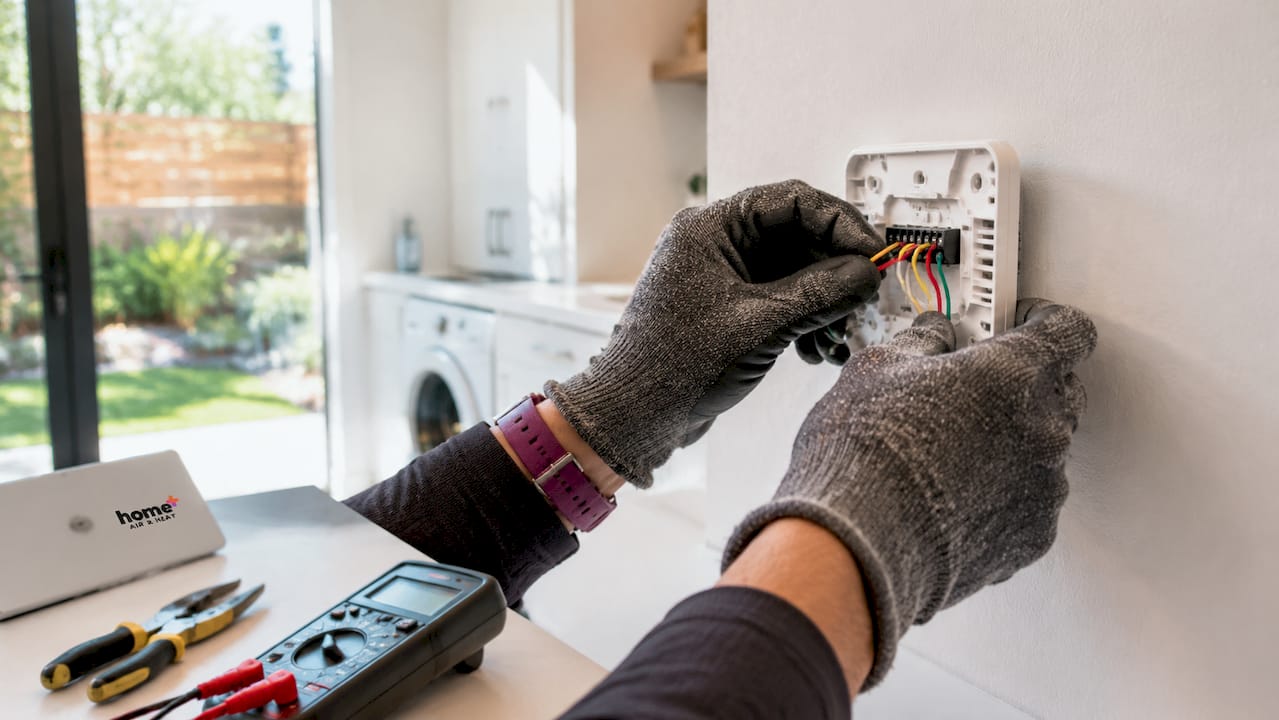
Most residential HVAC systems use a four-wire wiring setup with color-coded terminals that each carry a specific function:
- Red ®: Carries 24V power from the transformer to the thermostat
- White (W): Signals the furnace or heat strip to activate heating
- Yellow (Y): Signals the AC compressor to start cooling
- Green (G): Controls the air handler fan independently
- Common wire ©: Provides continuous 24V power return, required by most smart thermostats
Each wire connects the thermostat to a specific HVAC component. If any wire is loose, corroded, or connected to the wrong terminal, the system behaves erratically. On Long Island, salt-air corrosion is a real threat to these low-voltage connections, which is why Hometsair technicians inspect thermostat wiring during every maintenance visit.
How regulated cycling protects your equipment
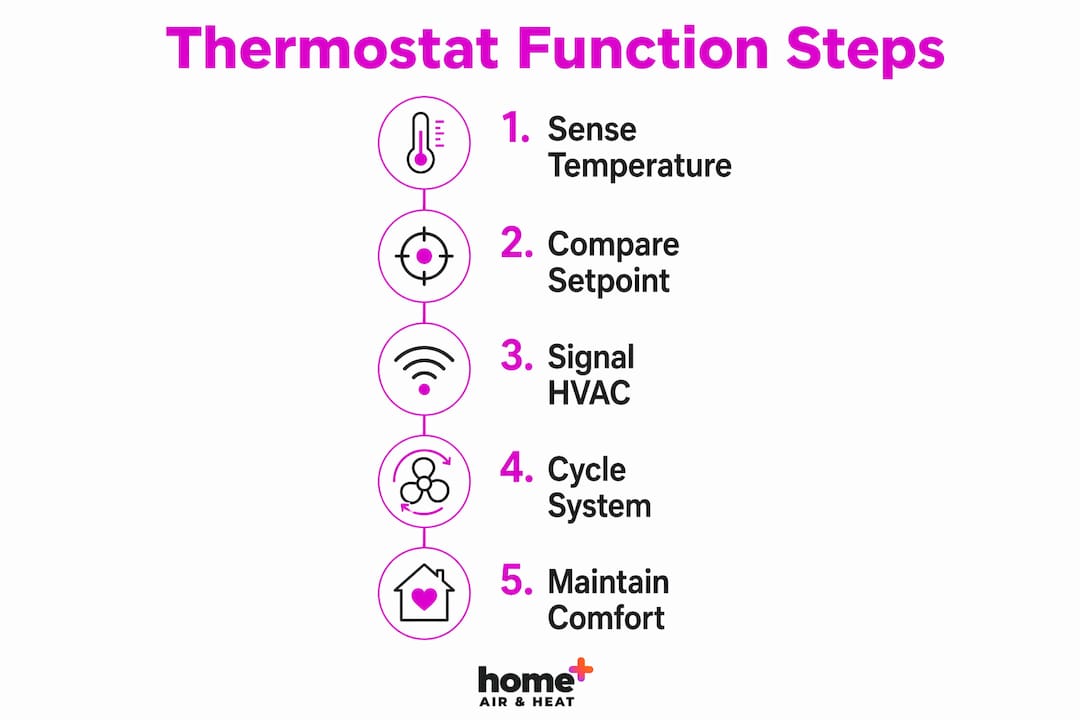
The thermostat does more than flip a switch. It prevents equipment wear by managing how often your system cycles on and off. Every startup puts mechanical stress on compressors, motors, and heat exchangers. A properly calibrated thermostat spaces those cycles out at healthy intervals. Without that regulation, your system short cycles, meaning it turns on and off too frequently, which accelerates component failure and raises repair costs.
Pro Tip: If your system runs for less than five minutes before shutting off and then restarts within a few minutes, suspect the thermostat before calling for a compressor repair. Short cycling is often a thermostat problem, not a mechanical one.
Why does thermostat placement matter for HVAC performance?
Improper thermostat placement near heat sources, supply vents, or windows causes the sensor to read a temperature that does not reflect the actual room conditions. When the thermostat sits in a warm spot, it tells the AC to run longer than needed. When it sits in a cold draft, it calls for heat even when the rest of the house is comfortable. Both scenarios waste energy and create uneven comfort.
Where to place a thermostat for accurate readings
The best thermostat location follows a few clear rules:
- Mount on an interior wall, away from exterior walls that gain or lose heat quickly
- Keep at least 3 feet from supply air vents, which blow conditioned air directly onto the sensor
- Avoid walls that share space with appliances like ovens, refrigerators, or water heaters
- Stay out of direct sunlight, which heats the sensor and triggers false cooling calls
- Position at roughly 5 feet from the floor, where occupied-zone air temperature is most representative
Moving a thermostat to a better location often solves comfort complaints that homeowners assumed required a new HVAC unit. This is one of the most underused fixes in residential HVAC service.
Calibration and cycle rate settings
Calibration refers to how accurately the thermostat reads temperature relative to the actual room temperature. A thermostat that reads 2°F high will keep your home cooler than you intended and run the AC longer than necessary. The cycle rate setting, sometimes called the temperature swing or differential, controls how far the room temperature must drift from the setpoint before the system kicks on again. A tight differential means more frequent cycling. A wider differential means fewer cycles but slightly more temperature variation. Short cycling caused by miscalibration increases wear on components and raises energy costs over time.
Pro Tip: Use a calibrated digital thermometer to check your thermostat’s accuracy. Hold it next to the thermostat for 15 minutes and compare readings. A difference of more than 1°F warrants recalibration or replacement.
What are the benefits of programmable and smart thermostats?
Programmable and smart thermostats reduce HVAC runtime by adjusting temperatures automatically when the home is unoccupied or when occupants are asleep. A basic programmable thermostat lets you set a weekly schedule, so the system runs less aggressively during work hours and ramps back up before you return home. That single change cuts unnecessary equipment operation without any sacrifice in comfort.
Smart thermostats go further. They learn your household’s habits, respond to local weather forecasts, and give you remote access through a smartphone app. If you leave for a weekend and forget to adjust the thermostat, you can change the setpoint from anywhere. These features prevent the system from conditioning an empty house for days at a time.
The practical benefits for homeowners and property managers include:
- Reduced energy costs from avoiding unnecessary heating and cooling cycles
- Extended equipment life because the system runs fewer total hours per year
- Remote monitoring that catches problems like a system that stopped running during a cold snap
- Geofencing on advanced models, which detects when you leave or approach home and adjusts automatically
- Energy reports that show usage patterns and flag inefficiencies
For property managers overseeing multiple units, smart thermostat benefits extend to centralized control. You can set temperature limits, monitor usage across properties, and receive alerts when a unit’s system behaves abnormally. That level of visibility was not possible with manual thermostats. Pairing a smart thermostat with heating efficiency strategies compounds the savings further.
How to select and manage a thermostat for your HVAC system
Choosing the wrong thermostat is one of the most common and costly mistakes homeowners make during an upgrade. Compatibility with your specific HVAC system type is the first requirement, not an afterthought.
-
Identify your system type first. Single-stage systems use simple on/off control. Multi-stage systems have low and high output modes that require a thermostat capable of sending two separate signals. Heat pumps need a thermostat with an O/B wire terminal to control the reversing valve. Using a standard furnace thermostat on a heat pump causes the system to heat when it should cool, or vice versa.
-
Check for a C-wire before buying a smart thermostat. Smart thermostats require continuous 24V power through the common wire. Many older homes lack this wire at the thermostat location. Without it, some smart models use power-stealing technology that can interfere with system operation. A professional wiring upgrade or a plug-in adapter solves this cleanly.
-
Avoid extreme setpoint programming. Setting the thermostat to 60°F when you leave and 78°F when you return does not save energy proportionally. The system works harder to recover that large temperature gap, often negating the savings. A 4°F to 7°F setback from your comfort temperature is the practical range for efficient scheduling.
-
Test the thermostat after installation. Cycle through heating and cooling modes manually. Confirm the system responds within 30 seconds of a call. Check that the fan runs independently when set to “On” mode. These quick checks catch wiring errors before they cause damage.
-
Schedule periodic thermostat checks. Dust accumulation inside the thermostat housing affects sensor accuracy. Loose wiring terminals cause intermittent failures. Thermostat replacement is recommended when the unit shows signs of short cycling, inaccurate temperature matching, or age-related drift. Most thermostats have a functional lifespan of 10 years before accuracy degrades noticeably.
Pro Tip: When upgrading to a smart thermostat, photograph your existing wiring before disconnecting anything. Label each wire with tape and a marker. This takes two minutes and prevents a frustrating troubleshooting session later.
For homeowners unsure about thermostat compatibility with their specific system, a professional assessment before purchase saves both money and installation headaches.
Key Takeaways
The thermostat controls every HVAC cycle, and its placement, calibration, and compatibility determine whether your system runs efficiently or wastes energy year-round.
| Point | Details |
|---|---|
| Thermostat as control center | It compares room temperature to your setpoint and signals heating or cooling equipment to cycle on or off. |
| Placement determines accuracy | Mount on an interior wall away from vents, sunlight, and appliances to get accurate temperature readings. |
| Short cycling signals a problem | Frequent on/off cycles often trace back to thermostat miscalibration, not mechanical failure. |
| Smart thermostats extend equipment life | Automated scheduling and remote access reduce total system runtime and lower long-term repair costs. |
| Compatibility is non-negotiable | Match the thermostat to your system type and confirm C-wire availability before purchasing a smart model. |
Why homeowners keep blaming the wrong equipment
Homeowners almost always credit the furnace or AC unit when the house feels comfortable, and blame those same units when it does not. The thermostat rarely enters the conversation. That blind spot costs real money.
I have seen homes where a $400 thermostat replacement solved a comfort problem the owner had been chasing with $3,000 in equipment repairs over three years. The furnace was fine. The AC was fine. The thermostat was mounted on a wall that shared a cavity with a hot water pipe, and it had been calling for cooling on warm days when the house was actually comfortable. Nobody caught it because nobody looked there first.
The other pattern I see constantly is homeowners buying a smart thermostat, installing it without checking compatibility, and then calling for service when the heat pump starts acting erratically. Thermostat compatibility with HVAC system types is not a minor detail. It is the difference between a system that runs correctly and one that damages itself trying to follow the wrong signals.
My honest advice: before you spend money on any HVAC repair or upgrade, have someone check the thermostat first. Verify its location, test its calibration, and confirm it matches your system. That 30-minute check is the most cost-effective diagnostic step in residential HVAC. For homeowners on Long Island dealing with high energy bills from AC, the thermostat is almost always part of the answer.
— Blake
Hometsair can help you get your thermostat right
Getting the thermostat right is the fastest way to improve comfort and cut energy costs without replacing major equipment. Hometsair’s NATE-certified technicians assess thermostat placement, calibration, and compatibility as part of every service call on Long Island. Whether you need a smart thermostat installed correctly the first time or a full HVAC service evaluation, the team brings the same same-day response and zero overtime fees that Long Island homeowners rely on year-round.
Hometsair currently offers $1,000 off AC installations, making this the right time to pair a new system with a properly matched thermostat upgrade. Contact Hometsair for a free assessment and find out exactly which thermostat your system needs.
FAQ
What is the main role of a thermostat in an HVAC system?
The thermostat acts as the control center, sensing indoor temperature and signaling heating or cooling equipment to cycle on or off to maintain your setpoint. Without it, the HVAC system has no way to regulate output.
How does thermostat placement affect energy efficiency?
A thermostat placed near heat sources, vents, or direct sunlight reads inaccurate temperatures, causing the system to run longer or shorter than needed. Correct placement on an interior wall away from these influences improves both comfort and efficiency.
Do smart thermostats actually save energy?
Smart thermostats reduce HVAC runtime by automating temperature adjustments when the home is unoccupied and responding to weather changes. The savings come from preventing unnecessary equipment operation, not from the thermostat itself consuming less power.
What causes short cycling in an HVAC system?
Short cycling is often caused by thermostat miscalibration, poor placement, or a temperature differential set too tight. It increases wear on compressors and motors and should be diagnosed before assuming a mechanical failure.
When should I replace my thermostat?
Replace your thermostat when it shows inaccurate temperature readings, causes short cycling, or is more than 10 years old. Upgrading to a programmable or smart model at that point improves HVAC efficiency and control while extending equipment life.