
What Is an HVAC Service Call? Homeowner's Guide
Discover what an HVAC service call is and its costs. Learn how a technician diagnoses your system to ensure your home's comfort.
What Is an HVAC Service Call? Homeowner’s Guide
An HVAC service call is a scheduled visit by a certified technician to inspect, diagnose, and maintain your heating, ventilation, and air conditioning system. The industry term is a “diagnostic service visit,” though homeowners and technicians alike use “service call” interchangeably. A typical diagnostic visit lasts 45–60 minutes and costs between $65 and $150 in diagnostic fees alone. That fee pays for the technician’s time and expertise, not for any repairs. Understanding what happens during that visit, and what it costs, helps you avoid surprises and make confident decisions about your home’s comfort system.
What is an HVAC service call and what does it involve?
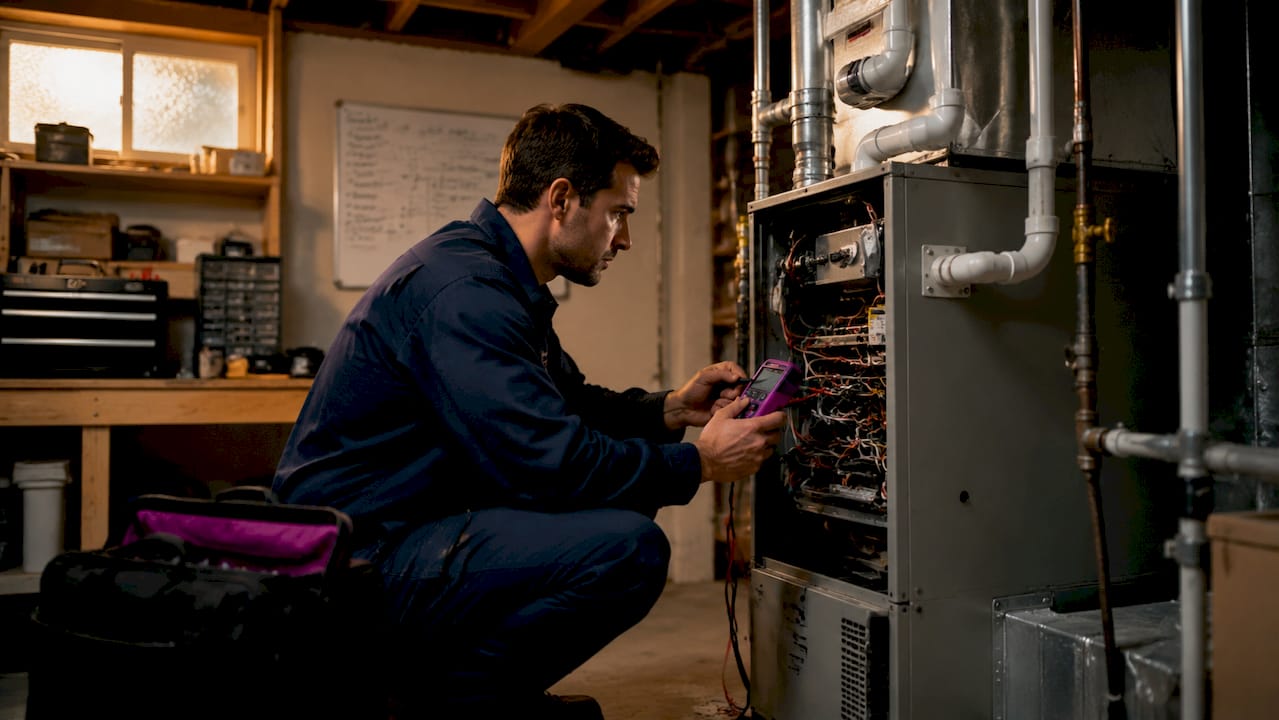
An HVAC service call follows a defined sequence of steps that any qualified technician performs in a consistent order. Technicians follow ACCA and ENERGY STAR guidelines to ensure every diagnostic is thorough and repeatable. That structure protects you from guesswork and gives the technician a reliable framework for finding problems fast.
Here is what a standard service call looks like from start to finish:
- Homeowner consultation. The technician asks you to describe what you noticed: unusual sounds, uneven temperatures, higher energy bills, or system shutdowns. Your observations are the first diagnostic clue.
- Visual inspection. The technician examines both the indoor air handler and the outdoor condenser unit. They check for visible damage, corrosion, blocked airflow, and dirty filters or coils.
- Electrical component testing. Capacitors, contactors, and wiring connections are tested for proper voltage and continuity. This step catches failures before they cause a full system breakdown.
- Performance measurements. The technician measures refrigerant pressure and airflow to confirm the system is operating within manufacturer specifications.
- Diagnosis and report. The technician explains what they found, identifies any failed or failing parts, and gives you a written or verbal summary before recommending next steps.
The entire process typically wraps up within an hour. A maintenance call focuses on prevention and tune-up tasks, while a repair call zeroes in on a specific failure. Understanding that distinction helps you choose the right type of service and avoid paying for work you do not need.
Pro Tip: Write down any symptoms your system showed before the technician arrives. Intermittent problems are hard to reproduce on demand, and your notes give the technician a head start.

How much does an HVAC service call cost?
The diagnostic fee is not the total bill. It is the starting point. A diagnostic fee covers the technician’s time to evaluate your system and report findings. Any repairs beyond that diagnosis are quoted separately and require your approval before work begins.
Several factors push the cost up or down:
- Travel distance. Technicians serving rural or remote areas often charge more to cover drive time and fuel.
- Time of year. Service calls booked during peak summer or winter demand periods may carry higher rates due to scheduling pressure.
- System complexity. Older systems, multi-zone setups, or equipment without ductwork require more time to evaluate.
- Parts and labor. If a repair is needed, the technician quotes parts and labor separately after the diagnosis is complete.
The $65–$150 diagnostic range reflects a standard residential visit under normal conditions. Coastal or high-demand regions, like Long Island, can see fees at the higher end of that range due to environmental wear factors such as salt-air corrosion on outdoor components.
Pro Tip: Ask for a written estimate before authorizing any repair. A reputable technician will always separate the diagnostic fee from repair costs and explain each line item clearly.
What are the benefits of regular HVAC service calls?
Regular service calls are not an expense. They are a way to protect a system that costs thousands of dollars to replace. Annual HVAC maintenance reduces energy bills, prevents emergency repairs, and extends the life of your equipment. Each of those outcomes has a direct dollar value.
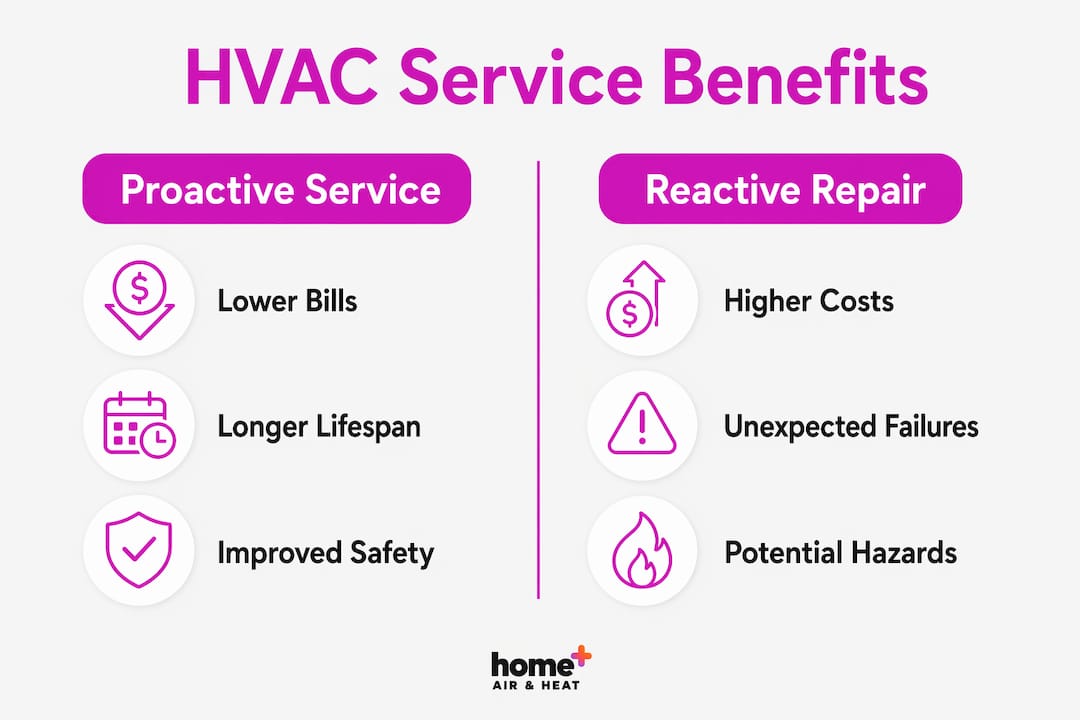
The table below shows how proactive service compares to reactive repair across the most common homeowner concerns:
| Concern | Proactive service | Reactive repair |
|---|---|---|
| Energy bills | Lower, system runs efficiently | Higher, degraded performance goes unnoticed |
| Repair costs | Small fixes caught early | Major failures repaired at emergency rates |
| Equipment lifespan | Extended through proper care | Shortened by accumulated wear |
| Comfort reliability | Consistent year-round | Unpredictable, often fails at worst times |
| Safety | Hazards identified before failure | Risks discovered after an incident |
HVAC systems in high-demand climates face accelerated wear from heat cycles, humidity, and airborne corrosives. Skipping annual service in those environments does not save money. It moves the cost forward and makes it larger. A technician who catches a failing capacitor during a $100 service call saves you from a $500 compressor replacement two months later.
Pro Tip: Schedule your service call in the spring for cooling systems and in the fall for heating systems. Booking before peak season means faster scheduling and often lower rates.
Just as routine home maintenance visits prevent small problems from becoming expensive ones, regular HVAC service keeps issues from turning into full system failures.
How to prepare for an HVAC service call
Preparation makes the visit faster and the results more useful. A technician who walks into a well-prepared home spends less time on logistics and more time on your system.
Before the technician arrives, have these things ready:
- System access. Clear the area around your indoor air handler and outdoor condenser unit. Remove stored items, furniture, or debris that block access panels.
- Maintenance history. Gather any past service records, warranty documents, or notes about previous repairs. This context helps the technician spot patterns.
- A list of symptoms. Note when problems occur, how often, and under what conditions. “The system shudders when it first starts on hot mornings” is far more useful than “it makes a noise sometimes.”
- Your questions. Write down anything you want explained. You are paying for the technician’s expertise, and asking questions is part of that value.
Certain HVAC components carry serious safety risks, including capacitors that hold lethal electrical charges and pressurized refrigerant lines. Never attempt to inspect or repair these yourself. The diagnostic fee exists precisely because this work requires trained hands.
Transparent communication from your technician is not optional. A qualified professional explains every finding in plain language, shows you what failed, and gives you a clear repair recommendation with pricing before touching anything. If a technician cannot explain what they found or why a repair is needed, ask them to try again. You have every right to a clear answer before you approve any work.
Pro Tip: Use the HVAC installation checklist from Hometsair to build a list of questions for your technician. It covers the key details most homeowners forget to ask.
Key Takeaways
An HVAC service call is a structured diagnostic visit that protects your equipment, your safety, and your budget when scheduled regularly and handled by a qualified technician.
| Point | Details |
|---|---|
| Diagnostic fee is not the full cost | The $65–$150 fee covers evaluation only; repairs are quoted and approved separately. |
| Service calls follow a standard sequence | Technicians use ACCA and ENERGY STAR guidelines to inspect, test, and measure your system. |
| Maintenance and repair calls differ | Maintenance prevents problems; repair calls fix specific failures. Choose the right type. |
| Preparation improves outcomes | Clear access, symptom notes, and direct questions make every service visit more productive. |
| Regular service saves money | Annual visits catch small failures before they become expensive emergency repairs. |
Why homeowners underestimate the service call
Most homeowners I talk to treat a service call as a last resort. The system stops working, they call someone, and they pay whatever it takes to get cool air back. That reactive pattern is the most expensive way to own an HVAC system.
The diagnostic fee is the part that frustrates people most. Paying $100 for a technician to tell you what is wrong, before you even know if you want to fix it, feels backward. But think about what you are actually buying. You are paying a trained professional to apply years of experience to your specific system and give you a reliable answer in under an hour. That is not a fee for showing up. That is a fee for knowing what to look for.
The other misconception I see constantly is that maintenance calls are only for older systems. New equipment fails too, and it fails faster when it is never serviced. A system installed two years ago with a dirty coil and low refrigerant will underperform and wear out ahead of schedule. Catching that during a routine heating maintenance visit costs a fraction of what early replacement does.
My honest advice: treat the service call as a checkup, not a crisis response. The homeowners who get the most out of their HVAC systems are the ones who schedule visits before something breaks, ask direct questions, and push back when a recommendation is not clearly explained. That posture saves money and keeps you in control of your home.
— Blake
Hometsair keeps your system running before problems start
Long Island homeowners deal with conditions that accelerate HVAC wear: salt air, high humidity, and homes that often lack traditional ductwork. Hometsair’s NATE-certified technicians are trained specifically for those challenges, and the company reports a 90% first-visit fix rate.
Hometsair offers same-day service with zero overtime fees, so a service call does not cost more just because your system picked an inconvenient time to act up. Pricing is transparent from the first call, and every technician explains findings before any repair is authorized. Whether you need a same-day AC repair or want to schedule a preventive tune-up, Hometsair makes it straightforward to book and easy to understand what you are paying for. HVAC services in Bayville, NY and across Nassau County are available with no fees and no pressure.
FAQ
What is the difference between a maintenance call and a repair call?
A maintenance call is a preventive visit where the technician inspects and tunes up your system before problems develop. A repair call addresses a specific failure that has already occurred, and the technician diagnoses and fixes the immediate issue.
How long does an HVAC service call take?
A standard residential diagnostic service call takes 45–60 minutes. More complex systems or multiple issues may extend that time, but most visits wrap up within one hour.
Does the diagnostic fee include repairs?
The diagnostic fee covers the technician’s evaluation and report only. Repair costs are quoted separately after diagnosis and require your approval before any work begins.
When should I call an HVAC technician?
Call a technician if your system is not reaching the set temperature, making unusual sounds, cycling on and off frequently, or producing higher-than-normal energy bills. You can also check common AC sounds to identify whether your issue needs immediate attention.
How often should I schedule an HVAC service call?
Schedule a service call once a year for each system: once in spring for your cooling equipment and once in fall for your heating system. Homes in high-demand or coastal climates may benefit from more frequent visits due to accelerated wear.