
Why HVAC Fails in Summer: Causes and Prevention
Discover why HVAC fails in summer. Learn causes and prevention strategies to keep your system running efficiently all season long.
Why HVAC Fails in Summer: Causes and Prevention
HVAC failure in summer is defined as a system breakdown caused by peak thermal demand exposing pre-existing weaknesses in installation, sizing, or maintenance. Understanding why hvac fails in summer matters most before july heat waves arrive, not after your system stops cooling at 9 PM on a Saturday. The core causes fall into four categories: improper sizing, component wear, refrigerant issues, and skipped maintenance. Each one is preventable with the right knowledge and a proactive schedule.
Why does HVAC sizing cause summer failures?
Improper sizing is the single most common reason air conditioning problems in summer escalate into full breakdowns. Most homeowners assume a bigger unit means better cooling. The opposite is true.
An oversized system short-cycles, meaning it reaches the thermostat setpoint quickly, shuts off, then restarts minutes later. That constant stop-and-start creates mechanical and electrical wear far faster than steady operation. An undersized system never shuts off during a heat wave. It runs continuously until the compressor overheats and burns out.
Improperly sized systems increase utility costs by 25–30% and accelerate equipment failure through compressor overheating and motor burnout. That cost increase shows up on your electric bill long before the system actually dies.
The fix is a Manual J load calculation. This is a standardized engineering method that accounts for your home’s square footage, insulation, window placement, and local climate. Many contractors skip it and size by rule of thumb instead, which is why sizing errors are so common even in new installations. If you are replacing a system, always ask your contractor to show you the Manual J results before any equipment gets ordered.
Pro Tip: Ask your contractor for the Manual J load calculation report before signing any installation contract. If they cannot produce one, that is a red flag worth taking seriously.
| Sizing problem | What happens to the system |
|---|---|
| Oversized unit | Short-cycles frequently, wearing out electrical contacts and compressor valves |
| Undersized unit | Runs nonstop, causing compressor overheating and motor burnout |
| Correct sizing | Steady operation, longer lifespan, lower utility bills |
What mechanical and electrical parts fail most in summer?
Summer heat does not create new problems. It accelerates existing ones. The components that fail most often are the compressor, capacitors, contactors, coils, and refrigerant lines.
Compressor and refrigerant failures
The compressor is the most expensive part of any AC system. It relies on cool, low-pressure refrigerant gas to keep its motor from overheating. When refrigerant leaks, warm gas returns to the compressor instead of cool gas, and the motor overheats rapidly. Refrigerant does not get used up over time. Low refrigerant always means a leak. Running the system with a known leak is one of the fastest ways to destroy a compressor.
Capacitors, contactors, and wiring
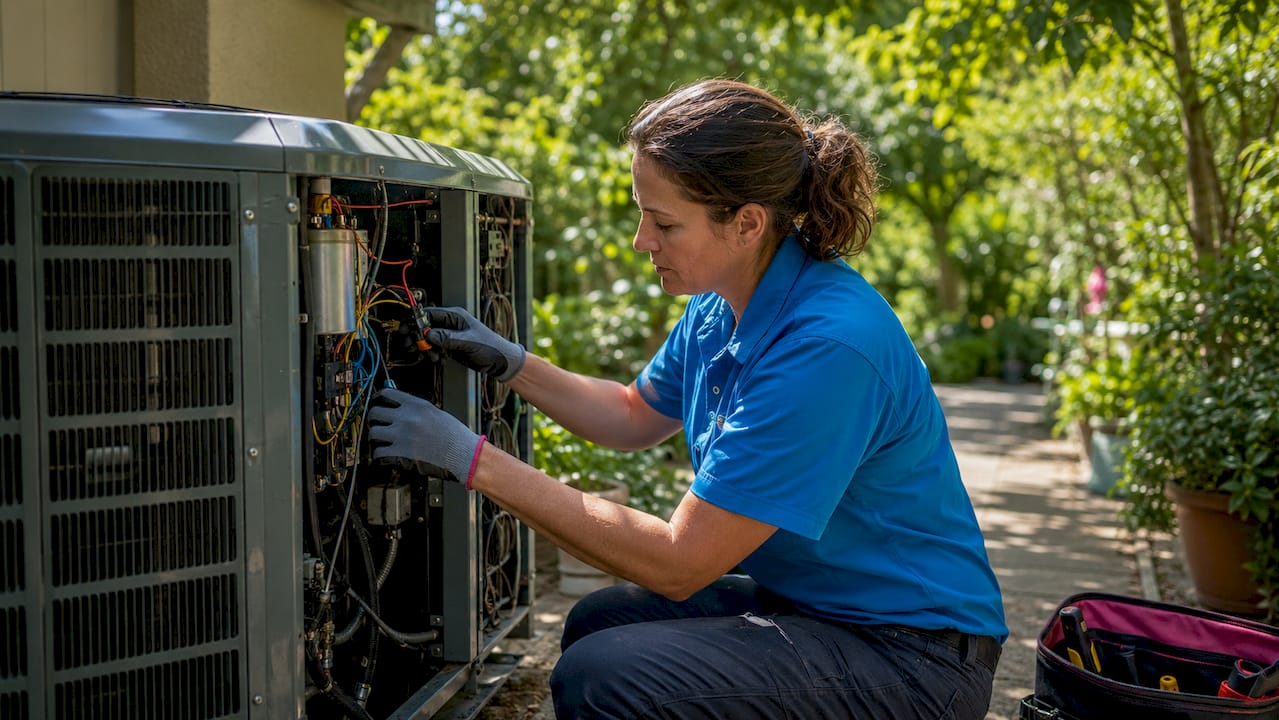
Capacitors give the compressor and fan motors the electrical jolt they need to start. Summer heat degrades capacitors faster than any other season. Capacitor failure is one of the most common causes of sudden AC stoppage, and it gets worse when maintenance has been skipped. Contactors are the electrical switches that control power flow to the compressor. Repeated cycling wears them down, causing shorts and heating element failures that require professional repair.
Coil and airflow problems
- Dirty evaporator coils restrict heat absorption, forcing the system to work harder and run longer.
- Clogged air filters block airflow to the evaporator coil. When airflow drops too low, frozen evaporator coils form, blocking cooling entirely and pushing refrigerant back to the compressor in a damaging liquid state.
- Dirty condenser coils on the outdoor unit trap heat instead of releasing it. The system overheats and trips safety switches or fails outright.
- Debris around the outdoor unit (leaves, grass clippings, shrubs) blocks airflow and compounds heat buildup.
Heat waves expose all of these weaknesses at once. Failing capacitors, low refrigerant, dirty coils, and loose wiring rarely cause problems on a mild spring day. They cause problems on the hottest day of the year, when the system runs hardest.
How does maintenance prevent summer HVAC failures?
Two professional tune-ups per year can extend system lifespan by over five years compared to neglected units that lose 30–50% of their operational life. That is not a minor difference. It is the gap between a system that lasts 15 years and one that fails at 9.
A spring tune-up before peak cooling season is the most valuable maintenance investment a homeowner can make. A technician will check refrigerant levels, test capacitors and contactors, clean coils, inspect wiring, and measure airflow. Each of those checks catches a problem that would otherwise surface as an emergency breakdown in july or august. Learn more about year-round maintenance value and how a consistent schedule protects your investment.
Homeowners can also handle several tasks between professional visits:
- Change air filters every 30–90 days. A clogged filter is the leading cause of frozen coils and restricted airflow. Check yours monthly during summer.
- Clear the outdoor unit perimeter. Keep at least two feet of clearance around the condenser. Remove leaves, grass, and any objects blocking airflow.
- Check the condensate drain line. A clogged drain causes water backup, humidity problems, and potential water damage near the air handler.
- Listen for unusual sounds. Grinding, rattling, or clicking sounds during startup signal component wear before a full failure occurs.
- Monitor your utility bills. A sudden spike in electricity costs without a change in usage habits often means the system is working harder than it should.
Pro Tip: Schedule your professional tune-up in march or april, before demand for HVAC technicians spikes. You will get faster appointments and avoid the summer backlog.
Installation quality is the leading factor affecting HVAC lifespan, more than brand or age. That means even a premium system installed poorly will fail earlier than a mid-range system installed correctly. Maintenance cannot fully compensate for a bad installation, but it can catch the downstream damage before it becomes catastrophic.
What are the warning signs of HVAC trouble in summer?
Early warning signs of air conditioning problems appear well before a full breakdown. Catching them early is the difference between a $200 capacitor replacement and a $2,500 compressor repair.
Homeowners often misinterpret frequent cycling and warm airflow as minor quirks, when these symptoms actually signal serious system stress requiring professional evaluation. Recognizing the signs early gives you time to act before the system fails completely.
Watch for these red flags:
- Short-cycling: The system turns on and off every few minutes. This indicates oversizing, a refrigerant issue, or a failing thermostat.
- Warm or weak airflow: Air coming from vents feels barely cool or has low pressure. This points to dirty coils, low refrigerant, or a failing blower motor.
- Ice on the indoor unit: Visible frost or ice on the evaporator coil means airflow is severely restricted or refrigerant is critically low.
- Strange noises: Grinding suggests bearing failure. Clicking at startup and shutdown is normal, but clicking during operation signals a failing relay or contactor.
- Rising utility bills: If your bill climbs without a change in usage, the system is losing efficiency, often due to dirty coils or a refrigerant leak.
- Humidity inside the home: An AC that runs but leaves the air feeling sticky is not removing moisture properly, which points to airflow or refrigerant problems.
Before calling a technician, check your air filter and replace it if it is dirty. Clear any debris from the outdoor unit. Check that all vents are open and unobstructed. If the problem persists after those steps, contact a professional rather than waiting. Compressor damage from a delayed repair costs far more than a diagnostic visit.
Key Takeaways
HVAC systems fail in summer when peak thermal demand exposes pre-existing weaknesses in sizing, installation quality, component health, and maintenance history.
| Point | Details |
|---|---|
| Sizing errors cause breakdowns | Oversized and undersized systems both fail faster; always require a Manual J calculation. |
| Capacitors fail first in heat | Capacitor failure is the most common cause of sudden AC stoppage during summer heat waves. |
| Refrigerant leaks destroy compressors | Low refrigerant always means a leak; running the system accelerates compressor failure. |
| Two tune-ups extend system life | Professional maintenance twice a year can add over five years to equipment lifespan. |
| Early signs save money | Short-cycling, warm airflow, and rising bills signal problems before a full breakdown occurs. |
What I have learned after watching too many July emergencies
Most summer HVAC failures I have seen were not surprises to the system. They were surprises to the homeowner. The system had been signaling trouble for weeks, sometimes months, through short-cycling, slightly warmer air, or a utility bill that crept up $30 a month. Homeowners assumed those were normal summer quirks. They were not.
The part that frustrates me most is the sizing issue. Contractors who skip the Manual J calculation are not cutting corners out of laziness. They are doing what they were trained to do in an industry where “bigger is safer” became an unofficial standard. The result is a generation of oversized systems that short-cycle constantly, wear out in 8 years instead of 15, and get blamed on the equipment brand rather than the installation decision.
Installation quality is the factor that matters most for long-term reliability. More than the brand, more than the SEER rating, more than how often you change the filter. A correctly sized, properly commissioned system with average maintenance will outlast a premium unit that was installed without a load calculation and never commissioned. That is not a theory. That is what the field data shows consistently.
My honest advice: treat the spring tune-up as non-negotiable. Not because something will definitely break without it, but because the cost of catching a failing capacitor in april is a fraction of the cost of replacing a compressor in july. The math is not close.
— Blake
Hometsair keeps Long Island cool when it matters most
Long Island summers push HVAC systems hard, and coastal salt air adds corrosion risk that inland systems never face. Hometsair’s NATE-certified technicians handle the full range of causes behind summer failures, from Manual J sizing and proper commissioning on new installs to coil cleaning, refrigerant checks, and electrical component testing on existing systems.

Hometsair reports a 90% first-visit fix rate and charges zero overtime fees, which matters when your system fails on a weekend in august. Current promotions include $1,000 off AC installations. For homeowners who want to get ahead of summer failures, an AC tune-up in Nassau County covers every component that typically fails under summer heat. For those ready to replace an aging system, professional AC installation in Cedarhurst includes correct sizing and full commissioning from the start.
FAQ
Why does my AC stop working on the hottest days?
Heat waves push every component to its limit at once. Failing capacitors, low refrigerant, and dirty coils that cause no problems on mild days trigger full breakdowns under extreme heat.
How do I know if my HVAC is the wrong size?
Short-cycling (turning on and off every few minutes) signals an oversized unit. A system that runs nonstop without reaching the set temperature points to an undersized one.
What is a Manual J calculation and why does it matter?
A Manual J calculation is a standardized engineering method that determines the exact cooling and heating load your home requires. Systems sized without it are frequently oversized or undersized, leading to early failure and higher utility costs.
How often should I schedule HVAC maintenance?
Two professional tune-ups per year, one in spring before cooling season and one in fall before heating season, can extend system lifespan by over five years compared to neglected units.
Can I fix a refrigerant leak myself?
No. Refrigerant handling requires EPA certification and specialized equipment. Low refrigerant always indicates a leak that must be located and repaired by a licensed technician before recharging.