
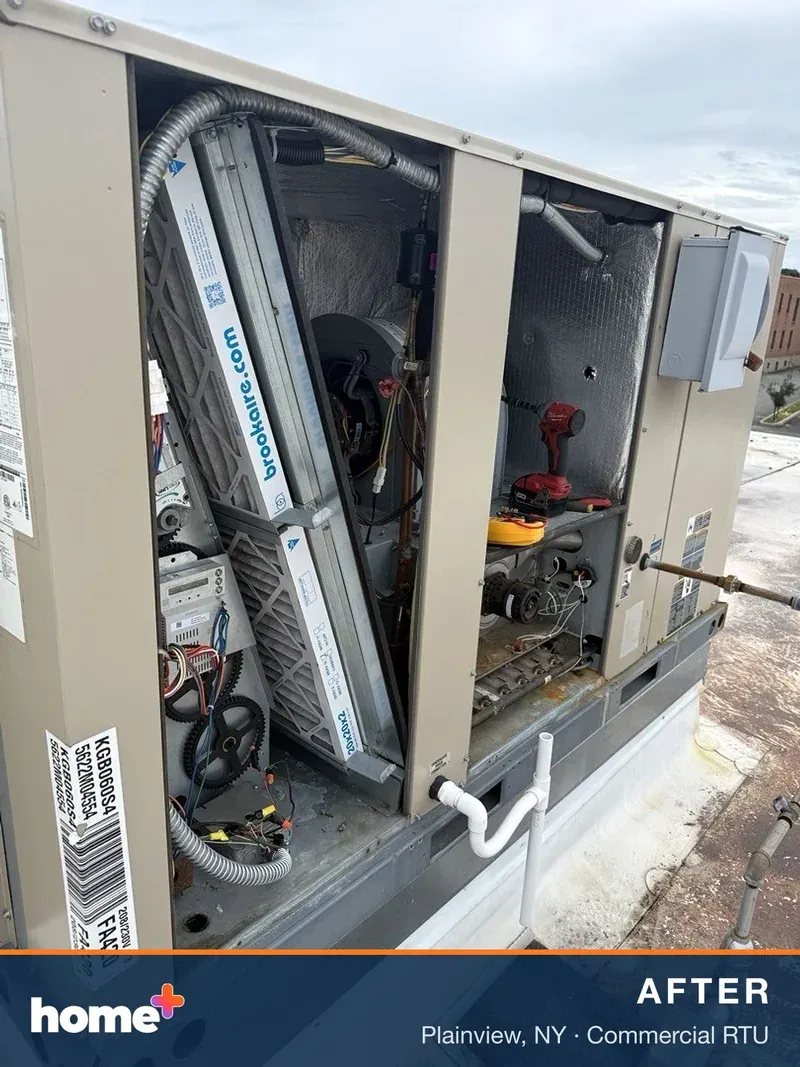
 Maintenance
Plainview, NY·Commercial rooftop units
Commercial Rooftop HVAC Inspection & Filter Change in Plainview
See the job
Restaurant HVAC is an air-balance problem before it is an equipment problem. The hood, the make-up air unit and the rooftop units have to work as one system.
Home+ documents hood exhaust volume, make-up air, outdoor-air intake, building pressure and rooftop-unit condition, then states what the kitchen and dining room actually need, what it will take, and what falls to another trade.
Restaurant calls move faster when the kitchen layout and equipment facts come with the request. Photos of nameplates and the hood line are usually enough to start.
Restaurant-specific symptoms
These patterns show up constantly in Long Island kitchens and almost always trace back to air balance, controls or an undersized make-up air path.
A negative building is the classic sign that exhaust exceeds supply. It also affects flues, screens and hood capture.
Capture failure can come from exhaust volume, make-up air placement, cross-drafts or filter and fan condition.
Kitchen exhaust pulling conditioned air out of the dining room shows up as a comfort complaint far from the kitchen.
Untempered or missing make-up air puts full outdoor conditions on the line while the rooftop unit runs continuously.
Humid infiltration replacing exhausted air raises indoor moisture and creates a safety and health-inspection problem.
Grease-loaded coils, dirty filters and high outdoor-air loads keep equipment at full capacity and shorten its life.
Restaurant scope
Restaurant work touches code, health inspection, the landlord and your service hours. The written option should separate confirmed work from allowances, exclusions and other trades.
How the work runs
Record hood and appliance details, make-up air equipment, rooftop nameplates, zones and the actual complaints by station.
Take exhaust, supply, outdoor-air and pressure readings so the recommendation rests on numbers rather than assumptions.
State the corrective work, equipment basis, assumptions, exclusions, other-trade items and the expected service interruption.
Perform the work in pre-open, post-close or planned-closure windows agreed with the operator and landlord.
Uptime and operating cost
A restaurant cannot absorb an unplanned closure, and it cannot absorb a rooftop unit running at full tilt to fight its own exhaust. Both are managed with maintenance cadence and controls.
Grease-laden return air loads filters and coils quickly; frequent filter, coil, drain and belt attention protects capacity.
Occupied and unoccupied schedules, economizer operation and hood interlock reduce run time without hurting the room.
Knowing lead times and identifying the units that would close the room lets you plan instead of react.
Qualifying commercial equipment and controls projects may be eligible; confirm current program rules and estimated amounts in writing before purchase.
Request commercial service
Share the property, the number of rooftop units, the hood and make-up air situation and your service hours. The commercial team will confirm scope fit and the next site-review step by phone.
Prefer to speak with dispatch?
(516) 259-1191Service area
Current coverage is centered on Nassau County. Dispatch confirms the address, equipment, roof access, project fit and current availability before scheduling.
Home+ focuses on residential and light-commercial HVAC. Equipment type, capacity, controls, fuel, roof access and site requirements must be reviewed so the team can confirm capability and the right next step.
Recent work
MaintenancePlainview, NY·Commercial rooftop units
See the job
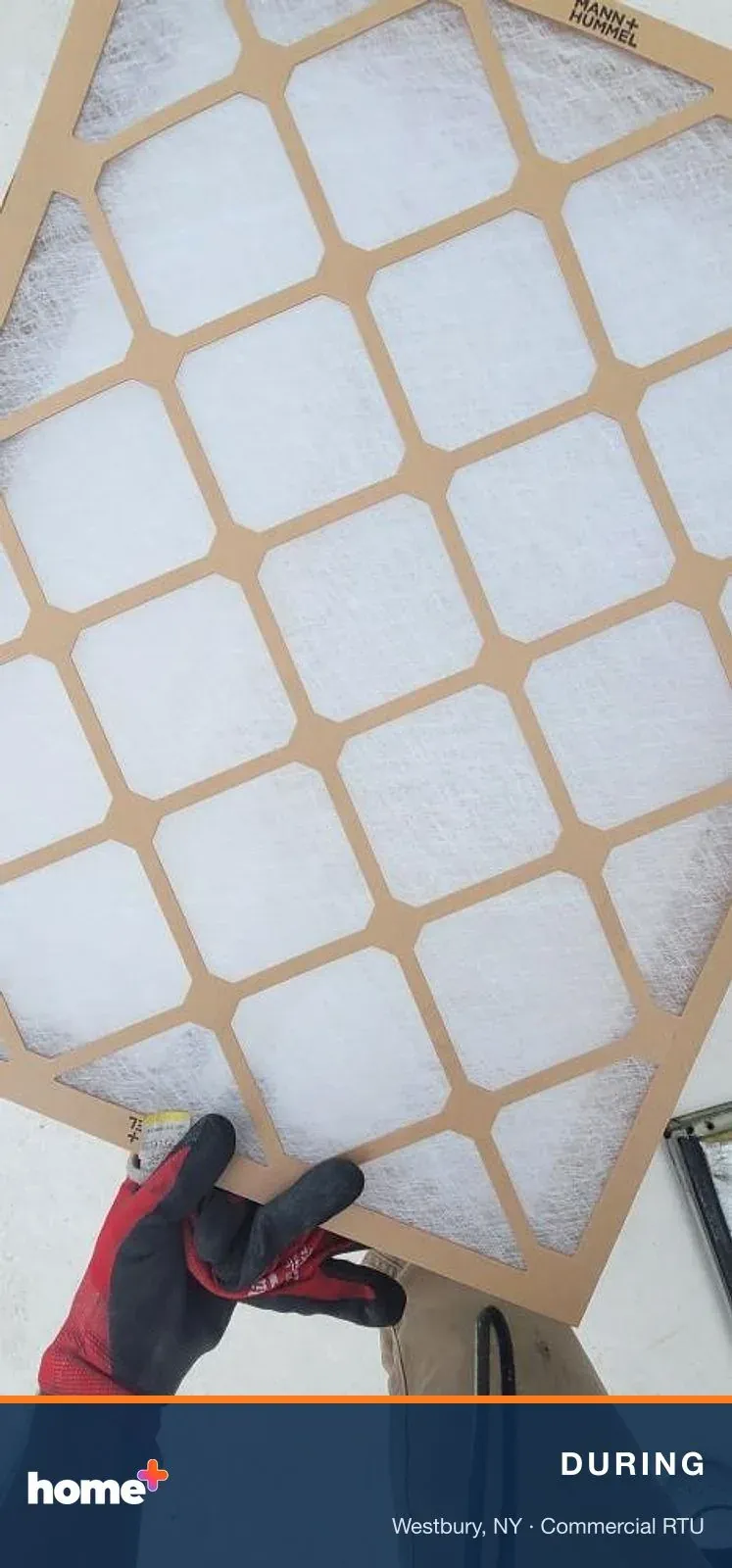 Maintenance
Westbury, NY·Commercial rooftop units
See the job
Photos enhanced for clarity.
Frequently asked questions
A kitchen exhaust hood removes a large volume of air. Without a matching make-up air supply the building goes negative, which pulls air down flues, makes doors hard to open, drags humid outdoor air through the dining room, and can keep the hood from capturing smoke and grease. Make-up air volume, tempering and interlock with the hood should be documented for the specific hood and appliance line.
It is usually an air-balance problem rather than a failed rooftop unit. When exhaust exceeds supply, conditioned dining-room air is pulled into the kitchen and replaced by unconditioned infiltration. Measuring hood exhaust, make-up air, outdoor-air intake and building pressure identifies whether the fix is balancing, controls, or added capacity.
Commercial kitchen ventilation is governed by the New York State mechanical and fire codes, hood and duct listings, and local health-department and building-department review. Requirements vary by municipality, appliance type, hood classification and building. Confirm applicable requirements and responsibility for filings with the authority having jurisdiction before work is approved.
Often some of it can. Maintenance, controls, balancing and many repairs can be scheduled outside service hours. Equipment replacement involving rigging, roof work, electrical shutdown or gas work may require a closure window. The written scope should state expected downtime, work hours and coordination with the landlord.
Grease-laden air, long run hours and heavy outdoor-air loads make restaurant equipment dirty faster than an office. Many operators use a quarterly cadence for filters, coils, belts, drains and economizer checks, with a fuller seasonal inspection twice a year. The right interval depends on the equipment, hood layout and hours of operation.
Home+ focuses on residential and light-commercial HVAC: rooftop units, make-up air equipment, heating and cooling, controls and air balance. Hood cleaning, fire-suppression service and specialty kitchen-exhaust fabrication are separate trades. We will say plainly which items fall outside our scope so you can assign them.
Compare repair, maintenance, replacement planning and recurring commercial coverage.