
What Is HVAC Emergency Service? A 2026 Guide
Discover what HVAC emergency service is and when to call for urgent repairs. Learn to protect your home and health effectively.
What Is HVAC Emergency Service? A 2026 Guide
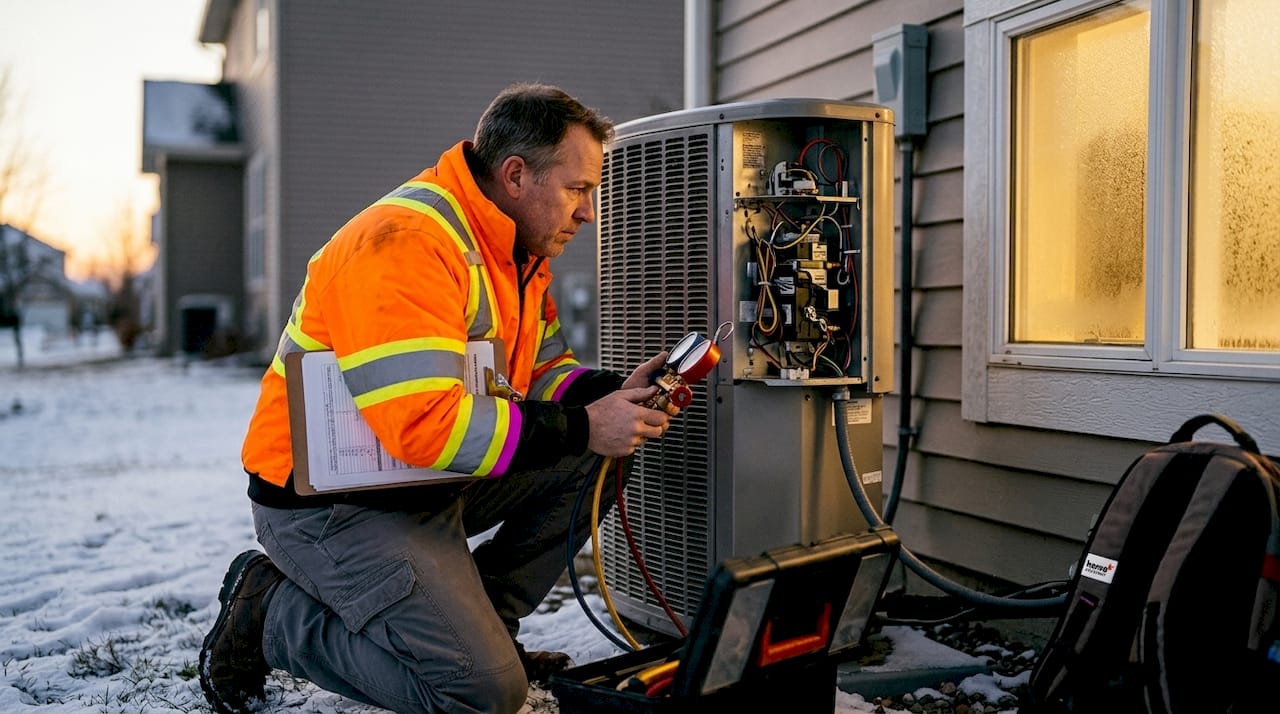
HVAC emergency service is defined as any heating, cooling, or ventilation repair that addresses an immediate threat to occupant safety, health, or property. Not every breakdown qualifies. True emergencies involve gas leaks, carbon monoxide alarms, electrical burning odors, active water leaks, or extreme indoor temperatures that endanger vulnerable people. Understanding the difference between a genuine emergency and an urgent inconvenience protects you from unnecessary costs and helps you act decisively when it counts.
What is HVAC emergency service, and when does it apply?
HVAC emergency service is the category of urgent repair work triggered by conditions that risk life, health, or property rather than simple equipment failure. A furnace that stops working on a mild spring night is an inconvenience. A furnace that stops working during a January cold snap with an elderly resident inside is an emergency. The distinction shapes every decision you make, from whether to call at 2:00 AM to how much you should expect to pay.
Professionals and regulatory bodies use specific thresholds to classify emergencies. Indoor temperatures below 50°F in winter or above 85°F in summer qualify when vulnerable occupants, including children, elderly adults, or people with medical conditions, are present. Gas odors, carbon monoxide detector activations, smoke from the unit, and active water leaks causing structural damage all meet the threshold automatically. These criteria are not arbitrary. They reflect the point at which waiting for a scheduled appointment creates measurable physical or financial harm.
The term “24/7 HVAC repair service” is widely used in marketing but does not always mean what homeowners expect. Knowing the real definition of HVAC emergency service helps you ask the right questions before you commit to a call.
What are the signs of an HVAC emergency?
Recognizing the signs of an HVAC emergency quickly is the skill that separates a manageable situation from a dangerous one. Some signals are obvious. Others are easy to dismiss until the damage is done.
Immediate emergencies requiring action right now:
- Gas or burning odors. A sulfur or rotten-egg smell near your furnace or gas lines signals a potential gas leak. An electrical burning smell from the unit indicates wiring failure or arcing, both of which are fire hazards.
- Carbon monoxide alarm activation. CO is odorless and colorless. If your detector sounds, treat it as a confirmed emergency, not a false alarm.
- Extreme indoor temperatures. Temperatures below 50°F or above 85°F with vulnerable occupants present meet the emergency temperature threshold used by most HVAC professionals.
- Active water leaks. A refrigerant line or condensate drain failure that is actively soaking walls, ceilings, or flooring causes property damage by the hour.
- Smoke, sparks, or system shutdown with burning smell. These indicate electrical failure inside the unit and require immediate power cutoff.
Urgent but non-emergency situations:
- No cooling during moderate weather with no vulnerable occupants
- Unusual noises without accompanying odors or temperature extremes
- Reduced airflow without complete system failure
The line between emergency and urgent matters financially. Indoor temperatures that are not life-threatening can safely wait 8–12 hours, avoiding costly after-hours premiums. Calling an emergency line for a non-emergency situation can cost two to three times the standard rate.
Pro Tip: Before calling an emergency line, check your thermostat batteries, circuit breaker, and air filter. A tripped breaker or dead battery causes roughly one in five “emergency” calls that turn out to be simple fixes.
How do professional HVAC emergency services operate?
Not all emergency HVAC services are structured the same way. Marketing claims for 24/7 service vary significantly, and the tier a provider operates under determines whether a technician arrives at midnight or the next morning.
The three service tiers work like this:
- Tier 1 (true emergency dispatch). An on-call technician is available around the clock with a truck stocked for common repairs. Arrival typically falls within 60–180 minutes under normal conditions, extending to 3–5 hours during peak demand periods like heat waves or cold snaps.
- Tier 2 (24-hour phone, daytime service). Someone answers the phone at any hour, but a technician only arrives the following business day. This is the most common setup marketed as “24/7.”
- Tier 3 (call-back booking). The after-hours line takes a message and schedules a daytime appointment. No emergency response exists.
“Ask two direct questions before booking: ‘Can a technician be at my home tonight?’ and ‘What is the earliest arrival window?’ The answers immediately reveal which tier you are dealing with.”
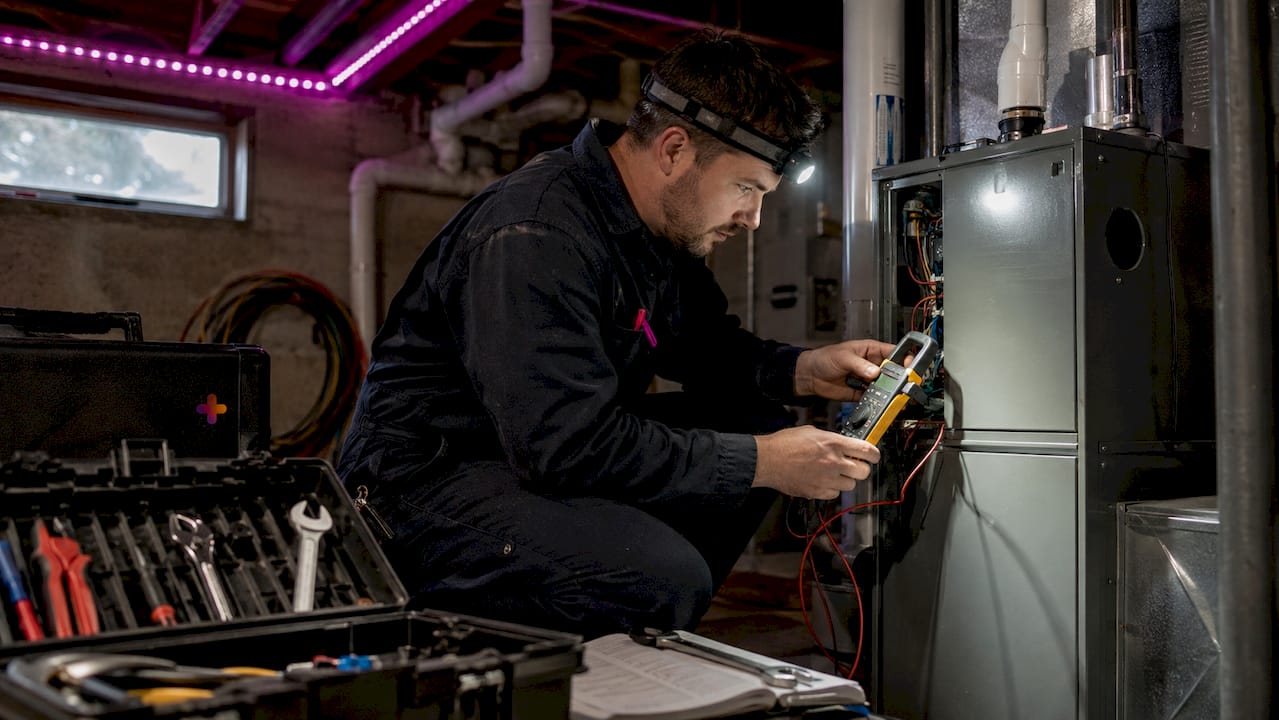
When a Tier 1 technician arrives, the first action is a safety assessment. HVAC systems carry high-voltage electricity and refrigerant, and technicians cut power at the breaker before any diagnostic work begins. Refrigerant handling requires EPA-certified technicians under federal regulations, which is one reason DIY repairs during emergencies create legal and safety exposure. Expect the technician to confirm the hazard, stabilize the system, and then present repair options before any work proceeds.
Dispatch fees and after-hours premiums are standard. Homeowners should clarify these costs before authorizing service, not after the technician has already arrived. Providers with genuine price transparency state their after-hours rates upfront.
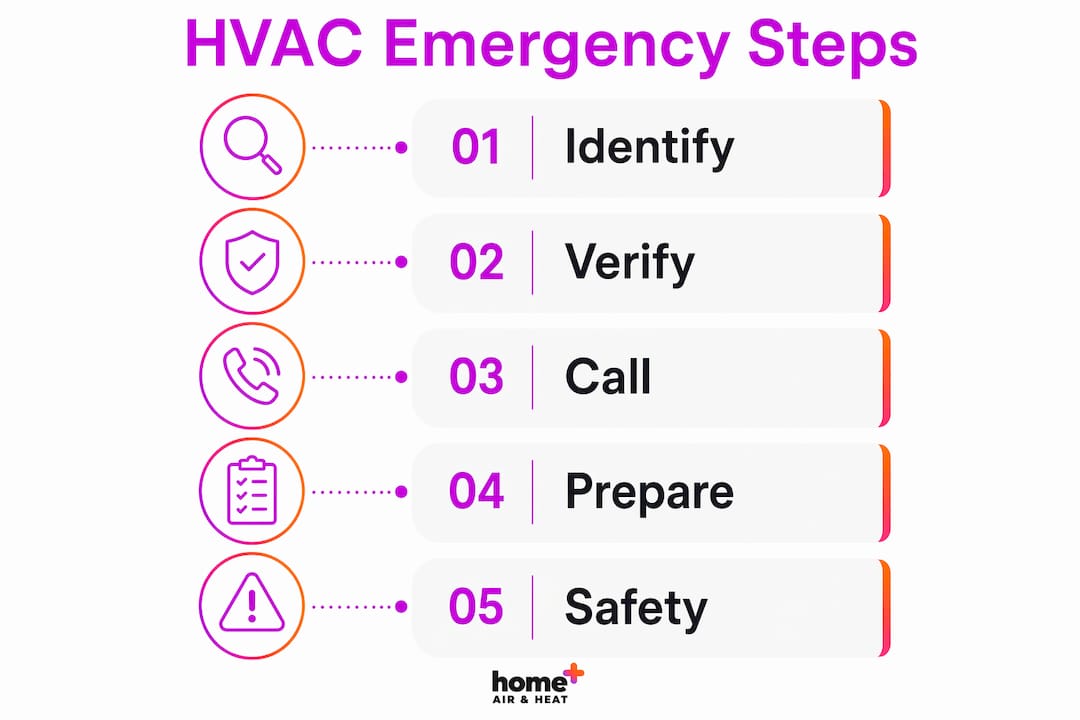
What should homeowners do during an HVAC emergency?
The first minutes of an HVAC emergency determine how much damage occurs and how safe everyone stays. Clear, fast action reduces both.
If you smell gas or your CO detector activates:
- Leave the building immediately. Do not stop to grab belongings or investigate the source.
- Call 911 or your gas utility’s emergency line from outside or a neighbor’s home.
- Contact your HVAC contractor only after emergency services have cleared the area. HVAC intervention comes after the hazard is contained, not before.
For electrical or mechanical emergencies:
- Cut power to the HVAC system at the main breaker. This stops an active electrical hazard from escalating.
- Do not attempt to restart the system or open the unit. DIY repairs on HVAC systems are dangerous due to lethal voltage and pressurized refrigerant lines.
- Move vulnerable occupants to a safe temperature environment, such as a neighbor’s home or a hotel, while waiting for the technician.
When you call the emergency line, have this information ready:
- Your full address and the best contact number
- The make, model, and approximate age of your HVAC system
- A clear description of the symptom: what you heard, smelled, or saw, and when it started
- Whether vulnerable occupants are present
Pro Tip: Photograph your HVAC unit’s model label before an emergency happens and save it in your phone. Technicians can pre-diagnose likely parts needs before arriving, which cuts repair time significantly.
Confirm the technician’s license and insurance before approving any work. Stress from a breakdown creates conditions that unlicensed providers exploit, leading to code violations and liability that fall back on the homeowner. A legitimate provider will confirm credentials without hesitation. You can also check how AI-powered dispatch systems handle after-hours calls, which some providers now use to triage emergencies and verify technician availability in real time.
What does HVAC emergency repair cost, and how can you manage it?
Emergency HVAC repair costs more than scheduled service. Understanding the fee structure before you call prevents unpleasant surprises at the worst possible moment.
| Fee type | What it covers | Typical expectation |
|---|---|---|
| Dispatch fee | Technician travel and initial visit | Charged regardless of repair outcome |
| After-hours premium | Service outside standard business hours | Added on top of standard labor rate |
| Holiday surcharge | Service on federal or major holidays | Highest surcharge tier |
| Parts markup | Components sourced for emergency repair | Often higher than scheduled-service pricing |
| Written estimate | Itemized cost before work begins | Required from any reputable provider |
Written estimates and surcharge clarifications before approval are the single most effective way to control emergency repair costs. Any provider that resists providing a written estimate before starting work is a red flag.
Financing options for emergency repairs are available through many providers and help homeowners avoid delaying critical work due to upfront cost. Ask about payment plans before the technician begins, not after the invoice arrives.
The cost-benefit of emergency versus next-day service is worth calculating when the situation is not life-threatening. A repair that costs $400 during business hours may cost $700 at midnight. If indoor temperatures are uncomfortable but not dangerous, waiting until morning is a financially sound decision. Review emergency service fee structures before you are in a crisis so the numbers are familiar when you need them.
Always verify that the provider carries general liability insurance and holds a valid state contractor license. An unlicensed technician who causes additional damage during an emergency repair creates a liability problem the homeowner absorbs entirely.
Key Takeaways
HVAC emergency service applies only when a condition threatens safety, health, or property, and knowing that distinction saves money and prevents dangerous decisions.
| Point | Details |
|---|---|
| True emergency criteria | Gas leaks, CO alarms, extreme temperatures, active water leaks, and electrical smoke qualify immediately. |
| Service tier matters | Only Tier 1 providers dispatch a technician the same night; always confirm arrival time before booking. |
| Homeowner first steps | Evacuate for gas or CO, cut the breaker for electrical issues, then call professionals in that order. |
| Cost control | Request a written estimate and surcharge breakdown before approving any emergency work. |
| Verify credentials | Confirm license and insurance during the call, not after the technician arrives. |
What I’ve learned after years of watching homeowners call the wrong number at midnight
The most expensive mistake I see homeowners make is not waiting too long. It is calling an emergency line for a situation that does not qualify, then paying a $250 dispatch fee to hear “your filter was clogged.”
Real emergencies are obvious once you know the criteria: gas smell, CO alarm, smoke, or a temperature inside the home that puts someone at physical risk. Everything else deserves a 60-second pause before you dial. Check the breaker. Check the thermostat. Look at the filter. That pause costs nothing and saves hundreds of dollars more often than people admit.
The second mistake is skipping credential verification because the situation feels urgent. Urgency is exactly when unlicensed providers show up. I have seen homeowners accept repairs from technicians who lacked EPA refrigerant certification, then face code violations during a home sale years later. Thirty seconds to ask for a license number is always worth it.
Preventive maintenance is the real answer to most of this. A system that receives an annual AC tune-up and regular filter changes fails far less often, and almost never fails catastrophically without warning. The homeowners I see calling at 3:00 AM in july are almost always the ones who skipped the spring checkup.
Balance safety, comfort, and cost in that order. Safety is non-negotiable. Comfort is worth paying a premium for when temperatures are dangerous. Cost is manageable when you know the fee structure in advance and you are working with a provider who charges the same rate day or night.
— Blake
Hometsair is ready when your HVAC system is not
When a real HVAC emergency hits Long Island, the last thing you need is a provider who answers the phone but sends no one until morning. Hometsair’s NATE-certified technicians are available for same-day AC repair with zero overtime fees, meaning the rate you hear on the phone is the rate on the invoice. The 90% first-visit fix rate means most emergencies are resolved in a single call.

Hometsair serves Nassau County and surrounding Long Island communities with full pricing transparency and licensed, insured technicians for every job. For homeowners who want to prevent the next emergency before it starts, HVAC services in Bayville and nearby areas include preventive maintenance plans designed to catch problems before they become 2:00 AM phone calls.
FAQ
What qualifies as a true HVAC emergency?
A true HVAC emergency involves an immediate threat to safety, health, or property, including gas leaks, carbon monoxide alarms, electrical smoke, active water damage, or extreme indoor temperatures with vulnerable occupants present.
How do I access HVAC emergency service at night?
Call a Tier 1 provider and ask directly whether a technician can arrive the same night. Confirm the dispatch fee and after-hours rate before authorizing the visit.
Should I attempt any DIY fixes during an HVAC emergency?
No. HVAC systems carry high-voltage electricity and pressurized refrigerant lines that create lethal risks. Cut power at the main breaker and wait for a licensed technician.
How much does emergency HVAC repair typically cost?
Emergency repairs carry dispatch fees, after-hours premiums, and potential holiday surcharges on top of standard labor and parts costs. Always request a written estimate before work begins to avoid unexpected charges.
Can I wait until morning instead of calling an emergency line?
If indoor temperatures are uncomfortable but not life-threatening and no vulnerable occupants are at risk, waiting 8–12 hours for a scheduled repair is often safer and significantly less expensive than an after-hours call.